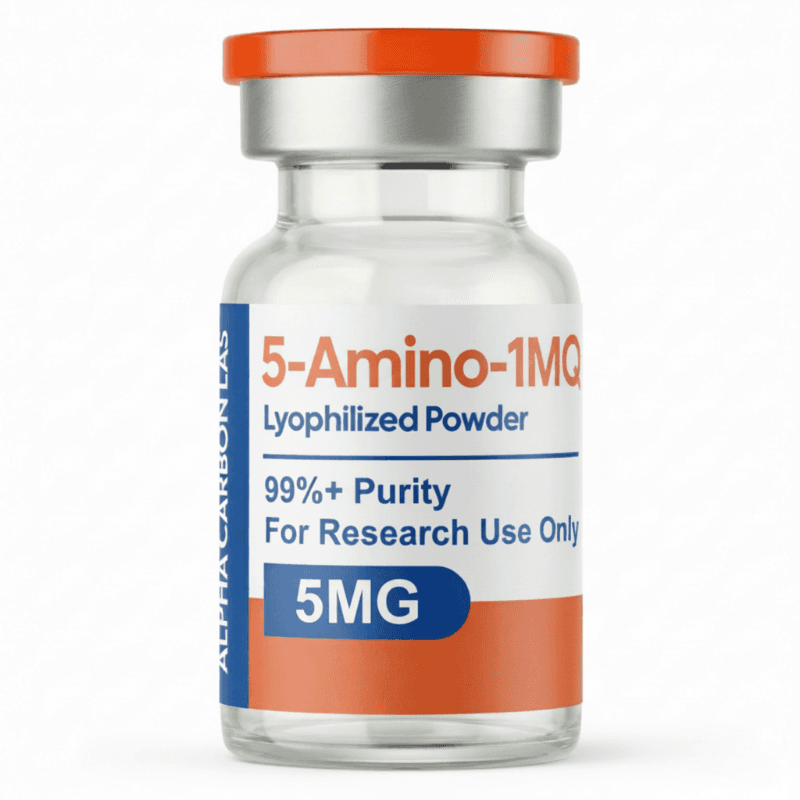
5MG
This product is for research purposes only. Not for human consumption.
Purity: >98% (HPLC verified)
Formulation: Lyophilized powder
Molecular Formula: C11H12N4O
Molecular Weight: 216.24 g/mol
CAS Number: 42464-96-0
PubChem CID: N/A
5-amino-1mq
Overview
5-Amino-1MQ (5-amino-1-methylquinolinium iodide, chemical formula C11H13N2+I−) is a small molecule compound that functions as a highly selective and competitive inhibitor of nicotinamide N-methyltransferase (NNMT), an enzyme that has emerged as an important regulator of cellular metabolism, energy expenditure, and adiposity. NNMT catalyzes the methylation of nicotinamide (vitamin B3) using S-adenosylmethionine (SAM) as the methyl donor, producing 1-methylnicotinamide (1-MNA) and S-adenosylhomocysteine. While this methylation reaction was historically considered a relatively minor metabolic pathway for nicotinamide clearance, research over the past decade has revealed that NNMT plays a surprisingly important and previously underappreciated role in cellular energy metabolism, NAD+ homeostasis, adipocyte biology, and whole-body metabolic regulation. The discovery that NNMT expression is dramatically elevated in adipose tissue of obese humans and animal models, and that NNMT inhibition or knockdown prevents diet-induced obesity and improves metabolic health, has catalyzed intense research interest in NNMT as a therapeutic target for obesity, metabolic syndrome, and related conditions. 5-Amino-1MQ was developed as a pharmacological tool to inhibit NNMT activity, and preclinical studies have demonstrated that oral administration of 5-Amino-1MQ to obese rodents produces dose-dependent reductions in body weight and fat mass, improvements in glucose metabolism and insulin sensitivity, and increases in energy expenditure - remarkably, these effects occur without changes in food intake, indicating that 5-Amino-1MQ works through metabolic enhancement and increased caloric burn rather than appetite suppression. This metabolic mechanism distinguishes 5-Amino-1MQ from most weight loss interventions which rely primarily on reducing caloric intake. The compound appears to work by increasing intracellular NAD+ levels (through preventing nicotinamide consumption by NNMT), which activates sirtuins and enhances mitochondrial function and fatty acid oxidation, while also promoting a phenomenon called "browning" of white adipose tissue - the transformation of energy-storing white fat cells into metabolically active beige/brown adipocytes that burn fatty acids for thermogenesis rather than storing them. These effects create a powerful metabolic shift toward fat utilization and energy expenditure. While 5-Amino-1MQ research remains in early stages with limited human data and no regulatory approvals, the compound has generated substantial interest in metabolic research, biohacking, and body composition optimization communities based on the compelling preclinical evidence and novel mechanism of action targeting a previously unexploited metabolic pathway.
Mechanism of Action
5-Amino-1MQ exerts its metabolic effects primarily through competitive inhibition of nicotinamide N-methyltransferase (NNMT), an enzyme belonging to the methyltransferase superfamily that is expressed in multiple tissues including liver, adipose tissue, skeletal muscle, kidney, and brain, with particularly high expression in visceral (abdominal) adipose tissue - the fat depot most strongly associated with metabolic disease. NNMT catalyzes the transfer of a methyl group from S-adenosylmethionine (SAM, the universal methyl donor in cells) to nicotinamide (a form of vitamin B3 and a precursor for NAD+ synthesis), producing 1-methylnicotinamide and S-adenosylhomocysteine (SAH). While this reaction was traditionally viewed as a minor nicotinamide clearance pathway, research has revealed that NNMT activity has far-reaching consequences for cellular metabolism through multiple interconnected mechanisms. First and most directly, NNMT activity consumes nicotinamide, which is a key precursor for NAD+ biosynthesis through the salvage pathway (the predominant NAD+ synthesis route in most mammalian cells). By methylating and removing nicotinamide, NNMT effectively drains NAD+ precursor availability, leading to reduced intracellular NAD+ levels. NAD+ (nicotinamide adenine dinucleotide) is a critical coenzyme involved in hundreds of enzymatic reactions including glycolysis, the citric acid cycle, and oxidative phosphorylation (the cellular energy production machinery), as well as serving as a substrate for NAD+-consuming enzymes including sirtuins, PARPs (poly-ADP-ribose polymerases), and CD38. The sirtuins (SIRT1-7) are particularly important NAD+-dependent enzymes that regulate metabolism, mitochondrial function, inflammation, DNA repair, and aging-related processes. When 5-Amino-1MQ inhibits NNMT, nicotinamide is preserved and available for NAD+ synthesis, leading to increased intracellular NAD+ concentrations. This NAD+ elevation activates sirtuins, particularly SIRT1 in adipocytes and hepatocytes, which deacetylates and activates numerous metabolic regulatory proteins including PGC-1α (peroxisome proliferator-activated receptor gamma coactivator 1-alpha), a master regulator of mitochondrial biogenesis, oxidative metabolism, and thermogenesis. SIRT1 activation also promotes fatty acid oxidation, reduces lipogenesis (fat synthesis), improves insulin sensitivity, and enhances cellular stress resistance. Second, NNMT inhibition affects cellular methylation capacity: SAM (the methyl donor consumed by NNMT) is required for hundreds of methyltransferase reactions throughout the cell, and NNMT's consumption of SAM can deplete this critical resource, while the SAH produced by NNMT is a potent product inhibitor of many methyltransferases. By inhibiting NNMT, 5-Amino-1MQ preserves SAM availability and reduces SAH accumulation, potentially supporting proper methylation of DNA, histones, and proteins - epigenetic modifications that regulate gene expression and cellular function. Research suggests this may contribute to metabolic benefits through altered expression of genes involved in lipid metabolism and energy expenditure. Third, and perhaps most fascinating, NNMT inhibition promotes browning of white adipose tissue - the conversion of white adipocytes (which primarily store energy as triglycerides) into beige/brown adipocytes (which contain numerous mitochondria and express uncoupling protein 1, UCP1, enabling them to dissipate energy as heat through non-shivering thermogenesis). This browning is mediated through multiple pathways including SIRT1/PGC-1α activation, increased expression of thermogenic genes (UCP1, PRDM16, PPARγ), and enhanced mitochondrial biogenesis. The result is transformation of metabolically inert fat-storage tissue into metabolically active fat-burning tissue, increasing total body energy expenditure even at rest. Studies show that 5-Amino-1MQ-treated animals have visibly darker (browner) visceral fat with increased mitochondrial density and oxidative enzyme expression. Fourth, NNMT inhibition improves insulin sensitivity and glucose metabolism through multiple mechanisms including increased NAD+ and SIRT1 activity (which enhances insulin signaling), reduced adipose tissue inflammation, and improved mitochondrial function. The compound also appears to reduce hepatic steatosis (fatty liver) by enhancing hepatic fatty acid oxidation and reducing lipogenesis. The 1-methylnicotinamide product of NNMT may itself have biological activities (including potential insulin resistance-promoting effects), and reducing its production through NNMT inhibition may contribute to metabolic improvements.
Research Findings
Research on 5-Amino-1MQ is in relatively early stages, with the bulk of published evidence coming from preclinical animal studies, in vitro cell culture experiments, and molecular/biochemical characterization of NNMT's role in metabolism. Human clinical trial data is limited or absent in peer-reviewed literature as of current knowledge, though the compound has gained use in research and biohacking contexts. The foundational research establishing NNMT as a metabolic regulator and potential therapeutic target came from studies by Daniel Kraus and colleagues published in Nature in 2014, which demonstrated that NNMT expression is dramatically upregulated in adipose tissue of obese humans and diet-induced obese mice, and that genetic knockdown of NNMT in mice protected against diet-induced obesity and improved metabolic parameters. These landmark studies showed that mice with adipose-tissue-specific NNMT knockout remained lean when fed high-fat diets that caused wild-type mice to become obese, and that these protected mice had increased energy expenditure, enhanced fatty acid oxidation, improved glucose tolerance, and elevated NAD+ levels in adipose tissue. This established NNMT as a promising drug target for metabolic disease. Subsequent research has explored the mechanisms by which NNMT regulates metabolism, with studies demonstrating that NNMT activity reduces cellular NAD+ availability, affects SAM-dependent methylation reactions, modulates sirtuin activity, and influences adipocyte differentiation and function. Cell culture studies using adipocytes have shown that NNMT overexpression promotes lipid accumulation and insulin resistance, while NNMT knockdown or inhibition increases NAD+ levels, activates SIRT1, enhances mitochondrial respiration, promotes expression of thermogenic genes including UCP1, and drives white adipocyte browning toward a beige phenotype. Studies using 5-Amino-1MQ specifically have demonstrated its potency and selectivity as an NNMT inhibitor, with IC50 values (concentration producing 50% inhibition) in the low micromolar range and good selectivity over other methyltransferases. Animal studies administering 5-Amino-1MQ orally to diet-induced obese mice have shown dose-dependent reductions in body weight (typically 10-30% reduction compared to vehicle-treated obese controls over 4-12 week treatment periods), with the weight loss primarily reflecting fat mass reduction while lean mass is preserved or even increased. Importantly, these effects occur without changes in food intake, indicating metabolic rather than anorectic mechanisms. Treated animals show increased oxygen consumption and energy expenditure measured by indirect calorimetry, confirming enhanced metabolic rate. Histological analysis of adipose tissue from 5-Amino-1MQ-treated animals reveals increased presence of multilocular (multiple small lipid droplets rather than single large droplet) brown-like adipocytes, increased mitochondrial density, elevated expression of UCP1 and other thermogenic markers, and reduced adipocyte size. Glucose metabolism studies show improvements in glucose tolerance, insulin sensitivity, and reduced fasting glucose and insulin levels. Liver analyses demonstrate reduced hepatic triglyceride content (improvement in fatty liver). Mechanistic studies have confirmed that 5-Amino-1MQ treatment increases NAD+ levels in adipose tissue and liver, enhances SIRT1 activity, and activates downstream targets including PGC-1α and AMPK (AMP-activated protein kinase, another key metabolic regulator). Studies examining safety and tolerability in rodents have generally not reported concerning toxicity signals at doses producing metabolic benefits, though comprehensive toxicology studies and long-term safety data are limited. No peer-reviewed human clinical trial data on 5-Amino-1MQ efficacy or safety appears to be available in published literature, representing a significant evidence gap. Anecdotal reports from research subjects and biohacking communities describe body composition improvements, increased subjective energy and mental clarity, and minimal side effects, though these uncontrolled observations require cautious interpretation and cannot substitute for rigorous clinical trials. Questions remaining include optimal human dosing, long-term safety, effects across different populations (lean versus obese, young versus old, male versus female), interactions with diet and exercise, and whether benefits extend beyond weight loss to improvements in cardiometabolic disease outcomes.
Research Applications
- Obesity and weight management research through metabolic enhancement
- Metabolic syndrome and insulin resistance studies
- NAD+ metabolism and homeostasis research
- Mitochondrial biogenesis and function studies
- Energy expenditure and thermogenesis research
- Adipose tissue biology and browning studies
- White-to-beige adipocyte conversion research
- NNMT enzyme inhibition and function studies
- Sirtuin activation and cellular metabolism research
- Fatty acid oxidation and lipid metabolism studies
- Non-alcoholic fatty liver disease (NAFLD) research
- Cellular methylation and SAM metabolism studies
- Type 2 diabetes and glucose metabolism research
- Body composition optimization and fat loss studies
- Aging and metabolic decline research
- Exercise mimetic and metabolic enhancement studies
Safety Profile
Safety data for 5-Amino-1MQ in humans is extremely limited, representing a significant knowledge gap that warrants caution in its use. The available evidence comes primarily from preclinical rodent studies, which have generally not revealed major toxicity concerns at doses producing metabolic benefits, though rodent safety data has well-known limitations in predicting human safety. No peer-reviewed published human clinical trials appear to exist examining 5-Amino-1MQ safety, tolerability, pharmacokinetics, or potential adverse effects in humans. The compound is being used by some individuals in research and biohacking contexts based on extrapolation from animal data and anecdotal reports, but this use occurs without regulatory oversight or comprehensive safety assessment. Theoretical safety considerations include: NNMT is expressed in multiple tissues and likely serves physiological functions beyond those currently understood, so chronic inhibition could potentially have unintended consequences. NAD+ elevation is generally considered beneficial based on extensive research, but optimal NAD+ levels and potential risks of excessive elevation have not been fully defined. Methylation reactions affected by NNMT inhibition are diverse and important, and alterations to cellular methylation capacity could theoretically affect epigenetic regulation, though current evidence suggests NNMT inhibition improves rather than impairs metabolic regulation. Effects on neurotransmitter metabolism or neurological function are uncertain given NNMT's brain expression. Interactions with medications, particularly those affecting metabolism or methylation pathways, are unknown. Use in individuals with pre-existing conditions including liver disease, kidney disease, metabolic disorders, or genetic variants affecting NAD+ metabolism or methylation pathways should be approached with particular caution. Long-term safety beyond the weeks-to-months duration of rodent studies is completely unknown. Appropriate quality assurance of 5-Amino-1MQ sources is critical, as purity, identity, and absence of contaminants cannot be assumed without proper analytical testing. Anecdotal user reports from research subjects describe generally good tolerability with minimal side effects, though occasional reports of nausea, headache, insomnia, or anxiety have been mentioned. These observations are uncontrolled and subject to substantial bias and confounding. Pregnancy and breastfeeding safety is completely unknown and use should be avoided. Use by minors is not appropriate given complete absence of safety data and potential effects on development. Individuals considering 5-Amino-1MQ use should weigh the limited human evidence, unknown long-term safety, and absence of regulatory evaluation against potential benefits, and should ideally do so under informed medical guidance with appropriate monitoring, though recognizing that even physicians have minimal evidence to guide such decisions.
Scientific References
Research Use Only
This product is intended for research purposes only and is not for human consumption, therapeutic use, or diagnostic applications. Please ensure compliance with all applicable regulations and institutional guidelines.