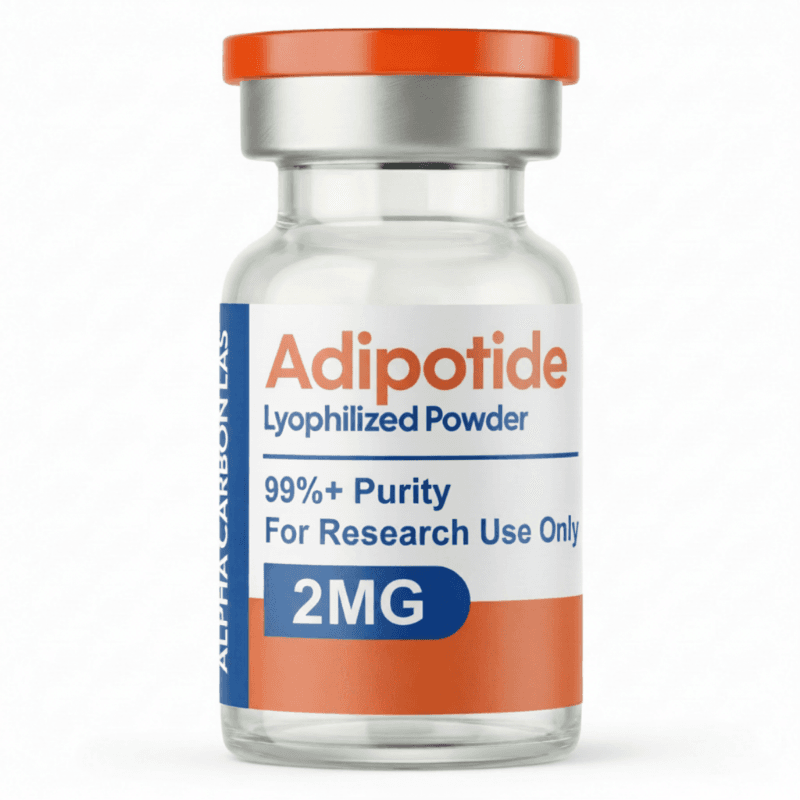
2MG
This product is for research purposes only. Not for human consumption.
Purity: >98% (HPLC verified)
Formulation: Lyophilized powder
Molecular Formula: C152H252N44O42
Molecular Weight: 3350.9 g/mol
CAS Number: N/A
PubChem CID: N/A
Adipotide
Overview
Adipotide, also known by its research designations FTPP (fat-targeting proapoptotic peptide) and prohibitin-targeting peptide 1, represents one of the most mechanistically radical and ultimately problematic approaches ever proposed for obesity treatment - attempting to induce selective destruction of the blood supply to adipose tissue through targeted vascular ablation.
Development and Design
Developed as an experimental peptidomimetic compound at the University of Texas MD Anderson Cancer Center and subsequently licensed for commercial development (though never reaching clinical trials), Adipotide was rationally designed with an ingenious but dangerous dual-function molecular architecture. The compound consists of two functional domains covalently linked together: an N-terminal homing/targeting domain engineered to selectively recognize and bind to specific molecular markers expressed on the surface of blood vessel endothelial cells that supply white adipose tissue, coupled to a C-terminal pro-apoptotic effector domain designed to trigger programmed cell death in any cell to which the compound gains entry.
Targeting Mechanism
The targeting specificity was based on prohibitin, a multifunctional protein that, while present in mitochondria throughout the body serving housekeeping cellular functions, exhibits aberrant cell-surface expression on vascular endothelial cells specifically in white adipose tissue and certain tumor blood vessels but not in most other normal tissues - this tissue-restricted surface expression pattern provided the theoretical basis for selective targeting.
Therapeutic Concept
The therapeutic concept was elegantly simple in principle but radical in execution: deliver a cell-death-inducing payload specifically to the endothelial cells lining blood vessels in fat tissue, cause these endothelial cells to undergo apoptosis, induce regression and collapse of adipose tissue vasculature, deprive fat cells (adipocytes) of their blood supply and the oxygen and nutrients it provides, cause ischemic injury and death of adipocytes starved of blood flow, trigger inflammatory clearance of dead adipocytes, and ultimately achieve reduction in total fat mass and body weight through physical elimination of adipose tissue.
This vascular ablation approach represents a fundamentally different paradigm from all conventional obesity treatments, which work through modulation of energy balance (reducing caloric intake through appetite suppression or malabsorption, or increasing energy expenditure through metabolic stimulation).
Research Findings and Safety Concerns
Proof-of-concept studies in obese rhesus monkeys demonstrated dramatic weight loss and fat reduction that generated tremendous excitement and media attention, with treated animals losing substantial body weight over weeks while reportedly maintaining normal feeding behavior and activity. The commercial potential of a drug that could "melt away" fat without requiring diet or exercise adherence sparked significant investor interest.
However, subsequent research revealed serious and ultimately insurmountable safety concerns that derailed clinical development and led to abandonment of the compound. The core problem was inadequate selectivity - prohibitin expression was not as exclusively limited to adipose vasculature as hoped, with expression also occurring in kidney vasculature and potentially other tissues, leading to off-target vascular damage particularly affecting renal function. Treated animals showed evidence of kidney injury including increased creatinine, proteinuria, and histological kidney damage consistent with renal ischemia from vascular injury.
The therapeutic window between weight loss efficacy and renal toxicity proved unacceptably narrow, with doses that produced desired fat reduction also causing kidney damage. Additional concerns included potential effects on other tissues, unpredictability of which fat depots would be affected, inability to control or reverse effects once dosed, and the fundamentally irreversible nature of destroying blood vessels and tissue.
While Adipotide generated valuable insights about adipose tissue biology and vascular targeting strategies, it stands as a cautionary tale illustrating how mechanistically novel and preclinically promising approaches can fail due to insufficient selectivity and safety margins. No human clinical trials were conducted, and development was discontinued in the early 2010s. The compound is not approved for any use and its safety profile makes it inappropriate for human application.
Mechanism of Action
Adipotide functions through a sophisticated two-component molecular architecture specifically engineered to achieve targeted vascular ablation in adipose tissue.
N-Terminal Targeting Domain
The N-terminal portion contains a modified peptide homing sequence (KGGRAKDC or variations thereof in different iterations) that functions as a targeting domain with binding affinity for prohibitin protein when it is expressed on cell surfaces. Prohibitin is normally a ubiquitous intracellular protein residing in mitochondria where it functions in mitochondrial biogenesis, cellular metabolism, and various regulatory processes.
However, research has shown that prohibitin can be aberrantly expressed on the cell surface of certain cell types, particularly vascular endothelial cells in white adipose tissue and tumor blood vessels, through mechanisms that are not fully understood but appear to involve altered protein trafficking and membrane insertion. This tissue-specific cell-surface prohibitin expression provides the molecular basis for Adipotide's intended targeting selectivity.
C-Terminal Pro-Apoptotic Domain
The C-terminal portion of Adipotide contains a pro-apoptotic effector domain with the sequence D(KLAKLAK)2, representing two repeats of the KLAKLAK motif flanked by D-amino acids for stability. This sequence is derived from the antimicrobial peptide class and functions as a mitochondrial poison - the positively charged, amphipathic structure allows it to insert into and disrupt mitochondrial membranes, particularly the inner mitochondrial membrane, causing membrane permeabilization, dissipation of mitochondrial membrane potential, release of cytochrome c from mitochondria into the cytoplasm, activation of the intrinsic apoptosis pathway through caspase cascade initiation, and ultimately execution of programmed cell death.
Critically, the pro-apoptotic domain is only effective once internalized into cells - it cannot penetrate cell membranes efficiently on its own. This provides a crucial safety feature in the design: only cells that express the surface target (prohibitin) and internalize the bound peptide should experience the cytotoxic effects.
Cellular Mechanism
When Adipotide encounters an endothelial cell expressing surface prohibitin, the homing domain binds to the prohibitin target, the entire peptide-protein complex is internalized into the cell through receptor-mediated endocytosis, and once inside the endosomal compartment and subsequently released into the cytoplasm, the pro-apoptotic domain gains access to mitochondria where it exerts its membrane-disrupting effects. The affected endothelial cell then undergoes apoptosis and dies.
As multiple endothelial cells along adipose tissue blood vessels die, the structural integrity of these vessels is compromised, leading to vascular regression, loss of functional blood flow, and ischemia in the downstream adipocytes supplied by those vessels. Adipocytes are highly metabolically active cells that absolutely require continuous blood supply - when deprived of oxygen and nutrients, they cannot maintain cellular functions and begin to die through combinations of hypoxic injury, metabolic failure, and necrosis.
Selectivity Failure
The mechanism's selectivity proved inadequate - prohibitin is also expressed on kidney vasculature endothelium, and Adipotide binding and uptake by renal vascular endothelial cells led to kidney blood vessel damage, glomerular injury, tubular ischemia, and progressive renal dysfunction. The kidney toxicity appeared to be mechanism-based rather than an off-target effect, meaning it resulted from the same prohibitin-targeting mechanism that was supposed to be selective for adipose tissue but wasn't sufficiently specific.
Research Findings
The research trajectory of Adipotide illustrates both the promise and perils of targeting adipose tissue vasculature for obesity treatment.
Early Rodent Studies
Early proof-of-concept studies in diet-induced obese mice demonstrated that Adipotide administration could produce significant reductions in body weight and fat mass, with some studies reporting 30% body weight reductions over several weeks of treatment. These dramatic effects in rodent models generated considerable excitement and led to studies in non-human primates, which are generally more predictive of human responses than rodent models.
Non-Human Primate Research
A landmark 2011 study published in Science Translational Medicine by Barnhart and colleagues examined Adipotide in obese rhesus monkeys, a gold-standard obesity model. The research showed that obese monkeys treated with daily subcutaneous injections of Adipotide experienced substantial weight loss - averaging approximately 11% body weight reduction over 4 weeks at the highest dose tested - accompanied by marked decreases in body mass index, improvements in insulin sensitivity measured by glucose tolerance testing, and reductions in markers of metabolic syndrome.
MRI imaging confirmed that the weight loss was predominantly from adipose tissue rather than lean mass. Histological analysis of adipose tissue from treated animals showed evidence of blood vessel regression, increased apoptosis markers in both endothelial cells and adipocytes, and inflammatory cell infiltration consistent with the proposed mechanism of action. These primate data appeared to validate the concept and support progression toward human trials.
Safety Concerns Emerge
However, the same studies also revealed concerning safety signals that would ultimately prove insurmountable. Even at doses that produced therapeutic weight loss effects, treated animals showed evidence of renal toxicity, including elevated serum creatinine levels indicating impaired kidney function, proteinuria suggesting damage to the glomerular filtration barrier, and histological evidence of injury to kidney blood vessels.
The renal effects were dose-dependent and appeared to result from prohibitin expression on kidney vasculature, causing unintended targeting of renal blood vessels by Adipotide. The therapeutic window - the ratio between effective doses for weight loss and doses causing kidney toxicity - was extremely narrow, with kidney effects observed at or near doses required for efficacy.
Program Discontinuation
Additional concerns emerged about potential effects on other organs where prohibitin might be expressed, including the liver and reproductive tissues. Limited human data from Phase 1 trials confirmed the compound could produce weight loss in humans but also showed evidence of renal effects similar to those seen in animals. The combination of narrow therapeutic index, organ toxicity, and the availability of safer alternative approaches to obesity treatment led pharmaceutical developers to abandon Adipotide.
Despite its failure as a therapeutic agent, Adipotide research provided important insights into adipose tissue biology, the role of angiogenesis in obesity, and the challenges of achieving adequate selectivity with targeted peptide therapeutics. The compound remains a valuable research tool for studying adipose tissue vascularization and the consequences of blood vessel regression in fat tissue, but it is definitively not suitable for clinical use.
Research Applications
- Obesity research (historical/terminated)
- Adipose tissue vascular biology studies
- Angiogenesis and blood vessel targeting research
- Prohibitin receptor biology research
- Targeted apoptosis induction studies
- Weight loss mechanism studies
- Peptide-based homing domain research
- Vascular targeting specificity research
- Metabolic syndrome research models
- Adipocyte death pathway studies
- Off-target toxicity research
- Therapeutic index optimization studies
Safety Profile
Adipotide has an extremely unfavorable safety profile that led to the complete abandonment of its clinical development, and it serves as an important cautionary example in peptide therapeutics. The primary safety concern is dose-limiting renal toxicity that occurs at or near doses required for therapeutic efficacy, creating an unacceptably narrow therapeutic window. In preclinical studies in obese rhesus monkeys, treatment with Adipotide at doses that produced meaningful weight loss caused measurable kidney damage, evidenced by elevated serum creatinine (indicating reduced glomerular filtration), proteinuria (protein in urine suggesting damage to the kidney filtration barrier), and histological findings of vascular injury in kidney tissues. The renal toxicity appears to result from unintended targeting of kidney blood vessels where prohibitin is also expressed on endothelial cells, leading to vascular damage and impaired kidney function. The narrow therapeutic index means that doses low enough to avoid kidney damage are insufficient to produce significant weight loss, while doses high enough to cause fat loss invariably cause renal effects. In the limited human exposure that occurred during early clinical trials, similar patterns of kidney-related adverse events were observed, confirming that the renal toxicity seen in animals translated to humans. Additional safety concerns include the potential for off-target effects in other tissues where prohibitin may be expressed, including liver, reproductive organs, and potentially other vascular beds. The mechanism of action - inducing blood vessel death - is inherently risky as precise targeting is difficult to achieve and unintended vascular disruption in vital organs could be catastrophic. There are also concerns about inflammatory responses triggered by adipocyte death, which could potentially cause systemic inflammation and metabolic complications. The long-term consequences of deliberately destroying adipose tissue vasculature are unknown but potentially include impaired wound healing, altered adipose tissue function, and metabolic dysregulation. Due to these serious safety issues, Adipotide development has been completely abandoned by pharmaceutical companies, and the compound is definitively not appropriate for therapeutic use in humans. Even for research purposes, Adipotide should only be used with extreme caution and appropriate ethical oversight, as it represents a compound with known serious toxicities. The Adipotide story emphasizes the critical importance of achieving adequate selectivity and therapeutic windows in targeted therapeutics, and the need for thorough safety assessment before advancing novel mechanisms into human testing.
Scientific References
Research Use Only
This product is intended for research purposes only and is not for human consumption, therapeutic use, or diagnostic applications. Please ensure compliance with all applicable regulations and institutional guidelines.