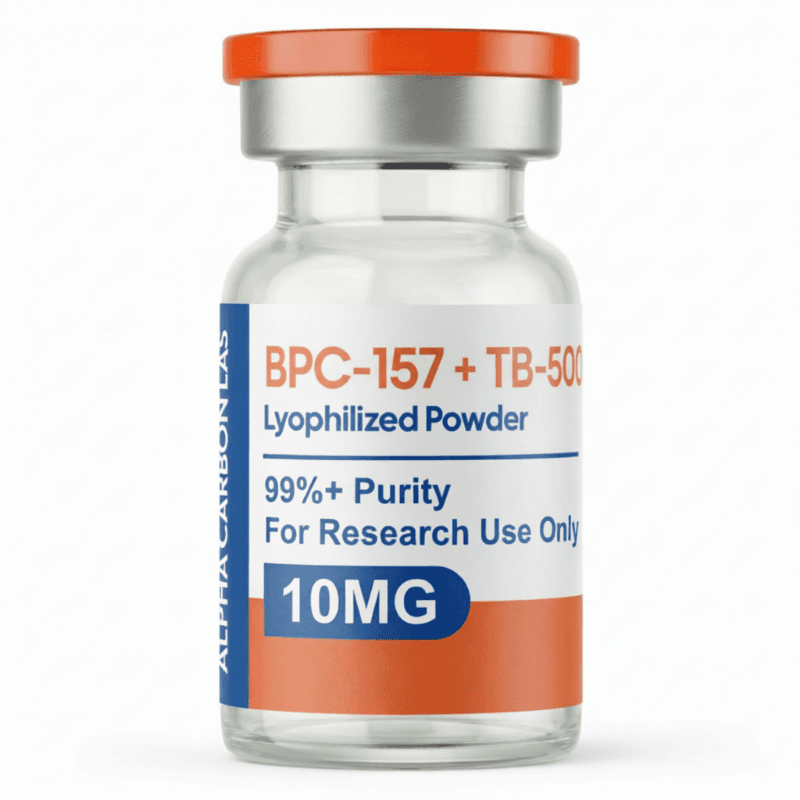
10mg (5mg/5mg)
This product is for research purposes only. Not for human consumption.
Purity: >99% (HPLC verified)
Formulation: Lyophilized powder blend
Molecular Formula: C62H98N16O22 + C212H350N56O78S
Molecular Weight: 1419.5 + 4963 g/mol
CAS Number: 137525-51-0 / 77591-33-4
PubChem CID: 9941957 / 16132341
BPC-157 + TB-500 Blend
Overview
The BPC-157 + TB-500 Blend combines two of the most extensively researched regenerative peptides into a single synergistic formulation. BPC-157 (Body Protection Compound-157) is a 15-amino acid gastric pentadecapeptide known for its remarkable tissue healing and protective properties, while TB-500 (Thymosin Beta-4) is a 43-amino acid peptide that plays fundamental roles in cell migration, tissue remodeling, and wound repair.
This combination leverages the complementary mechanisms of both peptides to potentially enhance regenerative outcomes. BPC-157's strength in promoting angiogenesis and modulating nitric oxide pathways pairs with TB-500's actin-regulatory functions that facilitate cellular movement and tissue reorganization. Researchers have noted that the two peptides appear to work through distinct but synergistic pathways.
The blend is particularly attractive for research applications where comprehensive tissue repair is being studied, as it addresses multiple aspects of the healing cascade simultaneously - from initial inflammation modulation through vascularization to final tissue remodeling.
Mechanism of Action
The BPC-157 + TB-500 blend operates through complementary molecular mechanisms that together address multiple phases of tissue repair and regeneration.
BPC-157 Mechanisms
BPC-157 exerts its effects through upregulation of vascular endothelial growth factor (VEGF), promoting angiogenesis and new blood vessel formation. It modulates the nitric oxide (NO) system, maintaining optimal vascular function and tissue perfusion. The peptide enhances growth factor expression including fibroblast growth factor (FGF) and epidermal growth factor (EGF), while simultaneously reducing pro-inflammatory cytokines like TNF-α and IL-6.
TB-500 Mechanisms
TB-500 functions primarily through its interaction with G-actin, sequestering monomeric actin to regulate cytoskeletal dynamics and cellular migration. This enables enhanced cell motility critical for wound healing. The peptide activates survival pathways including Akt signaling, promotes stem cell recruitment and differentiation, and upregulates matrix metalloproteinases (MMPs) for tissue remodeling.
Synergistic Effects
Together, these peptides provide: enhanced angiogenesis through both VEGF upregulation and endothelial cell migration; comprehensive inflammation modulation via cytokine regulation and NF-κB pathway effects; improved cellular migration combining actin regulation with growth factor stimulation; and accelerated matrix remodeling through coordinated MMP activity and collagen deposition.
Research Findings
While individual research on BPC-157 and TB-500 spans decades with extensive publication records, research specifically examining their combined effects is more limited but growing. The rationale for combination use draws from the substantial body of evidence supporting each component.
BPC-157 Research Foundation
Studies by Sikiric and colleagues have demonstrated BPC-157's efficacy across multiple tissue types including tendons, muscles, ligaments, gastrointestinal mucosa, and nervous tissue. Research published in the Journal of Applied Physiology showed enhanced tendon healing with improved biomechanical properties. The peptide has demonstrated cytoprotective effects against NSAIDs, alcohol, and various toxic agents in gastrointestinal studies.
TB-500 Research Foundation
Landmark research published in Nature by Bock-Marquette et al. demonstrated Thymosin Beta-4's ability to promote cardiac cell migration, survival, and repair. Studies have shown TB-500 accelerates wound closure, promotes angiogenesis in ischemic tissue, and supports neural regeneration. Research in corneal healing has led to clinical development of Thymosin Beta-4 formulations.
Combined Application Rationale
The theoretical basis for combination use rests on the complementary mechanisms: BPC-157's strength in promoting vascularization and anti-inflammatory effects combines with TB-500's cellular migration and tissue remodeling capabilities. Anecdotal reports from research settings suggest enhanced outcomes compared to single-agent use, though controlled comparative studies remain limited. The blend approach is particularly investigated in musculoskeletal injury models where multiple healing phases must be optimized.
Research Applications
- Comprehensive tissue repair and regeneration research
- Musculoskeletal injury healing studies
- Tendon and ligament repair research
- Muscle injury recovery studies
- Wound healing and tissue remodeling research
- Angiogenesis and vascularization studies
- Post-surgical healing research
- Inflammation modulation studies
- Sports medicine and athletic injury research
- Connective tissue repair studies
Safety Profile
The safety profile of the BPC-157 + TB-500 blend draws from the individual safety data of each component. Both peptides have demonstrated favorable tolerability in preclinical research. BPC-157 has shown no significant toxicity even at doses far exceeding therapeutic ranges across numerous animal studies. TB-500 has been well-tolerated in various research applications, with its endogenous nature (as Thymosin Beta-4) suggesting compatibility with normal physiology. However, comprehensive human safety data for the combination remains limited. No large-scale clinical trials have been completed examining the blend's safety profile in humans. Theoretical concerns regarding TB-500's effects on cell migration and potential implications for existing malignancies apply to the combination as well. As with all research peptides, this blend is not approved for therapeutic use and should be used only in appropriate research contexts with proper oversight.
Scientific References
Research Use Only
This product is intended for research purposes only and is not for human consumption, therapeutic use, or diagnostic applications. Please ensure compliance with all applicable regulations and institutional guidelines.