
2MG
This product is for research purposes only. Not for human consumption.
Purity: >98% (HPLC verified)
Formulation: Lyophilized powder
Molecular Formula: C165H271N47O46
Molecular Weight: 3647.3 g/mol
CAS Number: 863288-34-0
PubChem CID: N/A
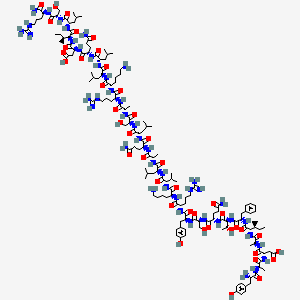
CJC-1295
Overview
CJC-1295 no DAC is a synthetic tetrasubstituted 29-amino acid peptide analog of growth hormone-releasing hormone (GHRH) that has been engineered with specific modifications to dramatically extend its biological half-life and duration of action compared to native GHRH.
Natural GHRH is a 44-amino acid peptide produced by neurons in the arcuate nucleus of the hypothalamus that stimulates growth hormone (GH) secretion from somatotroph cells in the anterior pituitary gland. However, native GHRH has an extremely short plasma half-life of only 6-7 minutes due to rapid enzymatic degradation by dipeptidyl peptidase-4 (DPP-4) and other proteases.
Molecular Modifications
CJC-1295 overcomes these pharmacokinetic limitations through four strategic molecular modifications: four amino acid substitutions at positions 2, 8, 15, and 27 of the GRF(1-29) sequence that enhance resistance to proteolytic degradation; and most importantly, the attachment of a drug affinity complex (DAC) consisting of maleimidoproprionic acid (MPA) linked to the peptide through a lysine residue.
This DAC moiety enables CJC-1295 to bind reversibly to serum albumin in the bloodstream, creating an albumin-bound reservoir of peptide that slowly releases active drug over time, dramatically extending the elimination half-life to approximately 6-8 days and allowing for once-weekly or twice-weekly dosing regimens.
Physiological Advantages
By stimulating pulsatile GH release in a more physiological pattern compared to exogenous GH administration, CJC-1295 offers several potential advantages: maintenance of normal feedback regulation; preserved pulsatility which may be important for optimal GH action; stimulation of endogenous GH production rather than suppressing it; and concurrent increases in other pituitary hormones that are co-secreted with GH.
The peptide has been investigated for growth hormone deficiency, age-related GH decline, muscle wasting conditions, metabolic disorders, and other applications where sustained elevation of GH and IGF-1 levels might provide therapeutic benefits.
Mechanism of Action
CJC-1295 exerts its biological effects by binding to and activating the growth hormone-releasing hormone receptor (GHRHR), a G-protein coupled receptor expressed on somatotroph cells in the anterior pituitary gland.
Intracellular Signaling
When CJC-1295 binds to GHRHR, it triggers conformational changes that activate Gs proteins, which stimulate adenylyl cyclase to produce cyclic AMP (cAMP) as an intracellular second messenger. Elevated cAMP activates protein kinase A (PKA), which phosphorylates transcription factors including cAMP response element-binding protein (CREB) that regulate growth hormone gene expression and secretion.
Importantly, CJC-1295 maintains the pulsatile pattern of GH secretion rather than producing continuous non-physiological elevation, as its stimulation of GH release is subject to normal hypothalamic and pituitary regulatory mechanisms including somatostatin tone and negative feedback from elevated GH and IGF-1 levels.
Downstream Effects
The released growth hormone then circulates to peripheral tissues where it exerts direct effects through binding to growth hormone receptors (GHR), and importantly stimulates the production of insulin-like growth factor 1 (IGF-1), particularly in the liver but also in many other tissues. IGF-1 is the primary mediator of GH's growth-promoting and anabolic effects.
GH and IGF-1 then mediate numerous metabolic and tissue-specific effects: in skeletal muscle, they promote protein synthesis and muscle fiber hypertrophy; in adipose tissue, they stimulate lipolysis and inhibit lipogenesis; in bone, they promote bone formation and may increase bone mineral density; and systemically, they influence multiple aspects of metabolism, recovery, and tissue repair.
DAC Technology
The DAC modification that gives CJC-1295 its extended half-life works through reversible non-covalent binding to serum albumin. By binding to albumin, CJC-1295 is protected from proteolytic degradation and renal filtration, slowly dissociating from albumin to maintain free peptide levels that can activate GHRHR.
Research Findings
The research foundation for CJC-1295 includes preclinical animal studies, clinical pharmacology investigations, and some clinical trials, though the compound has not progressed to late-stage development for regulatory approval.
Preclinical Studies
Early preclinical studies in rodents and other animal models established that CJC-1295 could produce sustained elevations in growth hormone and IGF-1 levels lasting days after a single injection, in contrast to the brief elevations seen with native GHRH. These animal studies showed dose-dependent increases in GH pulsatile secretion, elevated mean GH levels, and resulting physiological effects including enhanced growth rates, increased lean body mass, and reduced adiposity.
Phase I Clinical Trials
Phase I clinical trials in healthy human volunteers, most notably the study published by Teichman et al. in the Journal of Clinical Endocrinology & Metabolism in 2006, provided critical proof-of-concept for CJC-1295's ability to safely stimulate GH and IGF-1 secretion in humans with extended duration of action.
The results demonstrated that CJC-1295 produced dose-dependent increases in mean plasma GH concentrations and GH secretion pulse amplitude that persisted for up to 6 days or more after a single injection. Serum IGF-1 levels showed sustained dose-dependent elevations that persisted for 9-11 days, with peak increases of 1.5 to 3-fold above baseline.
Combination Therapy Research
Research has also explored combinations of CJC-1295 with GHRP-6, GHRP-2, ipamorelin, or other growth hormone secretagogues that work through the ghrelin/GHS-R receptor pathway. Studies in both animals and humans have shown that combining CJC-1295 with GHRPs produces greater GH and IGF-1 elevations than either class alone, though such combinations remain experimental.
Phase II Trials
A subsequent Phase II trial examined CJC-1295 in patients with HIV-associated lipodystrophy, demonstrating that CJC-1295 could produce favorable changes in body composition including reductions in visceral adipose tissue. Limitations of existing research include relatively small sample sizes and limited long-term safety data.
Research Applications
- Growth hormone secretion and regulation research
- Age-related growth hormone decline studies
- Muscle wasting and sarcopenia research
- Body composition and metabolic health studies
- Bone density and osteoporosis research
- IGF-1 pathway research
- Pulsatile hormone secretion studies
- GHRH receptor biology research
- Lipodystrophy and fat distribution research
- Recovery from injury or surgery studies
- Athletic performance and exercise adaptation research
- Anti-aging and longevity research
- Protein synthesis and muscle hypertrophy studies
Safety Profile
CJC-1295 has demonstrated generally favorable tolerability in the limited clinical trials conducted to date, though comprehensive long-term safety data in humans remains limited given that large-scale Phase III trials have not been performed and the compound is not approved for therapeutic use by regulatory agencies. In the Phase I and Phase II trials that have been published, adverse events were predominantly mild to moderate and transient. The most commonly reported side effects included injection site reactions such as erythema (redness), pain, swelling, or induration at the subcutaneous injection sites - these local reactions were generally self-limited and resolved within days. Some participants experienced flu-like symptoms including fatigue, headache, or malaise, particularly after initial doses, potentially reflecting the acute effects of elevated GH levels on immune and inflammatory pathways. Vasodilation with facial flushing was occasionally reported. Concerns about glucose metabolism effects were not substantiated in clinical trials - despite GH's known acute insulin-antagonistic properties, CJC-1295 did not produce clinically significant hyperglycemia or impaired glucose tolerance in healthy subjects or patients studied, likely because the gradual and pulsatile nature of GH elevation differs from acute GH boluses that can cause transient insulin resistance. However, theoretical concerns remain about long-term effects on glucose homeostasis with chronic use, particularly in individuals predisposed to diabetes. Water retention and peripheral edema, common side effects of recombinant GH therapy, were not prominently reported in CJC-1295 trials but could potentially occur with higher doses or longer-term use. Joint discomfort or arthralgias, another common GH-related effect, were similarly not emphasized in published reports but warrant monitoring. Importantly, because CJC-1295 stimulates endogenous GH production rather than providing exogenous GH, it theoretically should be subject to normal feedback regulation and might produce fewer side effects than supraphysiological GH administration - however, this theoretical advantage requires more extensive study to validate. Concerns about potential long-term risks associated with chronically elevated GH and IGF-1 levels include possible effects on cancer risk, as IGF-1 can promote cell proliferation and has been associated with increased risk of certain cancers in epidemiological studies, though causal relationships remain debated; acromegaly-like effects if GH/IGF-1 elevation becomes excessive over years; cardiovascular effects including potential effects on cardiac structure and function; and metabolic disturbances. No signals of these serious long-term effects emerged in the relatively short clinical trials conducted, but definitive long-term safety would require much more extensive study. The formation of antibodies against the peptide or the DAC modification is a theoretical concern with any synthetic peptide therapeutic; while no significant immunogenicity was reported in trials, long-term immunological effects require further evaluation. CJC-1295 is contraindicated in individuals with active malignancies given IGF-1's growth-promoting effects, and caution is warranted in those with history of cancer. Use in children and adolescents would require special consideration given potential effects on growth plate closure and development. Pregnancy and lactation safety has not been established. Quality and purity concerns arise because CJC-1295 is primarily available through research chemical suppliers rather than regulated pharmaceutical manufacturers, with variable quality control and potential for contamination or mislabeling. Users should be aware that most CJC-1295 available outside clinical trials is not subject to pharmaceutical manufacturing standards. As with any research compound being used outside approved indications, appropriate medical supervision, monitoring of GH and IGF-1 levels, assessment of glucose homeostasis and other metabolic parameters, and long-term surveillance for adverse effects would be prudent, though such monitoring is often not conducted in real-world research or experimental use contexts.
Scientific References
Research Use Only
This product is intended for research purposes only and is not for human consumption, therapeutic use, or diagnostic applications. Please ensure compliance with all applicable regulations and institutional guidelines.