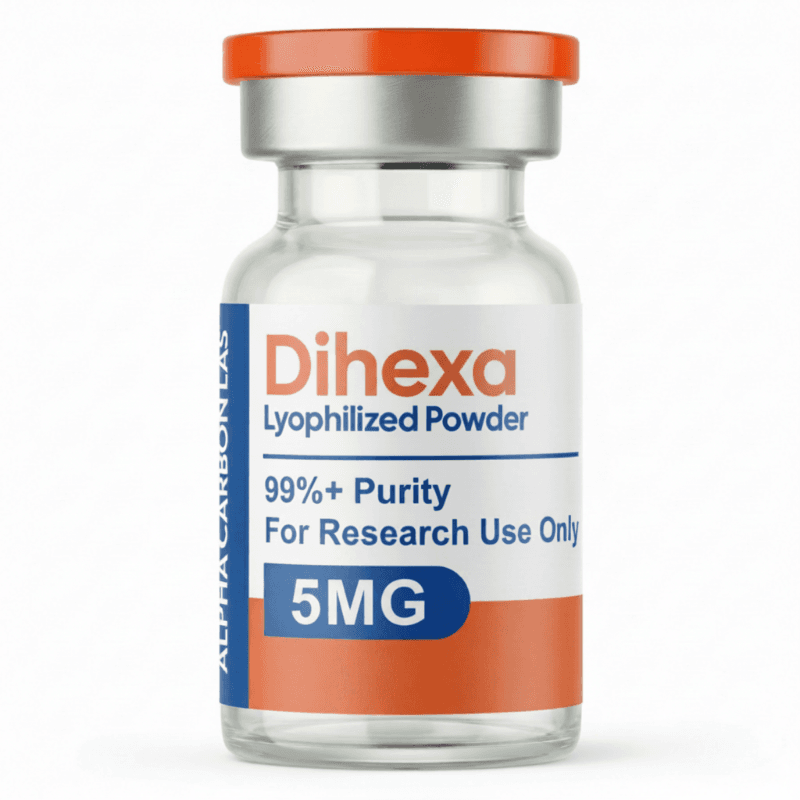
5mg
This product is for research purposes only. Not for human consumption.
Purity: >98% (HPLC verified)
Formulation: Lyophilized powder
Molecular Formula: C27H44N4O5
Molecular Weight: 504.66 g/mol
CAS Number: 1401708-83-5
PubChem CID: 71752305
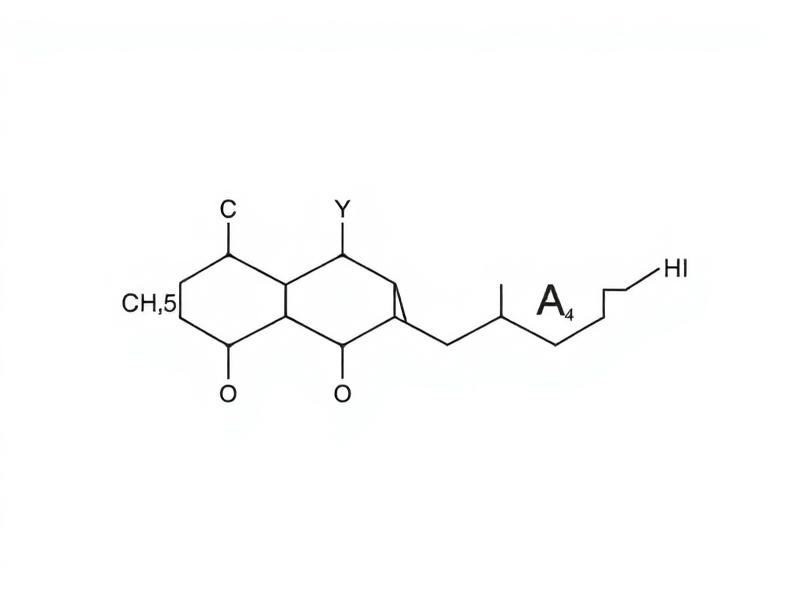
Dihexa
Overview
Dihexa, also known by its chemical designation N-hexanoic-Tyr-Ile-(6) aminohexanoic amide, is a small-molecule peptidomimetic compound that represents one of the most potent cognitive enhancers ever characterized in preclinical research. Developed at Washington State University by researchers led by Dr. Joseph Harding, Dihexa was specifically designed as an orally active, blood-brain barrier penetrant drug to enhance cognitive function and promote neuroplasticity through a novel mechanism: potentiation of hepatocyte growth factor (HGF) and its receptor c-Met signaling in the brain.
Extraordinary Potency
Dihexa demonstrates cognitive-enhancing potency approximately seven orders of magnitude (10 million times) greater than Brain-Derived Neurotrophic Factor (BDNF), the gold-standard neuroplasticity factor, in in vitro assays. This extraordinary potency, combined with oral bioavailability and CNS penetration, positions Dihexa as a uniquely promising therapeutic candidate for cognitive impairment and neurodegenerative diseases.
Mechanism of Action
The compound functions by binding to and activating the HGF/c-Met signaling pathway in neurons. HGF (hepatocyte growth factor, also known as scatter factor) is a potent growth factor that, despite its name, has critical functions in the nervous system including promoting neuronal survival, stimulating synapse formation, enhancing synaptic plasticity, and supporting neurogenesis. The c-Met receptor is expressed on neurons and when activated by HGF (or Dihexa), it triggers intracellular signaling cascades that promote dendritic spine formation, enhance synaptic connectivity, support neuronal health, and facilitate learning and memory processes.
Mechanism of Action
Dihexa exerts its cognitive-enhancing and neuroprotective effects through selective activation of the HGF/c-Met signaling system in the central nervous system. The c-Met receptor is a receptor tyrosine kinase that, upon ligand binding, undergoes dimerization and autophosphorylation, initiating multiple downstream signaling pathways including the PI3K/Akt pathway (critical for cell survival and growth), the MAPK/ERK pathway (important for gene expression and synaptic plasticity), and the STAT pathway (involved in transcriptional regulation).
Synaptogenesis and Neuroplasticity
When Dihexa activates c-Met receptors on neurons, these signaling cascades promote the formation of new dendritic spines (the tiny protrusions on dendrites where synapses form), enhance the complexity and connectivity of dendritic arbors, strengthen existing synapses through structural and functional modifications, and support the molecular machinery required for long-term potentiation (LTP) - the cellular basis of learning and memory. This synaptogenic effect is remarkably potent, with studies showing that Dihexa treatment can rapidly induce new spine formation and enhance synaptic density in brain regions critical for cognition including the hippocampus and cortex.
Neuroprotection and Neurogenesis
Beyond promoting synapse formation, HGF/c-Met signaling activated by Dihexa supports neuronal survival by activating anti-apoptotic pathways, protecting neurons from various toxic insults including oxidative stress, excitotoxicity, and metabolic stress. The pathway also enhances neurogenesis in the hippocampus (where adult neurogenesis continues throughout life and contributes to learning, memory, and mood regulation), promoting proliferation of neural progenitor cells, supporting their differentiation into functional neurons, and facilitating integration of new neurons into existing circuits.
Blood-Brain Barrier Penetration
A critical advantage of Dihexa is its small molecular size, lipophilicity, and chemical design that enable it to cross the blood-brain barrier effectively after oral administration. This contrasts with larger peptides and proteins including HGF itself, BDNF, and most other neurotrophic factors which do not cross the blood-brain barrier and thus cannot be administered systemically for CNS effects. Dihexa's CNS penetration allows it to access brain tissue and exert direct effects on neurons, making it viable as an orally available cognitive enhancer and potential therapeutic for neurodegenerative diseases.
Research Findings
The research foundation for Dihexa, while less extensive than decades-old peptides, includes compelling preclinical studies demonstrating extraordinary cognitive enhancement and potential therapeutic utility in neurological disease models.
Alzheimer's Disease Models
The foundational work from Dr. Harding's laboratory at Washington State University, published in high-impact journals including the Journal of Pharmacology and Experimental Therapeutics, demonstrated that Dihexa treatment in rodent models of Alzheimer's disease produced dramatic cognitive improvements. In the scopolamine-induced amnesia model (which mimics aspects of Alzheimer's-related cognitive impairment), Dihexa-treated animals showed complete reversal of memory deficits at doses as low as 0.17 μg/kg - an extraordinarily low dose demonstrating the compound's remarkable potency.
Studies in transgenic Alzheimer's mouse models showed that Dihexa administration improved spatial learning and memory in Morris water maze tasks, enhanced recognition memory, reversed cognitive deficits associated with amyloid pathology, and promoted structural synaptic changes in hippocampus and cortex including increased dendritic spine density and enhanced synaptic protein expression.
Cognitive Enhancement in Healthy Animals
Research in cognitively normal rodents demonstrated that Dihexa enhanced learning and memory beyond baseline levels, suggesting true cognitive enhancement rather than merely disease reversal. Animals treated with Dihexa showed faster acquisition in learning tasks, better memory retention, enhanced cognitive flexibility, and improved performance on complex behavioral tests requiring spatial navigation, working memory, and pattern recognition.
Synaptogenic Effects
Mechanistic studies using neuronal cell cultures and brain tissue analysis have confirmed Dihexa's synaptogenic properties. In vitro studies showed that Dihexa treatment rapidly induced dendritic spine formation, increased expression of synaptic markers including PSD-95 and synaptophysin, enhanced synaptic protein synthesis, and promoted neurite outgrowth. These structural changes correlate with functional improvements in synaptic transmission and plasticity measured electrophysiologically.
Structure-Activity Relationship Studies
Chemical optimization studies have explored Dihexa analogs with varying modifications to improve potency, pharmacokinetics, or other properties. This medicinal chemistry work has helped delineate the structural features critical for HGF/c-Met activation and blood-brain barrier penetration, potentially enabling development of improved second-generation compounds.
Current Status and Limitations
While preclinical research is compelling, it's important to note that Dihexa has not yet completed Phase III clinical trials in humans for any indication. Some early-phase human clinical exploration was undertaken by pharmaceutical development companies, but comprehensive efficacy and safety data in human cognitive disorders remain limited. The compound is available through research chemical suppliers for preclinical investigation but is not approved for therapeutic use.
Research Applications
- Cognitive enhancement and nootropic research
- Alzheimer's disease and dementia research
- Synaptic plasticity and synaptogenesis studies
- Neuroplasticity and learning mechanisms research
- Neuroprotection and neuronal survival studies
- Hippocampal neurogenesis research
- Age-related cognitive decline research
- Traumatic brain injury recovery studies
- HGF/c-Met signaling pathway research
- Memory formation and consolidation studies
- Dendritic spine dynamics research
- Neurodegenerative disease therapeutics development
- Blood-brain barrier penetration research
- Small molecule neurotrophic factor research
- Cognitive function optimization studies
- Spatial learning and navigation research
Safety Profile
Safety data for Dihexa in humans is limited compared to extensively studied compounds, as comprehensive Phase III clinical trials have not been completed. Preclinical animal toxicity studies conducted as part of drug development showed no major toxic effects at therapeutic doses, with good tolerability in rodent studies at doses producing cognitive benefits. Acute toxicity studies did not reveal concerning toxic effects at moderate dose ranges, though extremely high doses (far exceeding therapeutic doses) did produce adverse effects as would be expected for most compounds. Subchronic toxicity studies over weeks to months in rodents showed no significant organ toxicity, pathological changes, or concerning blood chemistry alterations at therapeutic dose ranges. However, as with any potent neuroactive compound, theoretical concerns exist regarding chronic use effects on neuroplasticity, potential for overstimulation of growth factor pathways, unknown long-term effects on brain structure and function, and individual variability in response and tolerance. The compound's mechanism of promoting synapse formation and neuroplasticity, while beneficial for cognition and potentially therapeutic for neurodegenerative disease, could theoretically have complex long-term effects that are difficult to predict without extensive human data. Limited anecdotal reports from non-clinical use suggest that side effects at commonly used doses are generally mild and may include headaches, vivid dreams or altered sleep patterns, mild stimulation or anxiety in some individuals, and occasionally emotional or mood changes. These effects appear dose-dependent and individual-specific, with most users reporting good tolerability. However, the absence of rigorous human safety data means potential risks remain poorly characterized. Specific safety considerations include: unknown effects in individuals with seizure disorders or other neurological conditions; potential interactions with other neuroactive substances or medications; safety in pregnancy and lactation is completely unknown; effects in children or adolescents whose brains are still developing have not been studied; and long-term effects of chronic use (years to decades) cannot be assessed from available data. Product quality and authenticity is a significant consideration, as Dihexa available through research chemical suppliers may vary in purity, actual content, and presence of contaminants - analytical verification through third-party testing is essential but often not performed by users. Given these limitations, individuals considering Dihexa should be aware they are essentially conducting self-experimentation with a research compound that, while showing promise in animal studies, lacks the comprehensive human safety validation of approved medications. Conservative dosing, informed decision-making, ideally medical consultation, and monitoring for adverse effects are critical. The compound should be approached as a research chemical with potential but unproven benefits and uncertain risks in humans, rather than as a validated therapeutic with established safety.
Scientific References
Research Use Only
This product is intended for research purposes only and is not for human consumption, therapeutic use, or diagnostic applications. Please ensure compliance with all applicable regulations and institutional guidelines.