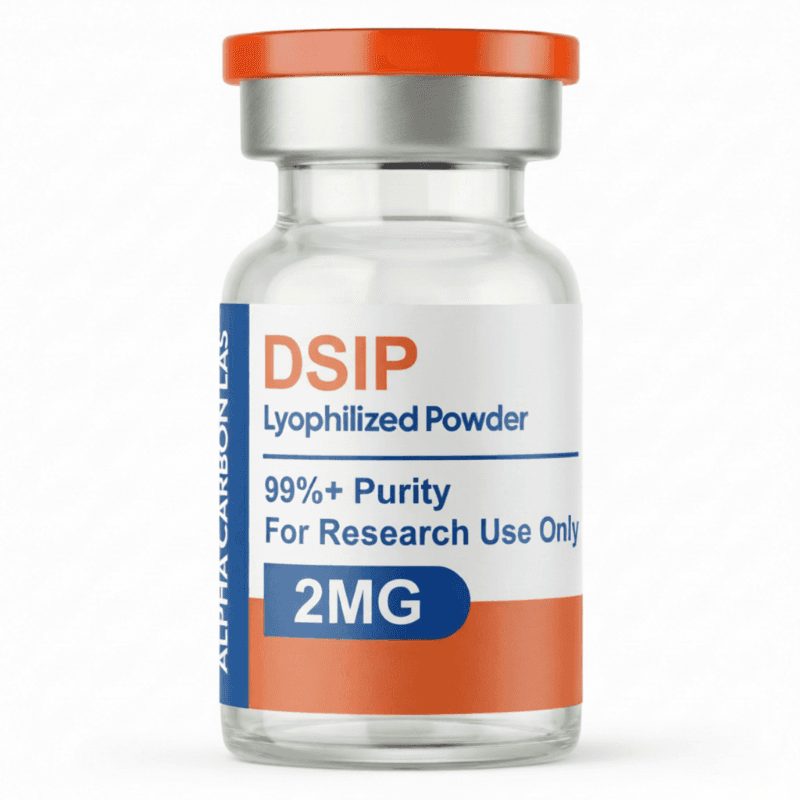
2MG
This product is for research purposes only. Not for human consumption.
Purity: >98% (HPLC verified)
Formulation: Lyophilized powder
Molecular Formula: C35H48N10O15
Molecular Weight: 848.81 g/mol
CAS Number: 62568-57-4
PubChem CID: N/A
DSIP
Overview
Delta Sleep-Inducing Peptide (DSIP) is a naturally occurring nonapeptide with the sequence Trp-Ala-Gly-Gly-Asp-Ala-Ser-Gly-Glu that was first isolated in 1977 by Swiss researchers from the cerebral venous blood of rabbits during induced sleep states. The peptide earned its name from initial observations that its injection could induce slow-wave sleep (delta sleep) in animals, leading to extensive investigation of its potential as a sleep-promoting agent and its broader physiological roles. Despite decades of research, DSIP remains somewhat enigmatic - it has been studied for diverse effects including sleep regulation, stress adaptation, pain modulation, neuroendocrine function, and even potential antitumor properties, yet its precise mechanisms, endogenous functions, and therapeutic potential continue to be subjects of scientific debate and investigation. The peptide is unique among neuropeptides in several respects: it does not conform to typical neuropeptide structural motifs, its distribution in the brain and periphery differs from classical sleep-promoting substances, and it appears to exert effects through multiple pathways rather than through a single characterized receptor system. Endogenous DSIP has been detected in various brain regions, plasma, and peripheral tissues, though its concentrations are very low and its physiological fluctuations are not well-characterized. Early clinical studies in humans explored DSIP administration for insomnia, stress-related disorders, chronic pain, and alcohol withdrawal, with mixed but sometimes promising results. More recent interest has focused on its potential neuroprotective, stress-adaptive, and metabolic effects. DSIP represents an interesting case study in peptide research - a substance with clear biological activity and intriguing properties that has nonetheless proven difficult to fully characterize and has not achieved mainstream therapeutic development despite decades of investigation. It remains available through research peptide channels and continues to be used experimentally, though it lacks regulatory approval for medical use in most jurisdictions.
Mechanism of Action
The mechanism of action of DSIP remains incompletely understood despite extensive research, reflecting the complexity of its effects and the likelihood that it acts through multiple pathways rather than through a single well-defined receptor-mediated mechanism. Unlike many neuropeptides that exert their effects primarily through binding to specific G-protein coupled receptors with well-characterized intracellular signaling cascades, DSIP appears to influence physiological processes through several complementary mechanisms. One proposed mechanism involves modulation of neurotransmitter systems in the brain, particularly GABAergic, opioidergic, serotonergic, and dopaminergic pathways that are known to regulate sleep, arousal, mood, and stress responses. DSIP has been shown in various studies to interact with these neurotransmitter systems, though whether this represents direct receptor binding, allosteric modulation, or indirect effects on neurotransmitter synthesis, release, or metabolism remains unclear. Some research suggests DSIP may enhance GABAergic inhibitory neurotransmission, which would be consistent with its sleep-promoting and anxiolytic properties, as GABA is the principal inhibitory neurotransmitter in the central nervous system and many sleep medications work by enhancing GABAergic function. Studies have also indicated interactions with opioid pathways - DSIP administration has been shown to modulate pain perception and has effects that can be partially blocked by opioid antagonists in some paradigms, suggesting opioidergic involvement in at least some of its actions. Another mechanism involves effects on neuroendocrine function and the hypothalamic-pituitary-adrenal (HPA) axis, which regulates stress responses. Research has demonstrated that DSIP can modulate stress hormone secretion, including effects on cortisol/corticosterone levels, ACTH release, and potentially the stress-responsive release of other hormones. Some studies suggest DSIP may help normalize dysregulated stress responses, potentially explaining observations of stress-protective or adaptogenic effects. Effects on circadian rhythms and the sleep-wake regulatory system represent another important aspect of DSIP mechanism. While DSIP does not simply act as a sedative or hypnotic like traditional sleep medications, it appears to influence sleep architecture - particularly the proportion and quality of slow-wave sleep (deep sleep characterized by delta frequency EEG activity) that is crucial for physical restoration, memory consolidation, and metabolic regulation. The mechanism by which DSIP influences sleep architecture may involve effects on hypothalamic sleep regulatory centers, interactions with circadian clock mechanisms, or modulation of homeostatic sleep drive. Some research suggests DSIP may influence melatonin regulation or interact with the pineal gland, though findings are inconsistent. At a more fundamental level, DSIP has been shown to influence calcium flux in neurons, modulate nitric oxide signaling, affect oxidative stress and free radical generation, and potentially influence membrane properties of neurons. These biophysical and biochemical effects could contribute to its diverse physiological actions. The peptide also appears to have some direct effects on peripheral tissues beyond the central nervous system, including potential metabolic effects, cardiovascular influences, and immunomodulatory properties. Importantly, DSIP exhibits significant inter-individual variability in effects, which may reflect genetic differences in metabolism, receptor expression, or endogenous regulatory systems. The lack of a well-defined primary receptor for DSIP has hampered mechanistic research - if such a receptor exists, it has not been convincingly identified and cloned, leading some researchers to propose that DSIP may work through non-receptor-mediated mechanisms or through promiscuous interactions with multiple receptor systems.
Research Findings
The research history of DSIP spans over four decades, beginning with its discovery and initial characterization in the late 1970s and continuing through various waves of scientific and clinical investigation. The foundational studies by Monnier, Schoenenberger, and colleagues who first isolated DSIP from rabbit brain venous blood during electrically-induced sleep demonstrated that intravenous or intraventricular administration of DSIP to rabbits and rats could induce behavioral and EEG changes consistent with sleep, particularly increases in slow-wave sleep. These observations generated significant excitement and led to nomenclature emphasizing its sleep-inducing properties. However, subsequent research revealed a more complex picture - while DSIP did not produce immediate sedation like traditional hypnotics, it appeared to normalize or regulate sleep architecture over time, with effects that varied depending on the baseline sleep state, timing of administration, dose, and route. Studies in the 1980s and early 1990s explored DSIP in various sleep disorders. Clinical trials in patients with chronic insomnia showed mixed results, with some studies reporting improvements in sleep quality, reduced sleep latency, and better sleep maintenance, while others found minimal effects or inconsistent responses. A pattern emerged suggesting DSIP might be more effective for stress-related sleep disturbances or dysregulated sleep patterns rather than primary insomnia. Research in the Soviet Union and Eastern Europe, where DSIP was more extensively studied than in Western countries, reported positive findings for sleep disorders, stress adaptation, and various other conditions, though methodological limitations and lack of independent replication limited the impact of this work. Pain research with DSIP explored its potential analgesic properties. Studies demonstrated that DSIP administration could elevate pain thresholds in animal models and provided some pain relief in clinical studies of chronic pain patients. The analgesic effects appeared to differ from typical opioid analgesia - they developed more slowly, persisted longer after administration ceased, and showed different patterns of tolerance development. This suggested DSIP might modulate pain processing through mechanisms distinct from classical opioid pathways, potentially involving effects on endogenous pain modulation systems, stress responses that influence pain perception, or neuromodulatory effects on nociceptive pathways. Research into stress adaptation explored observations that DSIP could enhance resistance to various stressors. Animal studies showed that DSIP pretreatment could protect against stress-induced ulcers, reduce stress-induced behavioral deficits, normalize stress hormone responses, and improve performance under stressful conditions. Some research suggested potential adaptogenic properties - the ability to help organisms maintain homeostasis when faced with physical, chemical, or biological stressors. Clinical studies explored DSIP in conditions characterized by stress dysregulation, including chronic stress syndromes, burnout, and disorders with stress-related components like hypertension. Results were inconsistent but sometimes promising. Neuroendocrine research documented various effects of DSIP on hormone secretion beyond the sleep-wake cycle. Studies showed influences on growth hormone secretion, prolactin levels, cortisol/corticosterone rhythms, luteinizing hormone, and possibly other pituitary and peripheral hormones. These effects appeared complex and context-dependent, varying with dose, timing, and baseline endocrine status. Some research proposed that DSIP might serve a role in neuroendocrine regulation and integration of homeostatic processes. Studies in alcohol and substance abuse explored early observations that DSIP might reduce withdrawal symptoms, decrease cravings, and support abstinence. Small clinical trials reported potential benefits for alcohol withdrawal syndrome, including reduced tremor, anxiety, sleep disturbances, and possibly decreased relapse rates, though larger confirmatory studies are lacking. More recent research has explored potential metabolic effects, neuroprotective properties in models of brain injury or neurodegeneration, and even antitumor activity, though these remain preliminary areas of investigation. Despite this substantial research history, DSIP has not achieved widespread clinical acceptance or regulatory approval in major markets, reflecting challenges including inconsistent clinical results, unclear mechanisms, difficulty in establishing optimal dosing, route, and timing protocols, and competition from better-characterized sleep and stress medications.
Research Applications
- Sleep disorder research
- Stress adaptation studies
- Pain modulation research
- Neuroendocrine regulation studies
- Circadian rhythm research
- Anxiety and mood disorder research
Safety Profile
The safety profile of DSIP based on available research appears generally favorable, with clinical trials and decades of investigational use not revealing major safety concerns or serious adverse events consistently attributed to the peptide. However, it's important to contextualize this assessment within the limitations of the available evidence: most safety data comes from relatively small studies, often of short-to-moderate duration, conducted primarily in the Soviet Union, Russia, and Eastern Europe where methodological standards and reporting practices have sometimes differed from Western pharmaceutical trial requirements. Comprehensive long-term safety data (years of continuous use) and large-scale safety databases are lacking. Among the adverse effects that have been reported in clinical studies, most are mild and transient. Some participants receiving DSIP have reported mild headache, typically occurring shortly after administration and resolving within hours. Slight dizziness or light-headedness has been occasionally noted, possibly related to the sedating or sleep-promoting properties of the peptide or to changes in autonomic tone. Injection site reactions when DSIP is administered subcutaneously or intramuscularly are generally minor, consisting of mild pain, redness, or irritation at the injection site. Gastrointestinal symptoms including nausea or mild stomach discomfort have been infrequently reported. Some individuals experience temporary changes in mood or affect, with occasional reports of mild dysphoria, emotional lability, or paradoxically increased anxiety in a small subset of users, though others report mood improvement and reduced anxiety - individual variability in response appears substantial. Importantly, DSIP does not appear to cause the hangover effects, cognitive impairment, or next-day sedation commonly seen with traditional hypnotics and sedatives like benzodiazepines or Z-drugs. It does not induce immediate sedation or loss of consciousness in the manner of anesthetic or hypnotic drugs, and individuals can typically function normally shortly after administration. No evidence of tolerance development (requiring progressively higher doses to achieve the same effect) or physical dependence (withdrawal symptoms upon discontinuation) has been documented in available research, distinguishing DSIP favorably from traditional sleep medications that commonly cause both tolerance and dependence. Rebound insomnia (worsening of sleep after discontinuation) has not been consistently reported, though systematic discontinuation studies are limited. Effects on cognitive function, memory, and psychomotor performance appear minimal based on available testing, with no indication that DSIP impairs daytime alertness, cognition, or performance when used for sleep support - potentially an advantage over many conventional sleep aids. Cardiovascular effects including changes in blood pressure or heart rate have been studied, with most research suggesting minimal cardiovascular impact, though some studies have noted modest blood pressure reductions in hypertensive individuals, which could be therapeutic rather than adverse. Respiratory depression, a serious concern with many sedatives and particularly with opioids, has not been reported as a problem with DSIP. Effects on hormonal systems have been noted (including influences on growth hormone, prolactin, cortisol, and potentially other hormones), but these appear to be modulatory rather than severely disruptive, and no endocrine toxicity has been established. Concerns about potential teratogenicity (birth defects), effects on pregnancy, or safety during lactation have not been adequately studied, so use during pregnancy or breastfeeding is not recommended absent compelling indication and appropriate medical supervision. Interactions with other medications have not been systematically characterized - potential interactions with CNS depressants (alcohol, sedatives, anxiolytics), opioids, or other psychoactive substances should be considered, though documented problematic interactions are not prominent in available literature. Quality, purity, and source of DSIP obtained through research peptide suppliers is variable and cannot be assured without proper analytical verification, introducing risks of contamination, incorrect dosing, or degraded product. The peptide's regulatory status is ambiguous - it lacks approval for medical use in most major markets including the United States and European Union, meaning it is not subject to pharmaceutical manufacturing standards and quality controls when obtained through research chemical sources. Long-term safety beyond months of use has not been adequately documented. Theoretical concerns about chronic peptide administration - including potential immunogenicity (antibody formation), accumulation in tissues, or long-term effects on neuroendocrine regulation - have not been systematically addressed. The overall impression from available evidence is that DSIP appears reasonably well-tolerated with a low incidence of serious adverse effects in the populations and contexts studied, but significant gaps in safety knowledge remain, particularly regarding long-term use, use in specific populations (elderly, children, those with comorbidities), and comprehensive toxicology assessment meeting modern pharmaceutical standards.
Scientific References
Research Use Only
This product is intended for research purposes only and is not for human consumption, therapeutic use, or diagnostic applications. Please ensure compliance with all applicable regulations and institutional guidelines.