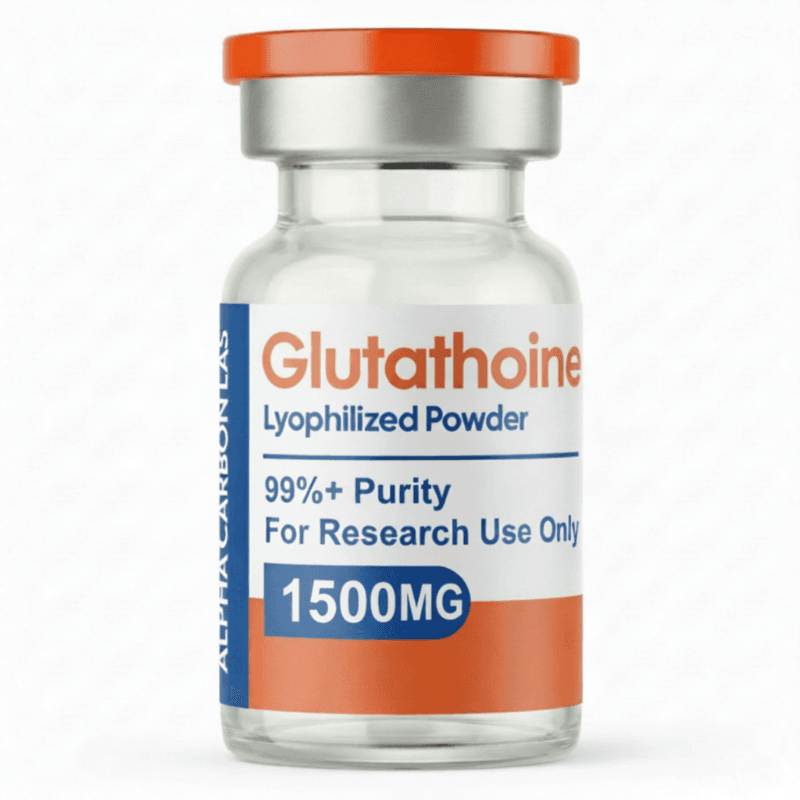
1500MG
This product is for research purposes only. Not for human consumption.
Purity: >98% (HPLC verified)
Formulation: Lyophilized powder
Molecular Formula: C10H17N3O6S
Molecular Weight: 307.32 g/mol
CAS Number: 70-18-8
PubChem CID: 124886

Glutathione
Overview
Glutathione (γ-L-glutamyl-L-cysteinyl-glycine, often abbreviated as GSH) is a tripeptide composed of three amino acids - glutamic acid (glutamate), cysteine, and glycine - that is synthesized intracellularly in virtually all cells of the body and serves as the most abundant and important intracellular antioxidant, playing critical and multifaceted roles in cellular defense against oxidative stress, detoxification of xenobiotics and endogenous toxins, regulation of cellular redox state, immune system function, protein synthesis and repair, DNA synthesis, enzyme activation, and numerous other fundamental cellular processes. Glutathione exists in two primary forms: reduced glutathione (GSH, the active form with a free thiol/sulfhydryl group on the cysteine residue) and oxidized glutathione (GSSG, formed when two GSH molecules are connected by a disulfide bond after donating electrons to neutralize free radicals or oxidants). The ratio of GSH to GSSG within cells serves as a key indicator of cellular redox state and overall cellular health, with high GSH:GSSG ratios indicating healthy reducing conditions and low ratios suggesting oxidative stress. Glutathione concentrations vary by tissue and subcellular compartment, with particularly high levels in the liver (which performs extensive detoxification), lungs (which are exposed to environmental oxidants), and within mitochondria (which generate substantial reactive oxygen species during energy production). The synthesis of glutathione occurs through a two-step enzymatic process: glutamate-cysteine ligase (GCL, also called gamma-glutamylcysteine synthetase) catalyzes formation of gamma-glutamylcysteine from glutamate and cysteine (the rate-limiting step), followed by glutathione synthetase adding glycine to form GSH. Cysteine availability is often the limiting factor for glutathione synthesis, explaining why N-acetylcysteine (NAC), which provides cysteine, is commonly used to boost glutathione levels. Glutathione levels decline with aging, chronic diseases, oxidative stress, poor nutrition, and certain medications, while increased demand during illness, toxin exposure, or intense physical activity can deplete stores. This has led to widespread interest in glutathione supplementation for health maintenance, disease prevention, athletic performance, anti-aging, and treatment of various conditions characterized by oxidative stress or glutathione deficiency. However, oral glutathione bioavailability has been controversial - while GSH is absorbed to some extent, it is also broken down in the gastrointestinal tract and liver during first-pass metabolism, with debate about how much intact glutathione reaches systemic circulation versus being degraded into constituent amino acids that can be used for de novo synthesis. Alternative approaches include intravenous glutathione (which bypasses digestive breakdown and provides direct systemic delivery), liposomal glutathione (which may enhance absorption), sublingual glutathione, and precursor strategies using NAC, alpha-lipoic acid, or other compounds that support endogenous glutathione synthesis.
Mechanism of Action
Glutathione exerts its diverse physiological functions through multiple complementary mechanisms centered on its remarkable ability to donate electrons (act as a reducing agent) and its role as a cofactor for crucial antioxidant and detoxification enzymes. As a direct antioxidant, the sulfhydryl group (thiol, -SH) on glutathione's cysteine residue can donate electrons to neutralize reactive oxygen species (ROS) including superoxide, hydroxyl radical, singlet oxygen, and hydrogen peroxide, as well as reactive nitrogen species including peroxynitrite. In this process, two glutathione molecules (GSH) are oxidized to form glutathione disulfide (GSSG) while the reactive species is reduced to a less harmful form. The enzyme glutathione reductase then regenerates GSH from GSSG using NADPH as the electron donor, maintaining the GSH pool and GSH:GSSG ratio. This regeneration capacity distinguishes glutathione from many dietary antioxidants that become oxidized and are not efficiently regenerated. Glutathione also functions as an indirect antioxidant by serving as a cofactor for the glutathione peroxidase (GPx) family of enzymes, which catalyze reduction of hydrogen peroxide to water and reduction of lipid peroxides to alcohols, protecting cellular membranes from peroxidative damage. There are multiple GPx isoforms with different tissue distributions and substrate specificities, including GPx1 (cytosolic), GPx4 (phospholipid hydroperoxide GPx, critical for preventing ferroptosis), and others. Glutathione also regenerates other important antioxidants including vitamins C and E back to their active reduced forms after they have been oxidized during antioxidant activity, creating an interconnected antioxidant network. In detoxification, glutathione plays central roles in Phase II conjugation reactions catalyzed by the glutathione S-transferase (GST) family of enzymes, which comprises numerous isoforms that conjugate glutathione to a wide variety of electrophilic compounds including drugs, environmental toxins, carcinogens, products of oxidative damage, and endogenous metabolic byproducts. The resulting glutathione conjugates are more water-soluble and can be exported from cells via transporters and eventually excreted in urine or bile, representing a major detoxification pathway particularly important in the liver, kidneys, and other tissues. Specific examples include detoxification of acetaminophen metabolites (glutathione depletion from acetaminophen overdose causes liver failure), heavy metals (glutathione binds mercury, lead, and other metals facilitating excretion), and numerous xenobiotics. Glutathione is also essential for maintaining proper protein structure and function through formation and reduction of disulfide bonds in proteins (protein thiol redox regulation), which can affect protein folding, activity, localization, and interactions. Many proteins contain cysteine residues that can form disulfide bonds under oxidizing conditions or be reduced under reducing conditions, with glutathione and associated enzymes (glutaredoxins, thioredoxins) regulating this redox-sensitive protein modification. S-glutathionylation, the reversible formation of mixed disulfides between protein cysteines and glutathione, serves as a protective mechanism against irreversible oxidation and as a signaling mechanism modulating protein function. In immune function, glutathione is critical for lymphocyte proliferation and function, with glutathione depletion impairing T-cell and natural killer cell responses. Glutathione supports optimal function of immune cells which generate substantial oxidative stress during pathogen killing and need robust antioxidant defenses to protect themselves. The peptide also plays roles in leukotriene and prostaglandin metabolism, DNA synthesis and repair, apoptosis regulation, and cell cycle progression.
Research Findings
Research on glutathione spans decades and encompasses extensive preclinical studies and clinical investigations across numerous health conditions, reflecting its fundamental importance in cellular function and disease pathogenesis. Age-related glutathione decline research has documented that tissue glutathione levels, particularly in brain, liver, and immune cells, decrease progressively with aging, and this decline has been implicated in age-related increases in oxidative damage, immune dysfunction, detoxification capacity reduction, and susceptibility to age-related diseases. Animal studies show that interventions that maintain higher glutathione levels or enhance glutathione synthesis can extend healthspan and in some cases lifespan, though translating these findings to human longevity interventions remains challenging. Neurodegenerative disease research has revealed significantly reduced glutathione levels in brains of patients with Parkinson's disease (particularly in substantia nigra), Alzheimer's disease, amyotrophic lateral sclerosis (ALS), and other neurodegenerative conditions, suggesting oxidative stress and impaired antioxidant defenses contribute to neuronal death. Studies have explored glutathione supplementation or enhancement strategies for neuroprotection, with some preclinical evidence showing benefits but clinical translation proving difficult partly due to challenges delivering glutathione across the blood-brain barrier. Intranasal glutathione administration has been explored as a potential route to enhance brain glutathione. Liver disease research has extensively studied glutathione in conditions including alcoholic liver disease, non-alcoholic fatty liver disease (NAFLD), viral hepatitis, and drug-induced liver injury. Given the liver's central role in detoxification and its high glutathione content and turnover, hepatic glutathione depletion is a common feature of liver injury. Studies using intravenous glutathione or precursors like NAC have shown benefits for liver function markers, though effects on clinical outcomes vary by condition and severity. NAC is established as the antidote for acetaminophen overdose by replenishing hepatic glutathione. Respiratory disease research has shown reduced glutathione levels in lungs of patients with chronic obstructive pulmonary disease (COPD), cystic fibrosis, acute respiratory distress syndrome (ARDS), and asthma. Inhaled or systemic glutathione or NAC administration has been studied for various pulmonary conditions with mixed results - some studies show improvements in symptoms, lung function, or exacerbation rates while others show minimal benefits. The oxidative burden on lungs from environmental exposures and inflammation provides rationale for antioxidant interventions. Immune function studies have documented that glutathione status influences lymphocyte function, with depletion impairing T-cell proliferation and cytokine production. Research in HIV/AIDS showed that patients with HIV have significantly reduced glutathione levels and that this correlates with disease progression, leading to studies of NAC and glutathione supplementation showing some immune and clinical benefits. Cancer research has explored the complex role of glutathione in malignancy - glutathione protects normal cells from oxidative damage and carcinogens (potentially cancer-preventive), but tumors often have elevated glutathione levels that protect them from oxidative stress and chemotherapy drugs (potentially cancer-promoting resistance mechanism). Some chemotherapy strategies have explored transiently depleting glutathione to sensitize tumors, while other approaches use glutathione or NAC to protect normal tissues from chemotherapy toxicity. Athletic performance research has investigated whether glutathione supplementation or enhancement can reduce exercise-induced oxidative stress, improve recovery, and enhance performance. Exercise generates substantial ROS, and while this partly stimulates beneficial adaptations, excessive oxidative stress may impair recovery. Studies have shown mixed results, with some finding improved markers of oxidative stress or performance and others showing minimal benefits, likely reflecting differences in training status, exercise type, dosing, and outcome measures. Skin health and cosmetics research has explored glutathione for skin lightening effects (through inhibition of melanin synthesis), antioxidant benefits for skin aging, and various dermatological conditions. Oral and particularly intravenous glutathione has been used in some countries for cosmetic skin lightening, though evidence quality is limited and safety concerns exist. Bioavailability studies have attempted to resolve the controversy around oral glutathione absorption, with recent research using stable isotope tracers suggesting that oral glutathione is partially absorbed intact and can increase circulating and tissue glutathione levels, though efficiency varies. Liposomal formulations show enhanced bioavailability in some studies.
Research Applications
- Oxidative stress and free radical damage research
- Aging and cellular senescence studies
- Neurodegenerative disease (Parkinson's, Alzheimer's, ALS) research
- Liver disease and hepatotoxicity studies
- Detoxification pathway and toxicology research
- Respiratory disease (COPD, asthma, cystic fibrosis) studies
- Immune system function and immunodeficiency research
- HIV/AIDS and infectious disease studies
- Cancer prevention and chemotherapy research
- Athletic performance and exercise recovery studies
- Skin health, dermatology, and cosmetic research
- Heavy metal toxicity and chelation studies
- Drug-induced toxicity (acetaminophen overdose) research
- Mitochondrial function and energy metabolism studies
- Cardiovascular disease and endothelial function research
Safety Profile
Glutathione has an excellent safety profile reflecting its status as an endogenous molecule present at millimolar concentrations in all cells, with the body having sophisticated systems for synthesizing, utilizing, and regulating glutathione levels. Oral glutathione supplementation at doses ranging from 500mg to 2000mg daily has been studied in numerous clinical trials with minimal adverse effects reported. The most common side effects are mild gastrointestinal symptoms including bloating, cramping, or loose stools, which appear to be dose-related and generally resolve with dose reduction or continued use. Allergic reactions are extremely rare but theoretically possible. Long-term safety data extending to months of continuous oral supplementation shows no significant adverse effects or safety concerns in healthy individuals. Intravenous glutathione, which achieves much higher plasma concentrations than oral administration, has also demonstrated good safety in clinical use with hundreds of thousands of administrations performed worldwide. Reported adverse events with IV glutathione are infrequent and typically mild, including transient lightheadedness, flushing, or rarely nausea, usually associated with rapid infusion rates and preventable by slower administration. Serious adverse events with appropriately prepared and administered IV glutathione are exceptionally rare. There have been isolated case reports of serious complications including Stevens-Johnson syndrome or acute kidney injury, but causality is often unclear given confounding factors, and these remain extremely uncommon relative to the widespread use. Quality and purity of IV preparations is critically important to minimize contamination risks. Concerns about high-dose glutathione potentially acting as a pro-oxidant under certain conditions have been raised based on theoretical considerations and some in vitro studies, but clinical evidence of pro-oxidant effects at supplemental doses in humans is lacking. Glutathione's effects on tumor cells (potentially protective) has led to caution about high-dose supplementation in cancer patients undergoing chemotherapy or radiation therapy, with recommendations to discuss with oncologists, though evidence of harm is limited and some oncology protocols actually use NAC or glutathione to protect normal tissues. Inhaled glutathione for respiratory conditions has shown good tolerability with minimal adverse effects beyond occasional bronchoconstriction in sensitive individuals. Use during pregnancy and lactation has not been extensively studied, and while glutathione is naturally present and elevated during pregnancy, supplementation safety has not been formally established, leading to general caution with high-dose supplementation during pregnancy. No significant drug interactions have been consistently identified, though theoretical concerns exist about potential interactions with chemotherapy agents given glutathione's detoxification functions.
Scientific References
Research Use Only
This product is intended for research purposes only and is not for human consumption, therapeutic use, or diagnostic applications. Please ensure compliance with all applicable regulations and institutional guidelines.