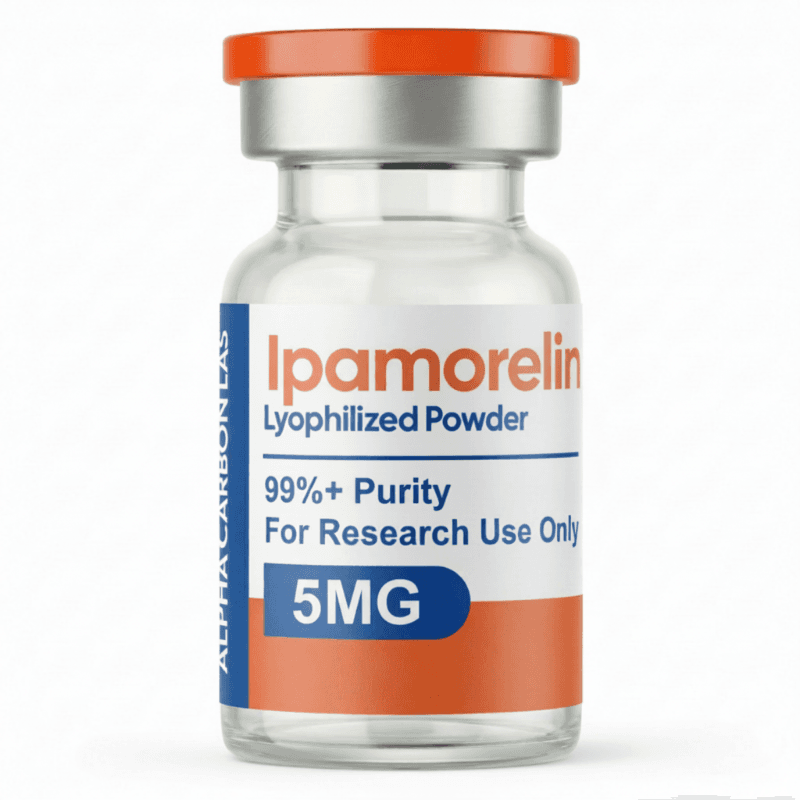
2MG
This product is for research purposes only. Not for human consumption.
Purity: >99% (HPLC verified)
Formulation: Lyophilized powder
Molecular Formula: C38H49N9O5
Molecular Weight: 711.9 g/mol
CAS Number: 170851-70-4
PubChem CID: 9831659

Ipamorelin
Overview
Ipamorelin is a pentapeptide (Aib-His-D-2-Nal-D-Phe-Lys-NH2) and represents one of the most selective growth hormone secretagogues (GHS) available for research. Developed to provide the benefits of growth hormone release while minimizing unwanted hormonal side effects, Ipamorelin selectively stimulates growth hormone (GH) release from the pituitary gland without significantly affecting cortisol, prolactin, or thyroid-stimulating hormone levels.
This selectivity distinguishes it from earlier generation GH secretagogues and traditional GHRP compounds. The peptide acts as a ghrelin mimetic, binding to the growth hormone secretagogue receptor (GHS-R1a) to trigger pulsatile GH release that closely mimics the body's natural secretion patterns.
This biomimetic approach to GH stimulation has made Ipamorelin a subject of significant research interest for applications in muscle preservation, bone health, metabolic optimization, and age-related GH decline.
Mechanism of Action
Ipamorelin functions by selectively binding to and activating the growth hormone secretagogue receptor (GHS-R1a), which is expressed in the pituitary gland and various peripheral tissues. Upon receptor activation, Ipamorelin stimulates pulsatile release of growth hormone from somatotroph cells in the anterior pituitary while maintaining the natural ultradian rhythm of GH secretion.
Unlike some other growth hormone secretagogues, Ipamorelin demonstrates high selectivity for GH release without stimulating ACTH/cortisol, prolactin, or thyroid hormones - a property that significantly reduces potential side effects associated with dysregulation of these hormonal axes.
The GH released in response to Ipamorelin then acts on target tissues throughout the body, binding to growth hormone receptors and triggering the production of insulin-like growth factor 1 (IGF-1) primarily in the liver but also in peripheral tissues. This GH-IGF-1 axis promotes protein synthesis, lipolysis (fat breakdown), bone mineralization, and tissue regeneration.
Ipamorelin's effects are dose-dependent and show minimal desensitization with repeated administration, allowing for sustained efficacy over extended periods. The peptide also appears to have some direct effects on appetite and gastrointestinal motility through ghrelin receptor activation, though these are generally milder than with other ghrelin mimetics. The lack of impact on hunger and appetite makes Ipamorelin distinct from GHRP-6 and similar compounds that significantly increase appetite.
Research Findings
Research on Ipamorelin began in the late 1990s, with early studies by Raun et al. published in the European Journal of Endocrinology demonstrating its selective GH-releasing properties without affecting cortisol or prolactin levels.
Subsequent animal studies have shown Ipamorelin effectively increases lean body mass, reduces body fat percentage, and improves overall body composition metrics. Research in aging animal models has demonstrated potential benefits for preserving muscle mass and bone density during sarcopenia and age-related decline.
Bone and Metabolic Health
Studies examining bone health have indicated that Ipamorelin-induced GH release may support bone formation and mineral density, potentially offering benefits for osteopenia and osteoporosis research. Metabolic research has shown improvements in insulin sensitivity and glucose metabolism in some models, suggesting potential applications in metabolic syndrome and age-related metabolic dysfunction.
Gastrointestinal and Sleep Research
Studies on gastrointestinal motility have revealed that Ipamorelin can stimulate gastric emptying and intestinal transit, which has led to research exploring its potential for post-surgical ileus and gastroparesis. Sleep quality research has indicated that GH secretagogues including Ipamorelin may enhance deep sleep stages, which is when natural GH secretion peaks.
Clinical Studies and Comparisons
Limited human studies have confirmed Ipamorelin's ability to increase GH levels with minimal side effects, though large-scale clinical trials remain limited. Research comparing Ipamorelin to other GH secretagogues consistently demonstrates its superior selectivity profile, with fewer side effects related to cortisol elevation, water retention, or appetite stimulation.
The peptide's ability to stimulate GH release is somewhat blunted in the presence of somatostatin (GH-inhibiting hormone), suggesting it works through physiological regulatory mechanisms rather than forcing non-physiological GH release.
Research Applications
- Growth hormone regulation and secretion research
- Anti-aging and age-related GH decline studies
- Bone density and osteoporosis prevention research
- Muscle preservation and sarcopenia studies
- Body composition optimization research
- Metabolic function and insulin sensitivity studies
- Sleep quality and recovery research
- Gastrointestinal motility and gastroparesis research
- Post-surgical recovery studies
- Athletic performance and recovery research
- IGF-1 pathway research
Safety Profile
Ipamorelin has demonstrated a favorable safety profile in both animal and limited human research studies. Its selective mechanism of action, which avoids stimulation of cortisol, prolactin, and other non-GH hormones, significantly reduces the side effect burden compared to earlier GH secretagogues. Animal toxicology studies have not revealed significant adverse effects at therapeutic dose ranges. The most commonly reported effects in research contexts are typically mild and may include increased hunger (though less than with GHRP-6), transient fatigue following injection, occasional headaches, or water retention - effects generally associated with GH elevation itself rather than the peptide directly. Unlike exogenous growth hormone administration, Ipamorelin works through endogenous pathways and maintains physiological feedback regulation, which may contribute to its safety profile. The lack of cortisol stimulation is particularly advantageous, as chronic cortisol elevation can lead to numerous adverse effects including immune suppression, bone loss, and metabolic dysfunction. However, comprehensive long-term human safety data remains limited, and Ipamorelin is not approved for therapeutic use by regulatory agencies. Theoretical concerns similar to all GH-elevating interventions include potential effects on glucose metabolism, possible interactions with insulin signaling, and unknown long-term effects on cellular proliferation. Ipamorelin should be avoided in individuals with active malignancies due to GH's growth-promoting effects.
Scientific References
Research Use Only
This product is intended for research purposes only and is not for human consumption, therapeutic use, or diagnostic applications. Please ensure compliance with all applicable regulations and institutional guidelines.