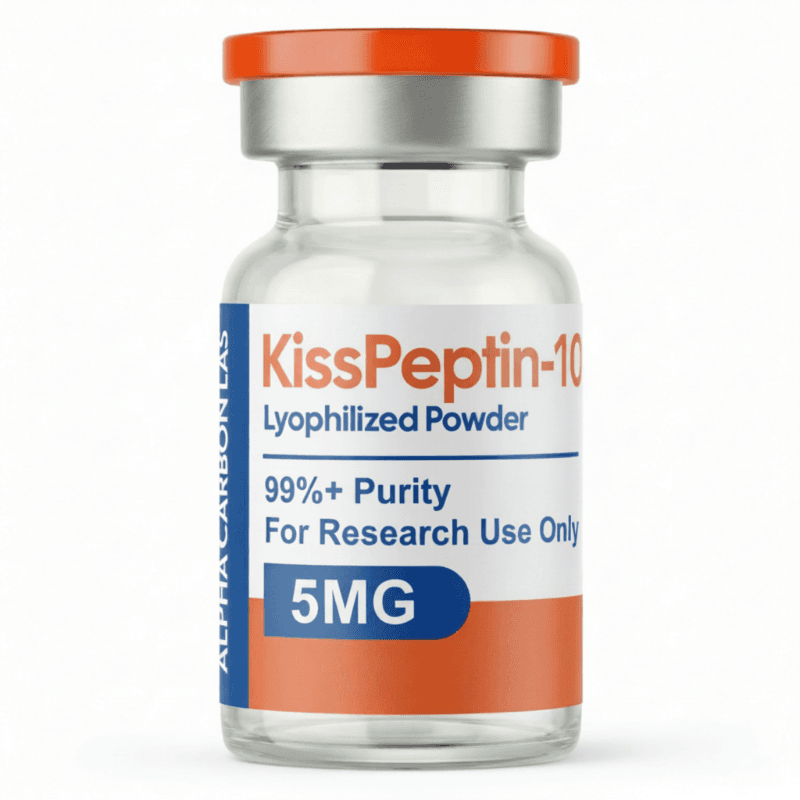
5MG
This product is for research purposes only. Not for human consumption.
Purity: >98% (HPLC verified)
Formulation: Lyophilized powder
Molecular Formula: C63H83N17O14
Molecular Weight: 1302.44 g/mol
CAS Number: N/A
PubChem CID: N/A
KissPeptin-10
Overview
Kisspeptin-10 is a truncated but fully bioactive form of the kisspeptin peptide family, consisting of the C-terminal 10 amino acids of the longer kisspeptin peptides (kisspeptin-54, kisspeptin-14, kisspeptin-13, and kisspeptin-10 are all derived from the same precursor protein and share a common C-terminal sequence). Kisspeptins are encoded by the KISS1 gene (named for its discovery location in Hershey, Pennsylvania, home of Hershey's Kisses chocolate) and represent one of the most important discoveries in reproductive endocrinology of the past two decades. The peptide family was initially identified for tumor suppressor properties (KISS1 was found to suppress metastasis in melanoma cells), but its critical role in reproductive function was discovered when mutations in the kisspeptin receptor (originally called GPR54, now designated KISS1R) were found to cause hypogonadotropic hypogonadism and absent puberty in both humans and mice. This groundbreaking finding established kisspeptin signaling as essential for reproductive function and prompted intensive research into the kisspeptin system's role in regulating the reproductive axis. Kisspeptin neurons in the hypothalamus serve as critical gatekeepers of reproduction, integrating signals about metabolic status, stress, seasonal changes, and other environmental inputs to regulate the secretion of gonadotropin-releasing hormone (GnRH), which in turn controls the pituitary-gonadal axis and all downstream reproductive processes including pubertal development, menstrual/estrous cycles, ovulation, spermatogenesis, and fertility. Kisspeptin-10, despite being the shortest naturally occurring form, retains full biological activity because the critical receptor-binding and activation sequences are contained within these C-terminal 10 amino acids (sequence: Tyr-Asn-Trp-Asn-Ser-Phe-Gly-Leu-Arg-Tyr-NH2, with amidation of the C-terminus being essential for activity). The peptide exhibits remarkable potency, with nanomolar to picomolar concentrations capable of stimulating robust GnRH release and subsequent gonadotropin secretion. Research has demonstrated kisspeptin's central role in puberty initiation - the increase in kisspeptin signaling at puberty triggers the reawakening of the GnRH pulse generator that has been quiescent since infancy, initiating the hormonal cascade that drives pubertal development. Kisspeptin also regulates the preovulatory GnRH/LH surge in females that triggers ovulation, responds to sex steroid feedback (with different kisspeptin neuron populations mediating positive and negative feedback), and integrates metabolic signals (with leptin and other metabolic hormones influencing kisspeptin neuron activity). Clinical research has explored kisspeptin administration in various reproductive contexts including triggering ovulation for assisted reproduction, treating hypogonadotropic hypogonadism, understanding reproductive disorders, and developing new contraceptive approaches. The peptide's short half-life and requirement for parenteral administration have prompted development of longer-acting analogs and alternative delivery methods, but the native peptides including kisspeptin-10 remain valuable research tools and potential therapeutic agents.
Mechanism of Action
Kisspeptin-10 exerts its effects through binding to and activation of the kisspeptin receptor KISS1R (also known as GPR54), a G-protein coupled receptor (GPCR) belonging to the rhodopsin family of GPCRs, which is expressed at high levels on GnRH neurons in the hypothalamus, as well as in the pituitary, gonads, placenta, and several other tissues. When kisspeptin-10 binds to KISS1R on GnRH neurons, it triggers a cascade of intracellular signaling events characteristic of Gq-coupled receptors. The receptor activates Gq proteins, which stimulate phospholipase C (PLC) to hydrolyze phosphatidylinositol 4,5-bisphosphate (PIP2) into inositol 1,4,5-trisphosphate (IP3) and diacylglycerol (DAG). IP3 causes release of calcium from intracellular stores, rapidly elevating intracellular calcium concentrations. DAG activates protein kinase C (PKC), which phosphorylates various downstream targets. These signaling events lead to depolarization of GnRH neurons, increased neuronal firing rates, and pulsatile release of GnRH into the hypothalamic-pituitary portal system. Kisspeptin is among the most potent stimulators of GnRH release known, with even brief pulses of kisspeptin causing robust and sustained GnRH neuronal activation. The released GnRH travels via the portal circulation to the anterior pituitary gland, where it binds to GnRH receptors on gonadotroph cells, stimulating synthesis and secretion of the gonadotropins luteinizing hormone (LH) and follicle-stimulating hormone (FSH). LH and FSH then enter the systemic circulation and act on the gonads - in males, LH stimulates testosterone production by Leydig cells while FSH supports spermatogenesis in Sertoli cells; in females, FSH promotes follicle development and estrogen production by ovarian granulosa cells, while the mid-cycle LH surge (triggered by the GnRH surge, which is driven by kisspeptin) causes ovulation and formation of the corpus luteum which produces progesterone. Kisspeptin neurons exist in two main populations in the hypothalamus with distinct roles: neurons in the arcuate nucleus (ARC) that express kisspeptin, neurokinin B, and dynorphin (termed KNDy neurons) generate pulsatile GnRH release through coordinated activity, acting as the GnRH pulse generator, while neurons in the anteroventral periventricular nucleus (AVPV in rodents; preoptic area in humans) mediate the positive feedback effect of estrogen that triggers the preovulatory GnRH/LH surge. KNDy neurons coordinate pulsatile GnRH secretion through complex interactions - neurokinin B and kisspeptin stimulate GnRH release, while dynorphin provides feedback inhibition, creating synchronized oscillatory activity. Kisspeptin neurons integrate multiple regulatory inputs: they express receptors for sex steroids (estrogen and testosterone receptors), allowing them to mediate steroid feedback on the reproductive axis; they respond to leptin and other metabolic signals, explaining why low body fat, malnutrition, or excessive exercise can suppress reproduction; they are influenced by stress hormones, providing a mechanism for stress-induced reproductive suppression; they respond to circadian signals and seasonal cues (in seasonal breeders), coordinating reproduction with appropriate times. Administration of exogenous kisspeptin-10 bypasses the normal regulatory mechanisms upstream of kisspeptin neurons and directly stimulates GnRH release, making it a powerful tool for triggering gonadotropin secretion in clinical settings. The magnitude and pattern of LH/FSH release in response to kisspeptin depends on several factors including dose, endogenous sex steroid levels (which modulate pituitary sensitivity to GnRH), and baseline reproductive status. Importantly, kisspeptin stimulation of GnRH/LH is much more robust in the presence of sex steroids compared to after gonadectomy or in hypogonadal states, reflecting the critical role of sex steroid priming of the reproductive axis. Desensitization can occur with continuous kisspeptin exposure, similar to GnRH agonists, though pulsatile administration maintains responsiveness.
Research Findings
Research on kisspeptin has rapidly evolved from initial discovery of its reproductive role in 2003 to extensive preclinical and clinical investigations establishing it as a master regulator of the reproductive axis with therapeutic potential. The foundational discovery came from studies showing that humans and mice with mutations in GPR54/KISS1R fail to undergo puberty and have hypogonadotropic hypogonadism, while subsequent work demonstrated that KISS1 gene mutations also cause similar phenotypes. These genetic findings definitively established the kisspeptin system as essential for human reproduction. Animal studies characterized the distribution of kisspeptin neurons in the brain, their projections to GnRH neurons, their expression of sex steroid receptors, and their roles in puberty, ovulation, and fertility. Research established that kisspeptin neurons directly contact GnRH neurons and that kisspeptin is the major excitatory input driving GnRH secretion. Studies in pubertal development demonstrated that a rise in kisspeptin expression and signaling occurs at the onset of puberty in multiple species, triggering the increase in GnRH pulsatility that initiates pubertal maturation. Premature activation of kisspeptin signaling causes precocious puberty, while deficiency delays or prevents puberty. Clinical research in humans has extensively characterized kisspeptin's effects on the reproductive axis. Early studies by Dhillo and colleagues demonstrated that intravenous administration of kisspeptin to healthy men produces dose-dependent increases in LH and FSH, with even low doses (0.01-0.3 nmol/kg) causing substantial gonadotropin release. Studies in women showed that kisspeptin administration during different phases of the menstrual cycle produces LH responses that vary based on estrogen status - larger responses during the follicular phase when estrogen levels are rising, reflecting estrogen's sensitizing effect. Importantly, a study by Jayasena and colleagues published in the Journal of Clinical Investigation demonstrated that a single dose of kisspeptin-54 could trigger a physiological LH surge and induce final oocyte maturation in women undergoing in vitro fertilization (IVF), comparable to the standard trigger (hCG) but with a lower risk of ovarian hyperstimulation syndrome (OHSS), a potentially dangerous complication of fertility treatment. This finding has prompted ongoing research into kisspeptin as a safer alternative trigger for oocyte maturation in assisted reproduction. Studies in hypogonadotropic hypogonadism have shown that kisspeptin administration can restore gonadotropin secretion in some patients with congenital forms of GnRH deficiency, though responses vary and may be blunted compared to healthy controls, possibly reflecting additional defects in GnRH neuron function or number. Research exploring pulsatile kisspeptin administration has shown that repeated pulses can drive pulsatile LH secretion, mimicking the physiological pattern of gonadotropin release, which is important for normal reproductive function. Studies comparing kisspeptin-10, kisspeptin-13, and kisspeptin-54 have shown that all forms are bioactive, with the longer peptides generally having somewhat longer duration of action but similar potency per mole. Metabolic studies have confirmed that kisspeptin links energy balance with reproduction - conditions of negative energy balance (caloric restriction, excessive exercise, anorexia nervosa) are associated with reduced kisspeptin expression and reproductive dysfunction, while restoration of energy availability can normalize kisspeptin signaling and reproductive function. Research in polycystic ovary syndrome (PCOS) has shown altered kisspeptin responsiveness, contributing to understanding of reproductive dysfunction in this common condition. Studies exploring kisspeptin's non-reproductive roles have identified effects on placental function, potential metabolic effects, cardiovascular influences, and emotional processing, though reproductive effects remain the primary focus. Safety and tolerability data from clinical studies has been favorable, with kisspeptin administration generally well-tolerated and producing expected physiological gonadotropin responses without serious adverse events in research settings.
Research Applications
- Reproductive endocrinology and GnRH regulation research
- Ovulation induction and IVF oocyte maturation trigger studies
- Hypogonadotropic hypogonadism treatment research
- Puberty disorders and delayed puberty research
- Polycystic ovary syndrome (PCOS) pathophysiology studies
- Infertility diagnosis and treatment research
- Neuroendocrine reproductive axis research
- Metabolic influences on reproduction studies
- Stress and reproductive function research
- Male hypogonadism and testosterone regulation studies
- Contraceptive development research
- Precocious puberty research
Safety Profile
Kisspeptin-10 and related kisspeptin peptides have been administered to hundreds of human subjects in clinical research studies with generally excellent safety and tolerability profiles. The peptides produce predictable and physiological gonadotropin responses without unexpected adverse effects. Because kisspeptin acts through stimulation of the body's natural GnRH-gonadotropin-sex steroid axis rather than bypassing it (as would occur with direct administration of gonadotropins or sex steroids), its effects are physiologically regulated through normal feedback mechanisms, which likely contributes to its favorable safety profile. The most commonly reported side effects in clinical studies have been mild and include injection site reactions (burning, redness, or discomfort at the subcutaneous or intravenous injection site), mild headache, nausea (particularly with higher doses), and flushing or warmth, likely related to gonadotropin and sex steroid changes. These effects are generally transient and well-tolerated. No serious adverse events directly attributable to kisspeptin have been reported in published clinical trials. Importantly, the major theoretical safety advantage of kisspeptin for assisted reproduction compared to hCG (the standard trigger for oocyte maturation) is the reduced risk of ovarian hyperstimulation syndrome (OHSS), a potentially life-threatening complication characterized by ovarian enlargement, fluid shifts, and vascular complications. Because kisspeptin stimulates endogenous LH release which has a much shorter half-life than exogenous hCG, the stimulus for OHSS is shorter-lived, substantially reducing risk - clinical studies have confirmed lower OHSS rates with kisspeptin triggers. The short plasma half-life of kisspeptin (approximately 30 minutes for kisspeptin-10, slightly longer for kisspeptin-54) means that its effects dissipate relatively quickly after administration ceases, which is generally a safety advantage but necessitates repeated dosing or continuous infusion for sustained effects. Long-term safety data is limited as most studies have involved single or short-term repeated administrations, though no signals of accumulating toxicity or delayed adverse effects have emerged. Theoretical considerations for any reproductive hormone-modulating therapy include potential effects on hormone-sensitive tissues and cancers, though kisspeptin's mechanism of working through the endogenous axis may limit these concerns compared to direct hormone administration. Appropriate patient selection, dose optimization, and monitoring remain important for any clinical applications, particularly in fertility treatment contexts where multiple hormonal interventions are typically occurring simultaneously.
Scientific References
Research Use Only
This product is intended for research purposes only and is not for human consumption, therapeutic use, or diagnostic applications. Please ensure compliance with all applicable regulations and institutional guidelines.