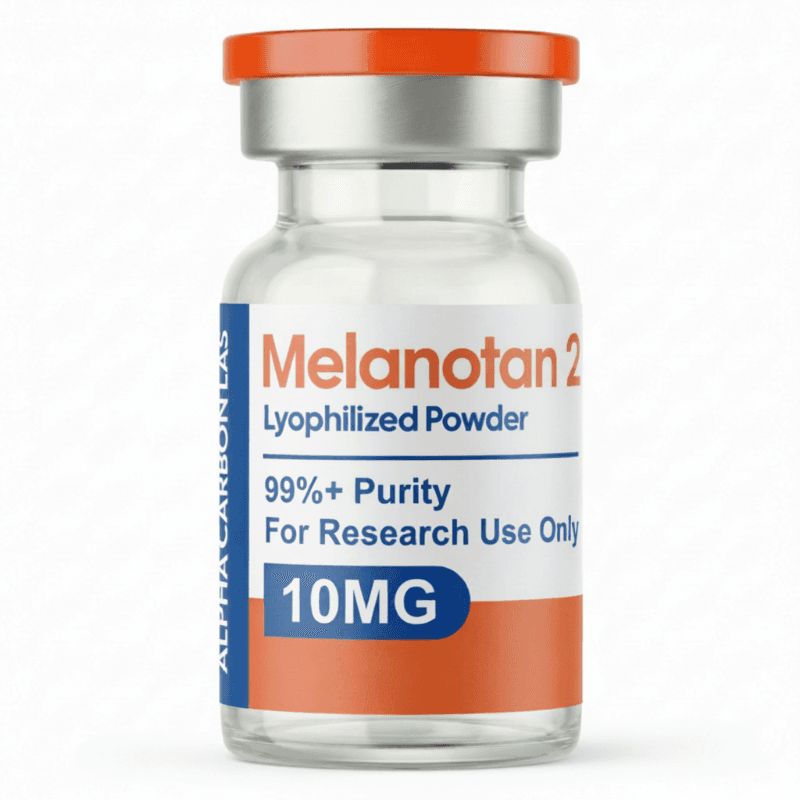
10MG
This product is for research purposes only. Not for human consumption.
Purity: >98% (HPLC verified)
Formulation: Lyophilized powder
Molecular Formula: C50H69N15O9
Molecular Weight: 1024.2 g/mol
CAS Number: 121062-08-6
PubChem CID: 16132341
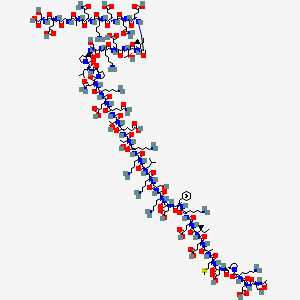
Melanotan-II
Overview
CJC-1295 is a synthetic growth hormone releasing hormone (GHRH) analog that was developed as a long-acting alternative to natural GHRH. It is a tetrasubstituted peptide consisting of 30 amino acids, modified from the native GHRH(1-29) sequence to enhance stability and duration of action. The compound was designed to stimulate growth hormone (GH) secretion from the pituitary gland with extended pharmacokinetics, potentially requiring less frequent dosing than natural GHRH.
CJC-1295 exists in two forms: with and without Drug Affinity Complex (DAC). The DAC modification involves attachment of a reactive chemical group that allows the peptide to bind to albumin in the bloodstream, significantly extending its half-life from minutes to several days. This modification enables sustained GH release with infrequent dosing.
Mechanism of Action
CJC-1295 functions as a GHRH receptor agonist, binding to GHRH receptors on somatotroph cells in the anterior pituitary gland. This binding activates G-protein coupled receptor signaling, increasing intracellular cAMP levels and stimulating the synthesis and secretion of growth hormone. The released GH then acts on various tissues throughout the body, stimulating IGF-1 production in the liver and other tissues.
The DAC modification extends the peptide's half-life by enabling it to bind to serum albumin, protecting it from rapid enzymatic degradation. This results in sustained, pulsatile GH release that more closely mimics physiological patterns than bolus administration of shorter-acting GHRH analogs. The extended pharmacokinetics allow for less frequent dosing while maintaining elevated GH and IGF-1 levels.
Research Findings
Research on CJC-1295 includes both preclinical animal studies and some clinical pharmacology research. Animal studies demonstrated that CJC-1295 with DAC produced sustained elevations in GH and IGF-1 levels lasting several days after a single injection. Research showed dose-dependent increases in both peak and mean GH levels, with corresponding increases in circulating IGF-1.
Clinical Studies
A Phase I/II clinical trial examined CJC-1295 with DAC in healthy adults, demonstrating sustained increases in GH and IGF-1 levels for up to one week following single-dose administration. The study showed dose-dependent pharmacodynamic effects with good tolerability at the doses tested. Subjects experienced increases in lean body mass markers and decreases in body fat percentage over the study period.
Research comparing CJC-1295 with DAC versus without DAC showed that the DAC modification significantly extended the half-life and duration of GH elevation, though it also resulted in more sustained (less pulsatile) GH secretion patterns, which may have different physiological implications than the pulsatile secretion characteristic of normal GH regulation.
Research Applications
- Growth hormone secretion research
- IGF-1 regulation studies
- Age-related GH decline research
- Body composition and metabolism studies
- GHRH receptor pharmacology research
- Pharmacokinetic extension strategies
- Pulsatile hormone secretion studies
Safety Profile
CJC-1295 clinical development was halted after a clinical trial participant experienced a serious adverse cardiac event, though causality was never definitively established. The peptide has not been approved for any therapeutic use. Potential safety concerns with chronic GH elevation include insulin resistance and glucose metabolism effects, fluid retention and edema, potential effects on cancer risk through IGF-1 elevation, and theoretical cardiovascular concerns. The DAC modification's long duration of action means effects cannot be quickly reversed if adverse reactions occur. Quality and purity of products from research chemical suppliers varies significantly. Comprehensive long-term human safety data is lacking.
Scientific References
Research Use Only
This product is intended for research purposes only and is not for human consumption, therapeutic use, or diagnostic applications. Please ensure compliance with all applicable regulations and institutional guidelines.