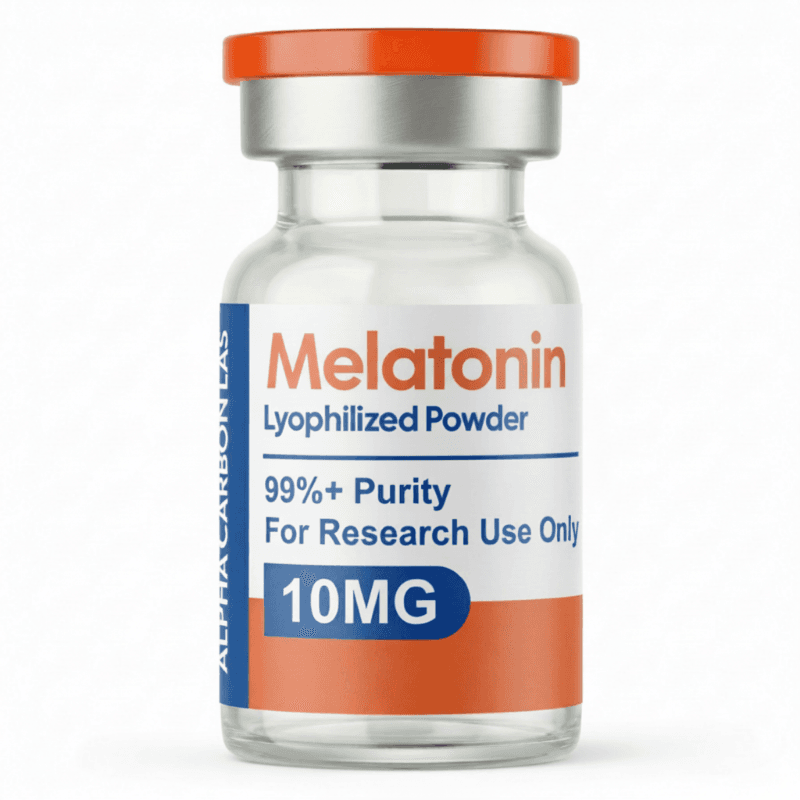
10MG
This product is for research purposes only. Not for human consumption.
Purity: >99% (HPLC verified)
Formulation: Powder/Capsule
Molecular Formula: C13H16N2O2
Molecular Weight: 232.28 g/mol
CAS Number: 73-31-4
PubChem CID: 896

Melatonin
Overview
Melatonin (N-acetyl-5-methoxytryptamine) is an indoleamine neurohormone primarily synthesized and secreted by the pineal gland in a circadian pattern characterized by low levels during daylight hours and dramatically elevated levels during darkness. It serves as the body's primary biochemical signal of darkness and plays a central role in regulating circadian rhythms, sleep-wake cycles, and seasonal biological changes.
Synthesis and Regulation
The synthesis of melatonin follows a well-characterized pathway beginning with the essential amino acid tryptophan, which is converted to serotonin, and finally to melatonin through two enzymatic steps involving serotonin N-acetyltransferase (the rate-limiting enzyme) and hydroxyindole-O-methyltransferase. The pineal gland's melatonin production is controlled by the suprachiasmatic nucleus (SCN) of the hypothalamus, which functions as the brain's master circadian pacemaker.
Multifunctional Properties
Beyond its primary role in circadian regulation, melatonin has emerged as a remarkably multifunctional molecule with potent antioxidant properties (directly scavenging reactive oxygen species and upregulating antioxidant enzymes), immunomodulatory effects, anti-inflammatory actions, neuroprotective capabilities, and influences on numerous physiological processes including body temperature regulation, blood pressure, glucose metabolism, and bone metabolism.
Melatonin receptors (MT1 and MT2) are found throughout the body - in the SCN where they mediate circadian effects, in peripheral tissues including blood vessels, immune cells, and digestive organs, and in the retina where they may influence visual function.
Mechanism of Action
Melatonin exerts its diverse physiological effects through multiple mechanisms involving receptor-mediated signaling, direct biochemical actions, and influences on gene expression.
Receptor-Mediated Effects
The primary receptor-mediated effects occur through two G-protein coupled receptors: MT1 (MEL1A) and MT2 (MEL1B). In the suprachiasmatic nucleus (SCN), melatonin binding to MT1 and MT2 receptors influences circadian rhythm generation and entrainment. MT1 activation is associated with acute inhibition of SCN neuronal firing, contributing to sleep-promoting effects, while MT2 activation is more involved in phase-shifting circadian rhythms.
Antioxidant Actions
Melatonin functions as a remarkably potent direct antioxidant, with the ability to scavenge hydroxyl radicals, superoxide anions, singlet oxygen, peroxynitrite, and other reactive species. Melatonin's antioxidant capacity significantly exceeds that of classical antioxidant vitamins like vitamin E or vitamin C on a molar basis. It can cross cellular membranes and the blood-brain barrier easily, protecting intracellular structures including mitochondria and nuclear DNA.
Immunomodulatory Effects
Melatonin exhibits immunomodulatory effects through multiple pathways including direct effects on immune cells (which express melatonin receptors), modulation of cytokine production, and influences on immune cell proliferation and function. Anti-inflammatory mechanisms include inhibition of NF-κB signaling and reduction of COX-2 and other inflammatory mediators.
Research Findings
Research on melatonin has evolved from initial focus on circadian rhythm regulation and sleep to encompass a remarkably diverse array of potential health applications, making it one of the most extensively studied naturally occurring molecules in contemporary biomedical research.
Sleep and Circadian Research
Numerous clinical trials and meta-analyses have demonstrated that melatonin supplementation can reduce sleep latency (time to fall asleep), improve sleep quality, increase total sleep time, and reduce night-time awakenings. A comprehensive meta-analysis in PLoS One confirmed that melatonin significantly reduces sleep onset latency and increases total sleep duration, though effect sizes are generally modest.
Jet Lag and Shift Work
Jet lag research has consistently shown that appropriately timed melatonin (taken near bedtime at the destination) can accelerate adaptation to new time zones. Studies in delayed sleep phase syndrome show that evening melatonin administration can phase-advance circadian rhythms.
Neuroprotection Research
Animal studies show protective effects against neurodegenerative diseases including Alzheimer's disease (reducing amyloid beta accumulation, tau phosphorylation, and cognitive decline) and Parkinson's disease (protecting dopaminergic neurons from oxidative damage). While animal data is compelling, translation to human disease treatment has been limited.
Cardiovascular Research
Several studies and meta-analyses show that melatonin supplementation can produce modest reductions in blood pressure, particularly nocturnal blood pressure, in hypertensive individuals. Benefits may be most pronounced in non-dippers (individuals who don't show normal nighttime blood pressure reduction).
Research Applications
- Sleep disorder and insomnia research
- Circadian rhythm regulation and jet lag studies
- Shift work disorder and chronotherapy research
- Delayed sleep phase syndrome treatment studies
- Antioxidant and oxidative stress research
- Neuroprotection and neurodegenerative disease studies
- Aging and longevity research
- Cardiovascular health and blood pressure studies
- Immune system modulation studies
- Metabolic health and diabetes research
- Seasonal affective disorder research
- Pediatric sleep disorders in neurodevelopmental conditions
Safety Profile
Melatonin has demonstrated an exceptional safety profile across decades of use, establishing it as one of the safest supplements available for sleep and circadian applications. The most commonly reported side effects are mild and include daytime drowsiness (particularly with higher doses), headache, dizziness, mild nausea, and vivid dreams. These effects are generally dose-dependent and resolve with dose reduction. Importantly, melatonin does not appear to cause tolerance, dependence, withdrawal symptoms, or rebound insomnia when discontinued - major advantages over traditional sedative-hypnotic medications. Long-term safety data extending to years of continuous use shows no evidence of significant cumulative toxicity. Safety in pregnancy and lactation is not fully established, and current recommendations generally advise avoiding supplementation during pregnancy and breastfeeding absent compelling indications.
Scientific References
Research Use Only
This product is intended for research purposes only and is not for human consumption, therapeutic use, or diagnostic applications. Please ensure compliance with all applicable regulations and institutional guidelines.