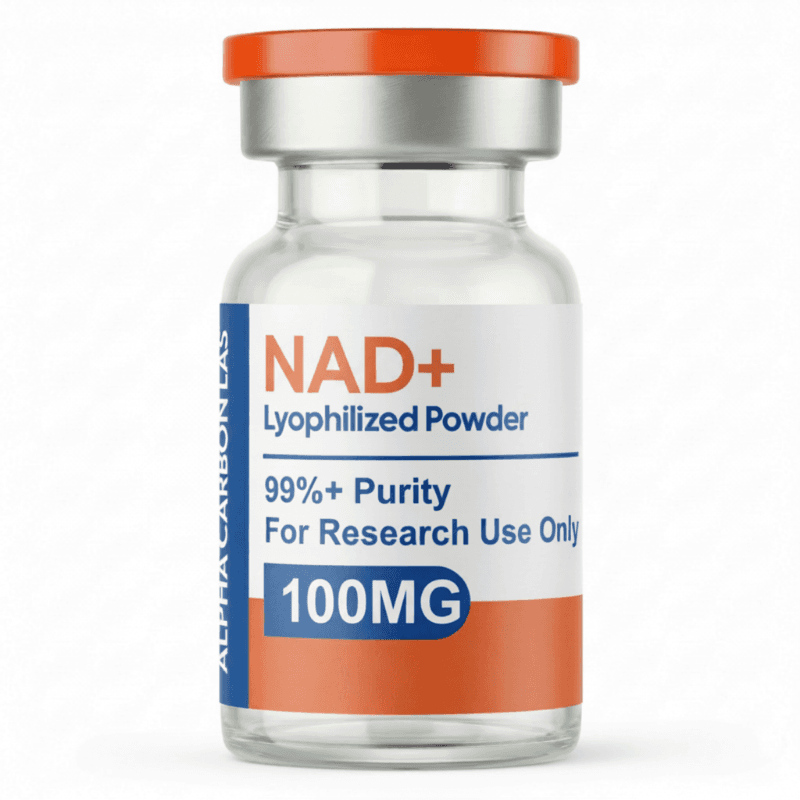
100MG
This product is for research purposes only. Not for human consumption.
Purity: >99% (HPLC verified)
Formulation: Lyophilized powder
Molecular Formula: C21H29N7O14P2
Molecular Weight: 663.43 g/mol
CAS Number: 53-84-9
PubChem CID: 5893
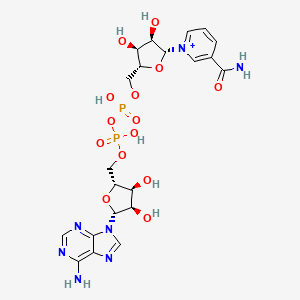
NAD+
Overview
NAD+ (Nicotinamide Adenine Dinucleotide) is a critical coenzyme found in all living cells, essential for fundamental biological processes including energy metabolism, DNA repair, cellular signaling, and gene expression. As we age, NAD+ levels naturally decline, potentially contributing to age-related metabolic dysfunction, mitochondrial decline, and cellular senescence.
The molecule exists in oxidized (NAD+) and reduced (NADH) forms, participating in hundreds of enzymatic reactions, particularly in the electron transport chain where it is crucial for ATP production. Beyond its role in energy metabolism, NAD+ serves as a substrate for sirtuins, PARPs (poly ADP-ribose polymerases), and CD38, enzymes involved in longevity pathways, DNA repair, and immune function.
Research has shown that declining NAD+ levels correlate with various age-related conditions, while restoration of NAD+ through supplementation or precursor administration may support cellular health, mitochondrial function, and metabolic efficiency.
Mechanism of Action
NAD+ functions through several critical pathways in cellular metabolism and regulation. In mitochondria, NAD+ accepts electrons during the breakdown of nutrients, becoming NADH, which then donates these electrons to the electron transport chain to generate ATP, the cell's energy currency. This process is fundamental to cellular respiration and energy production.
Sirtuin Activation
NAD+ serves as a critical substrate for sirtuins (SIRT1-7), a family of NAD+-dependent deacetylases that regulate gene expression, mitochondrial biogenesis, circadian rhythms, and cellular stress responses. When NAD+ levels are sufficient, sirtuins can effectively maintain cellular homeostasis and potentially promote longevity.
DNA Repair and Cellular Protection
NAD+ is consumed by PARPs during DNA repair processes, particularly PARP1 which responds to DNA damage and helps maintain genomic stability. The enzyme CD38, which increases with age and inflammation, is a major consumer of NAD+, converting it to ADP-ribose and nicotinamide. This age-related increase in CD38 activity contributes to declining NAD+ levels.
NAD+ also participates in calcium signaling through conversion to cyclic ADP-ribose (cADPR), influencing numerous cellular processes. The balance between NAD+ synthesis and consumption becomes increasingly important with age, as synthesis pathways may become less efficient while consumption by PARPs and CD38 increases.
Research Findings
Research into NAD+ biology has expanded dramatically over the past two decades, revealing its central role in aging and metabolic health. Foundational studies by David Sinclair and colleagues demonstrated that boosting NAD+ levels in mice through NMN (nicotinamide mononucleotide) supplementation improved mitochondrial function, enhanced exercise capacity, and extended healthspan.
Human Clinical Trials
Human clinical trials have begun to establish safety and preliminary efficacy. A landmark study published in Science showed that NMN supplementation increased NAD+ levels in human participants and improved insulin sensitivity in prediabetic women. Research has also demonstrated that NAD+ boosting can improve cardiovascular function, with studies showing enhanced endothelial function and reduced arterial stiffness in older adults.
Neuroscience and Metabolic Applications
In neuroscience, NAD+ restoration has shown promise in animal models of neurodegenerative diseases, with improvements in cognitive function and neuroprotection observed in Alzheimer's and Parkinson's models. Studies on metabolic health have revealed that NAD+ supplementation can improve mitochondrial function in muscle tissue, enhance fat oxidation, and support healthy glucose metabolism.
NAD+ Precursor Research
Research into different NAD+ precursors (nicotinamide riboside, NMN, nicotinamide, niacin) has helped identify optimal approaches for NAD+ restoration, with NMN and nicotinamide riboside emerging as particularly effective precursors that can elevate NAD+ levels more efficiently than niacin or nicotinamide alone. Investigations into the relationship between NAD+ and circadian rhythms have revealed that NAD+ levels fluctuate throughout the day and that disrupted NAD+ metabolism may contribute to circadian dysfunction.
Research Applications
- Cellular metabolism and energy production research
- Anti-aging and longevity studies
- Mitochondrial function research
- DNA repair mechanism studies
- Neurodegenerative disease research
- Metabolic disorder studies
Safety Profile
NAD+ and its precursors have shown favorable safety profiles in clinical studies. Common administration forms include intravenous infusion, sublingual, or oral supplementation with precursors like NMN or NR. Side effects are generally mild when administered appropriately.
Scientific References
Research Use Only
This product is intended for research purposes only and is not for human consumption, therapeutic use, or diagnostic applications. Please ensure compliance with all applicable regulations and institutional guidelines.