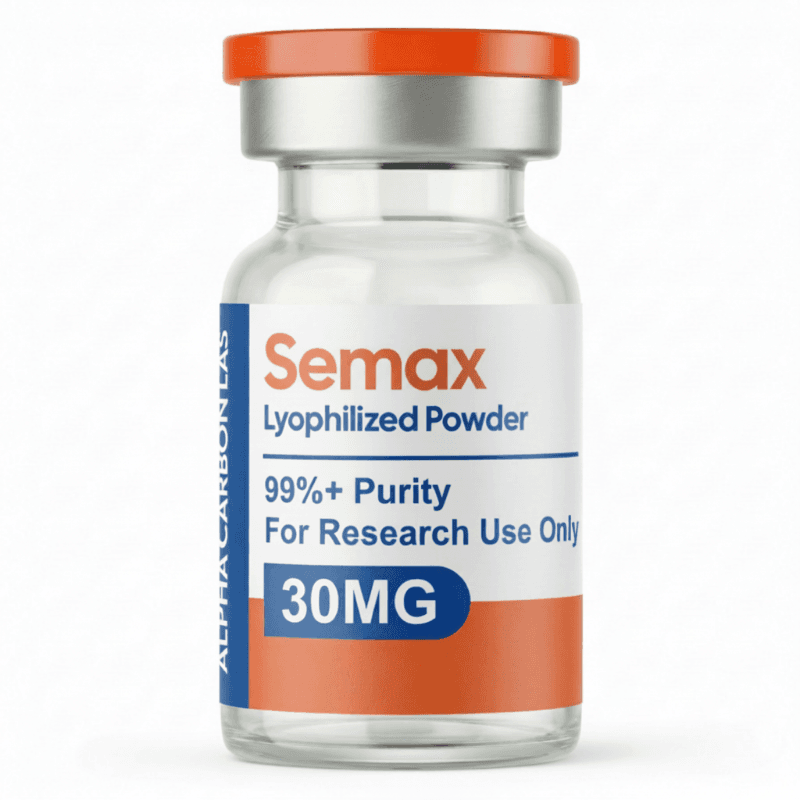
5MG
This product is for research purposes only. Not for human consumption.
Purity: >98% (HPLC verified)
Formulation: Lyophilized powder
Molecular Formula: C37H51N9O10S
Molecular Weight: 813.93 g/mol
CAS Number: 80714-61-0
PubChem CID: 155977617
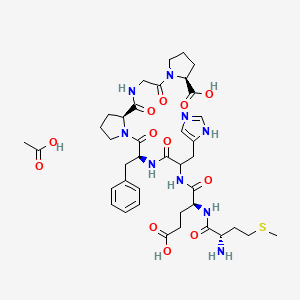
Semax
Overview
Semax is a synthetic heptapeptide with the sequence Met-Glu-His-Phe-Pro-Gly-Pro that was developed in Russia through collaborative research between the Institute of Molecular Genetics of the Russian Academy of Sciences and Moscow State University in the 1980s, based on the adrenocorticotropic hormone (ACTH) fragment 4-10 with additional modifications to enhance stability, bioactivity, and neuroprotective properties. ACTH is a peptide hormone produced by the anterior pituitary that primarily stimulates cortisol production from the adrenal cortex, but fragments of ACTH (particularly the N-terminal fragments) have been recognized since the 1970s to possess neurotrophic and cognitive-enhancing properties independent of their effects on the adrenal cortex - research by David de Wied and colleagues demonstrated that ACTH fragments could improve learning, memory, and attention in animal models even after removal of the pituitary or adrenal glands, indicating direct central nervous system effects. Semax was specifically engineered to maximize these neurocognitive benefits while eliminating hormonal effects, extending biological half-life through structural modifications that confer resistance to enzymatic degradation, and optimizing blood-brain barrier penetration. The resulting peptide demonstrates remarkable nootropic (cognitive-enhancing), neuroprotective, neurorestorative, anxiolytic (anti-anxiety), and adaptogenic properties that have been extensively studied in Russian research and clinical practice. Semax has been approved for clinical use in Russia since the 1990s for multiple indications including acute ischemic stroke, transient ischemic attacks, dyscirculatory encephalopathy, optic nerve diseases, cognitive impairment, and attention disorders, with intranasal administration being the primary route of delivery for easy patient use and direct nose-to-brain drug delivery bypassing the blood-brain barrier. The peptide is manufactured by several Russian pharmaceutical companies and is widely used in Russian neurology and psychiatry, though it remains largely unknown in Western medicine where it has not undergone the regulatory approval processes required for clinical use. Outside Russia, Semax has gained attention in nootropic and biohacking communities for its reported cognitive enhancement, mental clarity, stress resilience, and productivity benefits, though clinical use in Western countries is limited by regulatory status. The accumulated research on Semax over four decades provides compelling evidence for neuroprotective and cognitive effects, though the geographic concentration of research in Russia and limited penetration into international literature creates challenges for Western evaluation and acceptance.
Mechanism of Action
Semax exerts its diverse neurocognitive and neuroprotective effects through multiple interconnected mechanisms affecting neurotransmitter systems, neurotrophic factor expression, gene expression, antioxidant defenses, and neuroplasticity. One of the most well-characterized mechanisms involves upregulation of brain-derived neurotrophic factor (BDNF), the most abundant and important neurotrophin in the central nervous system that supports neuronal survival, growth, differentiation, synaptic plasticity, and cognitive function. Research has demonstrated that Semax administration increases BDNF mRNA expression and protein levels in various brain regions including the hippocampus (critical for memory formation and consolidation), cortex, and other areas involved in cognition and emotion regulation. BDNF binds to TrkB receptors on neurons, activating intracellular signaling cascades including MAPK/ERK, PI3K/Akt, and PLCγ pathways that promote neuronal survival, dendritic growth, spine formation, and synaptic strengthening - processes essential for learning, memory, and brain adaptability. By enhancing BDNF expression, Semax supports these fundamental neuroplasticity mechanisms. Semax also modulates multiple neurotransmitter systems critical for cognition, mood, attention, and motivation. Research shows Semax influences dopaminergic neurotransmission, particularly in regions including the striatum and prefrontal cortex where dopamine regulates executive function, working memory, attention, motivation, and reward processing. Studies have shown that Semax can enhance dopamine turnover, modulate dopamine receptor expression and function, and support optimal dopaminergic tone without causing the excessive stimulation or depletion seen with conventional stimulants. The peptide affects serotonergic systems involved in mood regulation, with research showing modulation of serotonin metabolism and receptor function in a manner that supports emotional stability and stress resilience. Cholinergic system effects have also been documented, with Semax shown to enhance acetylcholine synthesis and release, support cholinergic neuron function, and interact with nicotinic receptors - mechanisms relevant to memory, attention, and learning given the central role of acetylcholine in these cognitive processes. The peptide also influences GABAergic and glutamatergic systems, the brain's primary inhibitory and excitatory neurotransmitter systems, helping to maintain optimal excitatory-inhibitory balance. Semax demonstrates significant neuroprotective effects through multiple pathways. Research in ischemia models (oxygen-glucose deprivation in vitro or middle cerebral artery occlusion in vivo) has shown that Semax reduces neuronal death, decreases infarct size, improves functional recovery, and supports neurological outcomes. These protective effects appear to involve reduction of oxidative stress through enhanced antioxidant enzyme expression and free radical scavenging, anti-inflammatory effects through modulation of cytokine production and glial cell activation, anti-apoptotic effects by regulating cell death pathways, improvement of cerebral blood flow and microcirculation, and preservation of mitochondrial function and energy metabolism. The peptide affects gene expression broadly, with transcriptomic studies showing that Semax modulates expression of hundreds to thousands of genes involved in neuroplasticity, cellular stress responses, immune function, vascular function, and metabolic processes. This widespread gene expression modulation contributes to Semax's pleiotropic effects and adaptogenic properties.
Research Findings
Research on Semax encompasses extensive preclinical studies in cell culture and animal models, clinical trials primarily conducted in Russia, and post-marketing clinical experience accumulating over three decades of approved medical use. Animal studies have consistently demonstrated Semax's cognitive-enhancing properties across multiple learning and memory paradigms. Research using Morris water maze (spatial memory), passive and active avoidance (fear-motivated learning), novel object recognition, and operant conditioning tasks shows that Semax improves acquisition, consolidation, and retrieval of memory in both normal animals and those with experimentally induced cognitive impairment. The peptide shows particular efficacy in models of brain injury, hypoxia, or aging-related cognitive decline, supporting both performance enhancement in healthy subjects and cognitive restoration in impaired states. Neuroprotection studies in stroke models have been particularly extensive and clinically relevant given Semax's approved indication for acute ischemic stroke in Russia. Research using middle cerebral artery occlusion (MCAO) in rats - a standard experimental stroke model - has demonstrated that Semax administration (either before, during, or shortly after occlusion) reduces infarct volume, decreases neurological deficit scores, improves motor and cognitive recovery, and enhances survival. Mechanistic studies show that Semax's neuroprotective effects involve multiple pathways including antioxidant effects, anti-inflammatory actions, improvement of cerebral blood flow, preservation of blood-brain barrier integrity, and support of neuronal survival pathways. Gene expression profiling studies in stroke models have revealed that Semax modulates expression of genes involved in neurotrophic support, vascular remodeling, immune responses, and tissue repair. Clinical trials in stroke patients have demonstrated benefits when Semax is administered during the acute phase (within hours to days after stroke onset). Russian studies report that patients receiving Semax showed faster neurological recovery, better functional outcomes at follow-up assessments, reduced disability scores, and improved quality of life compared to standard treatment alone. A systematic review of Russian-language stroke trials (though with methodological limitations) suggested significant benefits, contributing to regulatory approval and standard-of-care inclusion in Russia. Clinical research in cognitive disorders including age-related cognitive decline, vascular dementia, dyscirculatory encephalopathy, and post-stroke cognitive impairment has shown that Semax administration improves cognitive test scores, enhances memory and attention, reduces subjective cognitive complaints, and may slow progression of cognitive decline. Studies in students and healthy adults have explored Semax as a cognitive enhancer, with some studies showing improvements in memory, focus, mental clarity, and performance under cognitive stress, though effect sizes vary and rigorous placebo-controlled trials in healthy populations are limited. Research in attention deficit disorders, including attention deficit hyperactivity disorder (ADHD), has explored Semax as a non-stimulant treatment option. Small clinical trials in Russia have reported improvements in attention, reduction in hyperactivity, better academic performance, and good tolerability, though large-scale Western trials confirming these benefits are lacking. Anxiety and stress research has shown that Semax has anxiolytic and adaptogenic properties, helping individuals maintain performance and psychological stability under stress without causing sedation. Studies in stressed animals show that Semax prevents stress-induced behavioral and physiological changes. Optic nerve disease research has demonstrated that Semax can support optic nerve function and visual outcomes in conditions including optic nerve atrophy, glaucomatous optic neuropathy, and ischemic optic neuropathy, leading to its approval for these indications in Russia. Safety and tolerability data from clinical trials and post-marketing surveillance over three decades shows excellent tolerability with minimal adverse effects.
Research Applications
- Cognitive enhancement and nootropic research
- Acute ischemic stroke treatment and recovery studies
- Neuroprotection and brain injury research
- Attention deficit disorder and ADHD studies
- Memory and learning enhancement research
- Anxiety and stress resilience research
- Age-related cognitive decline research
- Vascular dementia and dyscirculatory encephalopathy studies
- Optic nerve disease and vision research
- BDNF modulation and neuroplasticity studies
- Neurotransmitter system regulation research
- Post-stroke cognitive and neurological rehabilitation
- Cerebral blood flow and microcirculation research
- Neuropeptide drug development research
Safety Profile
Semax has demonstrated an excellent safety profile across extensive preclinical studies, clinical trials, and over three decades of approved clinical use in Russia with millions of doses administered. The peptide is generally well-tolerated with minimal adverse effects reported. Clinical trials and post-marketing surveillance data show that side effects are infrequent and typically mild. The most commonly reported effects include occasional mild nasal irritation or discomfort related to the intranasal administration route (similar to nasal spray use for any compound), which is transient and generally does not lead to discontinuation. Some users report mild headache, particularly in initial doses or with higher dosing, though this appears uncommon and often resolves with continued use. Unlike conventional stimulants used for cognitive enhancement or ADHD treatment, Semax does not produce jitteriness, anxiety, insomnia, appetite suppression, cardiovascular stimulation, or crash effects, which are common issues with amphetamines and methylphenidate. The peptide does not cause sedation, unlike many anxiolytics, allowing normal alertness and functionality. Semax does not appear to cause tolerance, dependence, or withdrawal effects, distinguishing it from many psychoactive medications. No serious adverse events have been consistently attributed to Semax in approved clinical use. Preclinical toxicology studies have shown no evidence of organ toxicity, genotoxicity, mutagenicity, or carcinogenicity at doses many times higher than therapeutic ranges. Long-term use over months to years in clinical practice has not revealed cumulative toxicity or delayed adverse effects. The peptide's mechanism of working through endogenous neurotrophic factor upregulation and neurotransmitter modulation rather than direct receptor agonism or enzyme inhibition likely contributes to its favorable safety profile. Drug interactions appear minimal, with no significant interactions reported with common medications, though comprehensive interaction studies are limited. Use during pregnancy and lactation has not been extensively studied, and as with most medications lacking pregnancy safety data, use is generally avoided during pregnancy and breastfeeding unless benefits clearly outweigh potential risks. The peptide structure and metabolism do not suggest teratogenic potential, but formal studies are lacking. Cardiovascular effects are minimal, with no significant blood pressure or heart rate changes reported in clinical monitoring. There are no known contraindications beyond hypersensitivity to the peptide or components of the formulation. The primary limitation regarding Semax safety assessment for Western medical practice is that most safety data comes from Russian studies and clinical experience, with limited independent Western replication or evaluation according to current regulatory standards.
Scientific References
Research Use Only
This product is intended for research purposes only and is not for human consumption, therapeutic use, or diagnostic applications. Please ensure compliance with all applicable regulations and institutional guidelines.