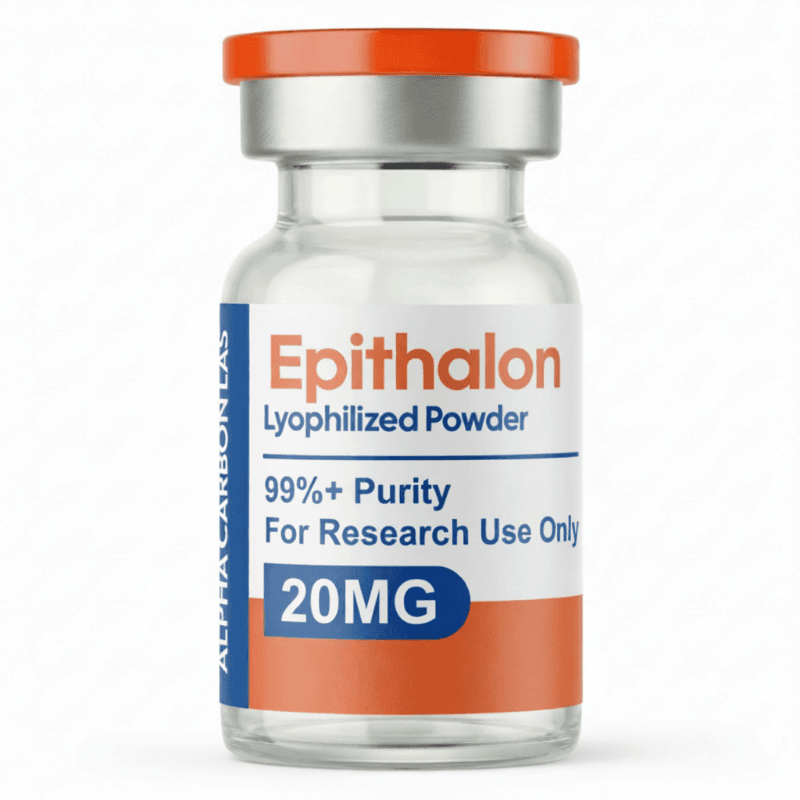
This product is for research purposes only. Not for human consumption.
Purity: >98% (HPLC verified)
Formulation: Lyophilized powder
Molecular Formula: C14H22N4O9
Molecular Weight: 390.35 g/mol
CAS Number: 307297-39-8
PubChem CID: N/A
Epithalon
Overview
Epithalon (also known as Epitalon, Epithalone, or by its chemical name Ala-Glu-Asp-Gly) is a synthetic tetrapeptide that represents the active bioregulatory sequence derived from epithalamin, a naturally occurring polypeptide extract from the pineal gland of young animals.
The pineal gland is a small endocrine organ in the brain that produces melatonin and various peptides that regulate circadian rhythms, aging processes, and neuroendocrine function. Epithalamin was originally characterized by Russian scientist Vladimir Khavinson and colleagues at the St. Petersburg Institute of Bioregulation and Gerontology.
Telomere Biology
This tetrapeptide has gained significant attention in longevity and anti-aging research based on findings suggesting it can influence telomere length, activate telomerase in somatic cells, normalize circadian rhythms, and potentially extend lifespan in animal models.
Telomeres are repetitive DNA sequences at the ends of linear chromosomes that protect genetic information from degradation during cell division. Each time a cell divides, telomeres shorten, eventually triggering cellular senescence or apoptosis - effectively limiting the replicative lifespan of normal somatic cells to approximately 50-70 divisions (the Hayflick limit).
Telomerase Activation
Telomerase is the enzyme complex that can add telomeric repeats to chromosome ends. It is active in germ cells and stem cells, but suppressed in most normal somatic cells. Epithalon's reported ability to activate telomerase in somatic cells and promote telomere elongation would represent a profound intervention in cellular aging processes.
Beyond telomere effects, Epithalon has been studied for its influence on pineal gland function, melatonin production, neuroendocrine regulation, and antioxidant systems.
Mechanism of Action
Epithalon's mechanisms of action appear to be multifaceted, with the most significant effect being its reported ability to activate telomerase in somatic cells where telomerase is normally silenced.
Telomerase Gene Expression
Proposed mechanisms include potential effects on telomerase gene expression - Epithalon may influence transcription of the TERT gene encoding the catalytic subunit of telomerase. Some research suggests Epithalon might modulate epigenetic regulators that control TERT expression, including DNA methylation patterns and histone modifications.
Studies have shown that Epithalon treatment can increase telomerase activity measured by the TRAP assay in cultured human cells, correlating with measurable telomere elongation. The functional consequence would be extended replicative capacity of cells and delayed entry into senescence.
Circadian and Neuroendocrine Effects
Epithalon influences pineal gland function and circadian rhythm regulation. Research indicates it can normalize circadian melatonin production patterns that become dysregulated with aging, potentially through effects on pineal gene expression and enzyme activities involved in melatonin synthesis.
The peptide also appears to have antioxidant properties through upregulation of endogenous antioxidant enzyme systems including superoxide dismutase, catalase, and glutathione-related enzymes. Some research suggests immunomodulatory effects with potential to enhance immune functions that decline with aging.
Research Findings
The research foundation for Epithalon is substantial, though much of this work has been conducted in Russia and published primarily in Russian or Eastern European journals, with less representation in mainstream Western scientific literature.
In Vitro Studies
In vitro studies have demonstrated that Epithalon can activate telomerase in cultured human cells, including fibroblasts and lymphocytes, with measurements showing increased telomerase activity by TRAP assay and subsequent telomere lengthening.
Animal Lifespan Studies
Animal studies in rodents have shown remarkable lifespan extension effects. Multiple studies have reported that Epithalon administration can extend both mean and maximum lifespan by 10-25% or more compared to control animals - effects approaching those seen with caloric restriction.
Treated animals showed delayed onset of age-related pathologies, better preservation of organ function, maintained reproductive capacity, reduced tumor incidence, and improved healthspan.
Human Clinical Research
Human studies have examined Epithalon effects on various biomarkers of aging. Studies have reported improvements in cardiovascular function, blood pressure normalization, lipid profile improvements, and enhanced sleep quality. Importantly, telomere length measurements in treated subjects showed significant elongation compared to controls.
However, critical evaluation requires acknowledging limitations: many studies lack the sample sizes and rigorous controls standard for Western regulatory purposes, independent replication has been limited, and long-term safety data in large human cohorts is lacking.
Research Applications
- Telomere and telomerase research
- Cellular aging and longevity studies
- Circadian rhythm regulation research
- Anti-aging intervention studies
- Age-related disease prevention research
- Cellular senescence studies
Safety Profile
Epithalon has shown a favorable safety profile in research studies with minimal reported adverse effects. Human studies have been limited but suggest good tolerability. As with all research peptides, comprehensive long-term safety data continues to be accumulated.
Scientific References
Research Use Only
This product is intended for research purposes only and is not for human consumption, therapeutic use, or diagnostic applications. Please ensure compliance with all applicable regulations and institutional guidelines.