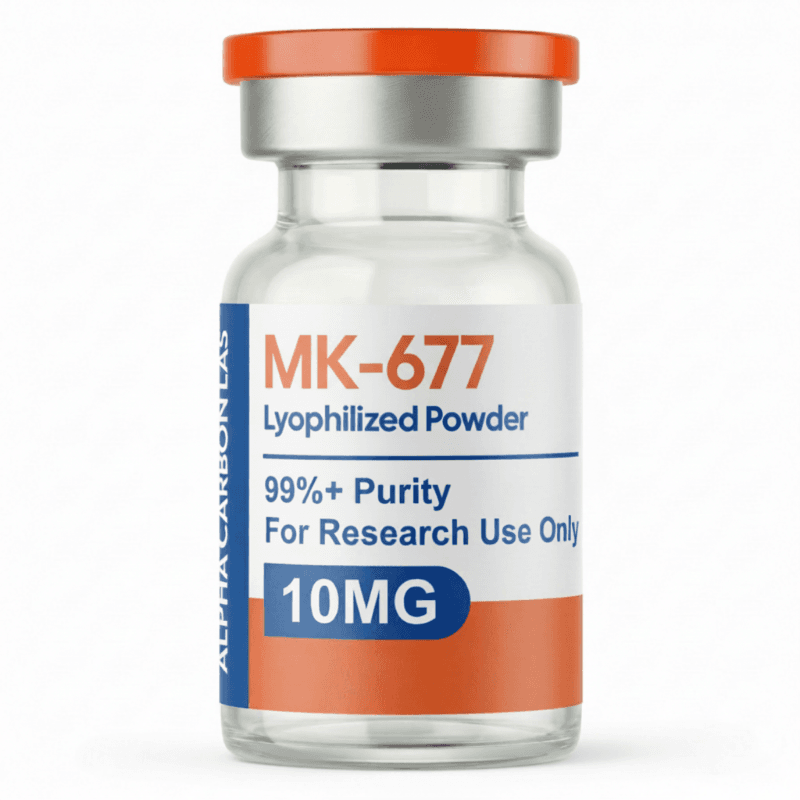
This product is for research purposes only. Not for human consumption.
Purity: >98% (HPLC verified)
Formulation: Powder/Capsule
Molecular Formula: C27H36N4O5S
Molecular Weight: 528.7 g/mol
CAS Number: 159752-10-0
PubChem CID: 9939050

MK-677 (Ibutamoren)
Overview
MK-677, also known as Ibutamoren or by its research designation L-163,191, is an orally active, non-peptide growth hormone secretagogue that represents a significant pharmaceutical innovation in GH modulation due to its unique combination of oral bioavailability, potent GH-releasing activity, and long duration of action.
Oral Bioavailability Advantage
Unlike peptide-based growth hormone secretagogues such as GHRP-6, GHRP-2, Ipamorelin, or CJC-1295 which require injection due to degradation in the gastrointestinal tract, MK-677 is a small molecule peptidomimetic that is stable in gastric acid and absorbable through the intestinal wall, enabling convenient oral administration via capsules or tablets.
This oral bioavailability represents a major practical advantage for both research applications and potential therapeutic development, as it eliminates the need for daily or multiple-daily injections and improves patient compliance and convenience.
Mechanism of Action
MK-677 functions as a highly selective agonist of the growth hormone secretagogue receptor type 1a (GHS-R1a), which is also the endogenous receptor for ghrelin. By mimicking ghrelin's action at this receptor, MK-677 powerfully stimulates pulsatile growth hormone secretion from the anterior pituitary gland while simultaneously producing characteristic ghrelin-mediated effects including appetite stimulation, enhanced food intake, and potential metabolic benefits.
Pharmacokinetics
What particularly distinguishes MK-677 from injectable GH secretagogues is its exceptionally long half-life of approximately 24 hours, which allows for once-daily dosing while producing sustained elevations in both GH and insulin-like growth factor 1 (IGF-1) levels that persist throughout the day.
Clinical Research
MK-677 has been studied extensively in formal clinical trials for various therapeutic applications including growth hormone deficiency, age-related functional decline, sarcopenia (muscle wasting with aging), frailty, hip fracture recovery, obesity, and wasting conditions associated with chronic illness. These clinical studies have generated substantial high-quality evidence regarding MK-677's efficacy, safety, pharmacokinetics, and physiological effects.
The compound has demonstrated consistent ability to increase lean body mass, enhance bone mineral density, improve nitrogen retention, stimulate appetite, enhance sleep quality (particularly slow-wave sleep), and produce other effects consistent with GH and IGF-1 elevation.
Mechanism of Action
MK-677 exerts its growth hormone-stimulating effects through highly selective agonism of the growth hormone secretagogue receptor type 1a (GHS-R1a), a Gq-coupled G-protein coupled receptor (GPCR) that was originally discovered as an orphan receptor and later identified as the natural receptor for ghrelin. GHS-R1a is expressed at high levels on somatotroph cells in the anterior pituitary gland, the primary site mediating GH release, and is also present in the hypothalamus (particularly the arcuate nucleus and ventromedial hypothalamus where it regulates appetite and metabolism), hippocampus, ventral tegmental area and other reward/motivation circuits, gastrointestinal tract, adipocytes, pancreatic beta cells, cardiovascular tissues, and various other locations where ghrelin exerts its diverse physiological effects. When MK-677 binds to GHS-R1a on pituitary somatotrophs, it activates Gq proteins, which stimulate phospholipase C to generate inositol 1,4,5-trisphosphate (IP3) and diacylglycerol (DAG) as second messengers. IP3 triggers calcium release from endoplasmic reticulum stores, elevating intracellular free calcium concentrations, which in turn drives exocytosis of growth hormone from secretory granules where it is stored within the somatotroph cells. This signaling mechanism differs from that of growth hormone-releasing hormone (GHRH), which acts through Gs-coupled receptors and cAMP-mediated pathways, explaining why ghrelin mimetics like MK-677 and GHRH analogs are synergistic when combined - they activate complementary pathways that converge on calcium mobilization and vesicle fusion. MK-677 appears to preserve the pulsatile nature of GH secretion despite its long half-life, with studies showing that it amplifies the magnitude of endogenous GH pulses rather than producing continuous flat elevation - this pulsatility preservation may be important for maintaining physiological GH signaling patterns and minimizing receptor downregulation. The sustained elevation in mean GH levels produced by once-daily MK-677 administration leads to increased hepatic synthesis and secretion of IGF-1, the primary mediator of many GH effects. IGF-1 levels typically increase within days of starting MK-677 and remain elevated with continued dosing, with studies showing 30-100% increases in serum IGF-1 depending on dose, age, and baseline status. This IGF-1 elevation drives many of the anabolic and metabolic effects attributed to MK-677, including stimulation of muscle protein synthesis, enhancement of lipolysis (fat breakdown), promotion of bone formation and mineralization, improvement in collagen synthesis and wound healing, and various effects on organ and tissue function. IGF-1 also provides negative feedback to the hypothalamus and pituitary to regulate GH secretion, though this feedback does not appear to cause complete suppression of GH release with MK-677 - studies have shown sustained GH and IGF-1 elevations over months of continuous MK-677 administration without significant desensitization or tolerance, suggesting the feedback regulation adapts to a new setpoint rather than shutting down the axis. At the hypothalamic level, MK-677 activation of ghrelin receptors in the arcuate nucleus powerfully stimulates orexigenic (appetite-promoting) NPY/AgRP neurons while inhibiting anorexigenic (appetite-suppressing) POMC neurons, resulting in robust appetite stimulation and increased food intake. This ghrelin-mimetic appetite effect is consistent across studies and represents both a potential therapeutic benefit for wasting conditions and cachexia, and an unwanted side effect for body composition applications where increased caloric intake could counteract fat loss goals. The appetite stimulation with MK-677 tends to be sustained with chronic use, unlike some other effects that may partially adapt. MK-677 produces modest elevations in cortisol levels, typically 20-40% increases, due to activation of hypothalamic-pituitary-adrenal axis pathways - these cortisol increases are generally within the physiological range and not considered clinically significant in healthy individuals, though they warrant awareness. Unlike some earlier GH secretagogues, MK-677 does not significantly elevate prolactin in most studies. The compound's effects on glucose metabolism are complex: while GH and IGF-1 can enhance insulin sensitivity in some contexts (such as in GH-deficient patients), the sustained GH elevation produced by MK-677 tends to cause insulin resistance due to GH's inherent anti-insulin effects at the cellular level. This can manifest as elevated fasting glucose and insulin levels, impaired glucose tolerance, and in susceptible individuals, progression toward prediabetes or exacerbation of existing diabetes - an effect that has complicated clinical development but appears manageable with lifestyle interventions and monitoring in most healthy research subjects.
Research Findings
MK-677 has been studied more extensively in formal clinical trials than most research peptides, with multiple Phase I, II, and III studies conducted by pharmaceutical companies (Merck and later Reverse Pharmacology) and academic medical centers examining its pharmacology, efficacy, and safety in various populations and therapeutic contexts. This robust clinical trial database provides high-quality evidence regarding the compound's effects and has established key pharmacokinetic, pharmacodynamic, and safety parameters that inform research use. Early pharmacokinetic studies in healthy volunteers established that oral MK-677 is well absorbed with bioavailability of approximately 60-70%, reaches peak plasma concentrations within 2-3 hours, and has an elimination half-life of approximately 4-6 hours for the parent compound but much longer-lasting pharmacodynamic effects on GH secretion due to receptor occupancy and signaling duration. The effective half-life for GH stimulation is approximately 24 hours, enabling once-daily dosing. Dose-ranging studies established that daily oral doses of 10-50 mg produce robust and dose-dependent increases in both GH secretion and serum IGF-1 levels, with the most commonly studied dose being 25 mg daily. At this dose, studies typically show 40-90% increases in mean 24-hour GH levels and 30-100% increases in serum IGF-1, with higher increases generally observed in elderly individuals and those with lower baseline GH/IGF-1 status. Importantly, these elevations are sustained over time - studies extending up to two years of continuous MK-677 administration have demonstrated persistent GH and IGF-1 increases without significant desensitization or tolerance, a crucial finding that distinguishes MK-677 from some other secretagogues where chronic use may lead to diminished responses. Body composition studies have consistently shown that MK-677 increases lean body mass (fat-free mass) over treatment periods of 8 weeks to 2 years, with magnitude of lean mass gain typically ranging from 1-3 kg depending on duration, dose, baseline status, and whether subjects engage in resistance training. Landmark studies by Svensson et al. and Chapman et al. in elderly populations demonstrated significant increases in lean body mass and improvements in functional capacity with 12-24 months of MK-677 treatment. Fat mass responses are more variable - while some studies show reductions in fat mass and visceral adiposity, others show no change or even slight increases, likely reflecting the competing effects of lipolytic GH/IGF-1 actions versus appetite stimulation and increased caloric intake. Bone density research has shown promising results, with multiple studies demonstrating that MK-677 increases markers of bone formation (such as osteocalcin and bone-specific alkaline phosphatase) and can improve bone mineral density, particularly at sites rich in trabecular bone such as the hip and spine. A landmark study in elderly hip fracture patients showed that MK-677 accelerated functional recovery and improved gait speed compared to placebo. Sleep quality research has revealed that MK-677 significantly increases slow-wave sleep (deep sleep, stage N3), the most restorative sleep stage that naturally features the largest physiological GH pulses. Multiple studies using polysomnography have documented 20-50% increases in slow-wave sleep duration with MK-677, potentially explaining subjective improvements in sleep quality and recovery reported by users. Studies in growth hormone deficiency have shown that MK-677 can normalize IGF-1 levels and improve body composition in both children and adults with GH deficiency, suggesting potential therapeutic utility as an oral alternative to injectable recombinant GH, though development for this indication has stalled. Metabolic studies have revealed the glucose metabolism concerns that complicated clinical development: multiple trials showed significant increases in fasting glucose (typically 5-15 mg/dL elevations) and fasting insulin levels, with some studies demonstrating impaired glucose tolerance on oral glucose tolerance testing. A meta-analysis of MK-677 trials found increased risk of elevated glucose and insulin resistance markers, with greater effects in older individuals and those with existing metabolic impairment. However, frank diabetes development was rare in studies, and effects appeared reversible upon discontinuation. Muscle wasting and cachexia research has explored MK-677 for various wasting conditions, based on its dual actions of stimulating GH/IGF-1 (anabolic) and appetite (increased intake). Studies in conditions such as chronic obstructive pulmonary disease (COPD), end-stage renal disease, and cancer-related cachexia have shown mixed results - while lean mass improvements occurred, functional benefits were inconsistent. Cardiovascular research includes studies examining effects on cardiac structure and function, with some evidence that MK-677 can improve cardiac output and exercise capacity in heart failure patients, though this application requires further investigation. Safety monitoring across the clinical trial database spanning hundreds of participants followed for up to two years has established a generally acceptable safety profile with identifiable but manageable concerns, primarily related to the glucose metabolism effects discussed above.
Research Applications
- Growth hormone secretion and GH pulsatility research
- Ghrelin receptor pharmacology and signaling studies
- Body composition optimization research (lean mass, fat reduction)
- Age-related GH decline and somatopause studies
- Bone density, mineral metabolism, and osteoporosis research
- Sarcopenia and age-related muscle wasting studies
- Frailty and functional decline research in elderly populations
- Sleep architecture and slow-wave sleep enhancement studies
- Muscle wasting and cachexia research (cancer, COPD, renal disease)
- Hip fracture recovery and rehabilitation research
- Appetite regulation and feeding behavior studies
- Metabolic health and energy homeostasis research
- Insulin sensitivity and glucose metabolism studies
- Cardiovascular function and heart failure research
- Athletic performance and recovery research
- Wound healing and tissue repair studies
- Growth hormone deficiency treatment research
- Anti-aging and longevity research
- Oral GH secretagogue pharmacology versus injectable peptides
Safety Profile
MK-677 has undergone extensive safety evaluation in formal clinical trials involving hundreds of participants followed for periods ranging from weeks to over two years, providing a robust safety database that exceeds that available for most research peptides. The overall safety profile is considered acceptable with identifiable and manageable adverse effects, though specific concerns warrant attention and monitoring. The most consistent and prominent side effect is appetite stimulation and increased hunger, occurring in the majority of users due to ghrelin receptor activation in hypothalamic appetite centers - this can lead to significant increases in food intake and caloric consumption if not consciously controlled, potentially resulting in unwanted fat gain that could counteract body composition goals, though this appetite effect may be therapeutically beneficial for cachexia and wasting conditions. Water retention and mild peripheral edema are common, particularly in the first weeks of use, reflecting GH's effects on sodium retention and fluid balance - this typically manifests as modest weight gain (1-2 kg), mild swelling of hands or feet, and transient feelings of bloating, though these effects often diminish with continued use as the body adapts. The most significant safety concern identified in clinical trials is MK-677's effects on glucose metabolism: sustained GH elevation produces insulin resistance through GH's inherent anti-insulin actions at the cellular level, resulting in measurable increases in fasting glucose (typically 5-15 mg/dL elevations), elevated fasting insulin levels, and impaired glucose tolerance on oral glucose tolerance testing in a substantial proportion of users. Meta-analyses of clinical trials have confirmed increased risk of hyperglycemia and markers of insulin resistance, with effects being more pronounced in elderly individuals, those with existing metabolic impairment or prediabetes, and overweight/obese subjects. While progression to overt type 2 diabetes appears rare in short-to-medium term studies in metabolically healthy individuals, the glucose-elevating effects warrant careful monitoring, particularly with long-term use - baseline and periodic assessment of fasting glucose, hemoglobin A1c, and potentially oral glucose tolerance testing is advisable, with dose reduction or discontinuation warranted if concerning metabolic changes occur. Individuals with pre-existing diabetes or significant insulin resistance should exercise particular caution and close monitoring. MK-677 produces modest elevations in cortisol levels, typically 20-40% increases that are generally within the physiological range and not considered clinically significant in healthy individuals, though awareness is warranted particularly for those with conditions where cortisol elevation could be problematic. Unlike earlier GH secretagogues, MK-677 does not significantly affect prolactin levels in most studies. Some users report lethargy or tiredness during initial weeks of use, possibly related to metabolic adaptation or the sedating effects of increased slow-wave sleep, though this typically resolves with continued use. Numbness, tingling, or joint discomfort have been reported in some clinical trial participants, possibly related to fluid retention or GH effects on connective tissue. Long-term safety beyond two years is not well characterized by formal studies, though theoretical concerns about chronic IGF-1 elevation (given IGF-1's growth-promoting properties and potential proliferative effects) warrant consideration - maintaining IGF-1 levels within the upper physiological range rather than supraphysiological elevation appears prudent. Quality and purity of MK-677 obtained from research suppliers varies considerably, and contamination or incorrect dosing could impact both efficacy and safety. Overall, MK-677 demonstrates an acceptable safety profile for research applications in metabolically healthy individuals with appropriate monitoring, with glucose metabolism effects being the primary concern requiring vigilance.
Scientific References
Research Use Only
This product is intended for research purposes only and is not for human consumption, therapeutic use, or diagnostic applications. Please ensure compliance with all applicable regulations and institutional guidelines.