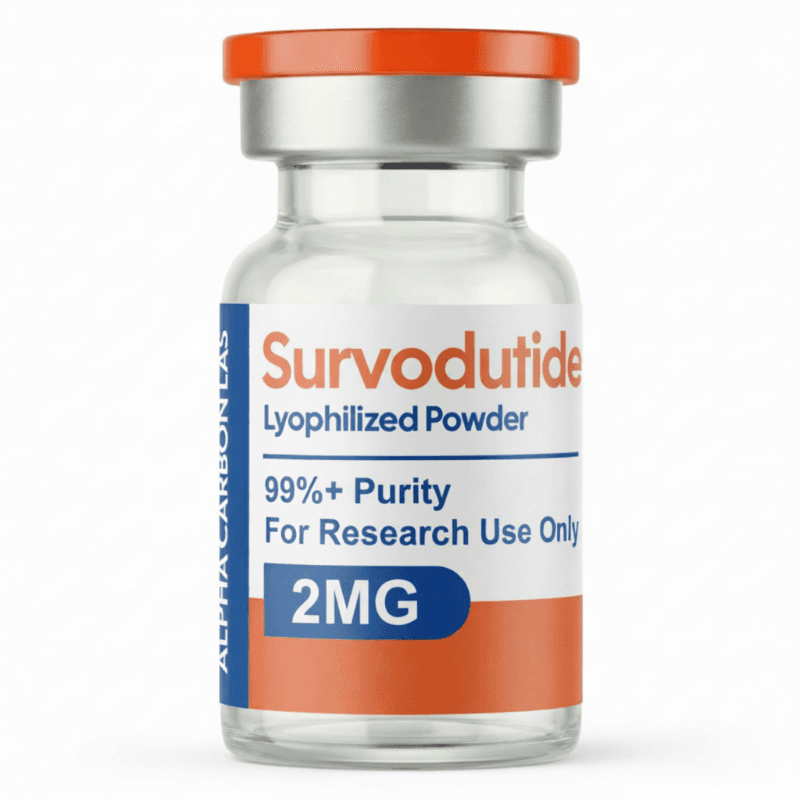
This product is for research purposes only. Not for human consumption.
Purity: >98% (HPLC verified)
Formulation: Lyophilized powder
Molecular Formula: C235H357N61O66S
Molecular Weight: 5188.82 g/mol
CAS Number: N/A
PubChem CID: N/A
Survodutide
Overview
Survodutide (BI 456906) represents the cutting edge of multi-receptor agonist peptide therapeutics, developed by Boehringer Ingelheim as a rationally designed dual agonist that simultaneously activates both the glucagon-like peptide-1 (GLP-1) receptor and the glucagon receptor (GCGR) to produce complementary metabolic effects that exceed what either pathway can achieve individually. This balanced co-agonist approach emerged from decades of research into incretin biology and metabolic regulation, building on the dramatic clinical success of pure GLP-1 receptor agonists like semaglutide and tirzepatide while incorporating insights about glucagon's underappreciated beneficial metabolic effects when properly harnessed. While glucagon is classically viewed as a counter-regulatory hormone that raises blood glucose (opposing insulin's effects), modern research has revealed that glucagon also powerfully increases energy expenditure, enhances hepatic and peripheral fat oxidation, reduces liver fat accumulation, improves lipid metabolism, and potentially supports cardiovascular health - metabolic effects that could be therapeutically valuable if the glucose-raising effects could be mitigated. The ingenious strategy embodied by survodutide is to combine GLP-1 receptor activation (which powerfully lowers glucose, suppresses appetite, slows gastric emptying, and promotes weight loss) with glucagon receptor activation (which increases energy expenditure and hepatic fat oxidation) in a single molecule with carefully balanced potencies at each receptor. The GLP-1 agonism counteracts glucagon's glucose-raising effects while preserving its beneficial metabolic actions, creating a therapeutic profile particularly well-suited for obesity with metabolic complications, type 2 diabetes, and metabolic dysfunction-associated steatohepatitis (MASH, previously called NAFLD/NASH) - conditions characterized by excess weight, dysglycemia, and ectopic fat accumulation particularly in the liver. Clinical development of survodutide has focused primarily on MASH, a progressive liver disease affecting an estimated 115 million people globally that can lead to cirrhosis, liver failure, and hepatocellular carcinoma, and for which effective pharmacological treatments remain limited. Phase 2 clinical trial results published in the New England Journal of Medicine in 2023 demonstrated that survodutide produced remarkable reductions in liver fat content, improvements in liver fibrosis, resolution of MASH on liver biopsy, and substantial weight loss - outcomes that generated significant excitement in hepatology and metabolic disease communities. The compound is also being developed for obesity and type 2 diabetes, where phase 2 studies have shown weight loss approaching or exceeding that seen with highly effective GLP-1 agonists, combined with excellent glycemic control and improvements in multiple cardiometabolic risk factors. As a next-generation multi-agonist peptide following in the footsteps of tirzepatide (GLP-1/GIP dual agonist), survodutide represents the pharmaceutical industry's ongoing efforts to optimize metabolic peptide therapeutics by intelligently combining complementary receptor pathways.
Mechanism of Action
Survodutide functions through simultaneous and balanced activation of two distinct G-protein coupled receptors with complementary metabolic effects: the GLP-1 receptor and the glucagon receptor. The GLP-1 receptor component produces the now well-established incretin effects that have made GLP-1 agonists revolutionary treatments for type 2 diabetes and obesity. GLP-1 receptors are expressed on pancreatic beta cells, where activation enhances glucose-dependent insulin secretion - this glucose-dependence means insulin secretion is stimulated when blood glucose is elevated but not when glucose is normal or low, dramatically reducing hypoglycemia risk compared to sulfonylureas or exogenous insulin. GLP-1 receptor activation also suppresses inappropriate glucagon secretion from pancreatic alpha cells (reducing hepatic glucose production), slows gastric emptying (moderating postprandial glucose excursions and enhancing satiety), and powerfully reduces appetite through effects on hypothalamic appetite centers and brainstem satiety neurons, leading to reduced caloric intake and progressive weight loss. These mechanisms collectively improve glycemic control and promote weight loss. The glucagon receptor component of survodutide's mechanism is more novel from a therapeutic perspective, as glucagon has historically been viewed primarily as a counter-regulatory hormone to be suppressed rather than therapeutically activated. However, modern research has revealed that glucagon receptor activation produces several metabolically beneficial effects when combined with GLP-1 agonism. Glucagon powerfully increases energy expenditure through multiple mechanisms including increased thermogenesis (heat production), enhanced fatty acid oxidation in liver and peripheral tissues, and increased metabolic rate - effects mediated through cAMP signaling and downstream activation of thermogenic programs. In the liver, glucagon enhances beta-oxidation of fatty acids and promotes export of lipids from hepatocytes, reducing intrahepatic lipid accumulation - this hepatic fat-reducing effect is particularly relevant for MASH, where hepatic steatosis is a cardinal feature. Glucagon also influences lipid metabolism more broadly, improving lipid profiles through enhanced clearance and oxidation of lipids. The potential cardiovascular effects of glucagon receptor activation, while still being fully characterized, may include beneficial effects on cardiac function and vascular health. Critically, the glucose-raising effect of glucagon receptor activation (mediated through increased hepatic glucose production) is counteracted by the simultaneous GLP-1 receptor activation in survodutide, allowing the metabolic benefits of glucagon to be harnessed without causing hyperglycemia. The net effect is a shift in whole-body energy balance toward increased energy expenditure and enhanced fat oxidation, complementing the reduced energy intake driven by GLP-1's appetite-suppressing effects. This dual mechanism attacks obesity and metabolic dysfunction from multiple angles simultaneously: reduced food intake (GLP-1), increased energy expenditure (glucagon), enhanced fat oxidation (glucagon), improved glucose metabolism (GLP-1), and reduced hepatic fat (glucagon + GLP-1), creating a comprehensive metabolic remodeling effect. At the molecular level, survodutide is a peptide designed to bind both GLP-1 and glucagon receptors with carefully optimized potencies and balanced activation profiles, formulated for once-weekly subcutaneous administration with pharmacokinetic properties supporting sustained receptor activation.
Research Findings
Clinical development of survodutide has proceeded through phase 1 and phase 2 trials with particularly notable results in metabolic dysfunction-associated steatohepatitis (MASH), obesity, and type 2 diabetes, generating substantial scientific and clinical interest. The landmark phase 2 MASH trial, published in the New England Journal of Medicine in October 2023 by Sanyal and colleagues, enrolled 293 patients with biopsy-confirmed MASH and liver fibrosis across multiple international sites. Participants were randomized to receive once-weekly subcutaneous injections of survodutide at doses of 2.4 mg, 4.8 mg, or 6.0 mg, or placebo, for 48 weeks, with liver biopsies performed at baseline and week 48 to assess histological endpoints - the gold standard for evaluating MASH treatments. The primary endpoint was MASH resolution (disappearance of hepatocyte ballooning and lobular inflammation) without worsening of fibrosis, which was achieved by 47% of patients in the 2.4 mg group, 62% in the 4.8 mg group, and 83% in the 6.0 mg group, compared to only 18% in the placebo group - statistically significant and clinically meaningful improvements at all dose levels. Improvement in fibrosis by at least one stage without worsening of MASH occurred in 39-51% of survodutide-treated patients versus 18% with placebo. Reductions in liver fat content measured by MRI-PDFF were dramatic, with the highest dose achieving approximately 60% relative reduction in liver fat versus 5% with placebo. Patients receiving survodutide also experienced substantial weight loss averaging 10-15% of body weight depending on dose, improvements in hemoglobin A1c, reductions in liver enzymes (ALT, AST), improvements in lipid profiles, and reductions in biomarkers of liver injury and fibrosis. These results represented some of the most impressive liver histology improvements seen in MASH clinical trials, positioning survodutide as a leading candidate for regulatory approval in MASH - a condition where effective treatments are desperately needed. Safety in the MASH trial showed predominantly gastrointestinal side effects (nausea, diarrhea, vomiting) typical of GLP-1 receptor agonists, generally mild to moderate and decreasing over time, with discontinuation rates manageable and comparable to other incretin-based therapies. Phase 2 studies in obesity have demonstrated weight loss efficacy comparable to or exceeding that of highly effective GLP-1 agonists. A study in participants with obesity showed that survodutide produced dose-dependent weight loss reaching approximately 15-20% of body weight at higher doses over 46 weeks, with improvements in multiple cardiometabolic parameters including blood pressure, lipids, inflammatory markers, and insulin sensitivity. The magnitude of weight loss positions survodutide competitively with semaglutide 2.4 mg and tirzepatide, currently the most effective weight loss medications. In type 2 diabetes studies, survodutide demonstrated excellent glycemic control with substantial reductions in hemoglobin A1c (often exceeding 2% reductions from baseline), combined with the substantial weight loss that many diabetes patients desperately need but struggle to achieve with traditional diabetes medications. Mechanistic substudies have confirmed that survodutide increases energy expenditure as measured by indirect calorimetry, enhances fat oxidation, reduces hepatic fat, and improves multiple markers of metabolic health. Comparative studies and modeling suggest that the addition of glucagon receptor activation provides incremental benefits beyond GLP-1 agonism alone, particularly for liver fat reduction and energy expenditure enhancement. Ongoing phase 3 trials in MASH (SYNCHRONY program) and obesity are evaluating survodutide's long-term efficacy, safety, and impact on hard clinical outcomes including liver-related events, cardiovascular outcomes, and mortality, with results anticipated to read out over the next few years and potentially support regulatory submissions for approval.
Research Applications
- Metabolic dysfunction-associated steatohepatitis (MASH) treatment research
- Non-alcoholic fatty liver disease (NAFLD) and steatohepatitis studies
- Obesity and weight management research
- Type 2 diabetes treatment and glycemic control studies
- Liver fibrosis and cirrhosis prevention research
- Hepatic steatosis reduction and liver fat metabolism studies
- Dual GLP-1/glucagon receptor agonist mechanism research
- Energy expenditure and thermogenesis research
- Metabolic syndrome and cardiometabolic disease studies
- Lipid metabolism and dyslipidemia research
- Multi-receptor agonist peptide therapeutic development
- Liver disease progression and histology improvement studies
Safety Profile
Survodutide is currently in clinical development with safety data primarily from phase 1 and phase 2 trials enrolling several hundred participants treated for up to one year, providing reasonable short-to-medium-term safety assessment though long-term safety data from larger phase 3 populations remains forthcoming. The safety profile observed to date is generally consistent with GLP-1 receptor agonist class effects, with the most common adverse events being gastrointestinal in nature. Nausea is the most frequently reported side effect, occurring in approximately 40-60% of participants in clinical trials depending on dose and titration schedule, though it is typically mild to moderate in severity and tends to decrease substantially over the first weeks to months of treatment as tolerance develops. Diarrhea and vomiting are also commonly reported but generally manageable. These gastrointestinal effects are mechanism-based, resulting from GLP-1 receptor activation effects on gastric motility and are similar to effects seen with semaglutide, liraglutide, tirzepatide, and other GLP-1 agonists. Careful dose titration, starting at lower doses and gradually increasing, can substantially reduce the frequency and severity of gastrointestinal side effects while maintaining efficacy. Discontinuation rates due to adverse events in phase 2 trials have been acceptable at approximately 5-15% depending on dose, which is manageable for a chronic disease treatment though dose-dependent. Injection site reactions are typically mild. Serious adverse events have been infrequent and not clearly attributable to survodutide in most cases, though comprehensive safety assessment continues in ongoing trials. Specific safety considerations related to glucagon receptor activation beyond those of GLP-1 agonism alone have not manifested as major concerns - theoretical risks might include effects on blood pressure, heart rate, or metabolic parameters, but these have not emerged as significant issues in clinical trials; indeed, blood pressure typically improves with the weight loss achieved. Hypoglycemia risk is low due to the glucose-dependent mechanism of GLP-1's insulinotropic effects and the counterbalancing of glucagon's hyperglycemic effects by GLP-1, with rates of clinically significant hypoglycemia being very low in trials unless participants were on concurrent insulin or sulfonylureas requiring dose adjustment. Cardiovascular safety appears acceptable from available data, with improvements in cardiovascular risk factors including weight, blood pressure, lipids, and inflammatory markers, though dedicated cardiovascular outcome trials (which are standard requirements for diabetes and obesity therapies) will be needed to definitively assess cardiovascular safety and potential benefit. Hepatic safety is obviously critical for a MASH therapy; liver enzyme monitoring in trials showed improvements rather than worsening, consistent with therapeutic benefit rather than hepatotoxicity, though continued monitoring in larger populations is appropriate. Pancreatitis, a rare but serious concern with incretin-based therapies, has been monitored in trials with no clear signal of increased risk, though this remains an area of ongoing vigilance. Thyroid safety, including medullary thyroid carcinoma risk (a theoretical concern with GLP-1 agonists based on rodent studies though not confirmed in humans), continues to be monitored per regulatory requirements, with survodutide carrying similar precautionary labeling to other GLP-1 agonists. The overall risk-benefit profile appears favorable for the populations being studied (MASH, obesity, type 2 diabetes), where the serious health consequences of these conditions and lack of highly effective alternatives support acceptance of manageable side effects, though final regulatory and clinical judgments await completion of phase 3 programs and comprehensive benefit-risk assessment.
Scientific References
Research Use Only
This product is intended for research purposes only and is not for human consumption, therapeutic use, or diagnostic applications. Please ensure compliance with all applicable regulations and institutional guidelines.