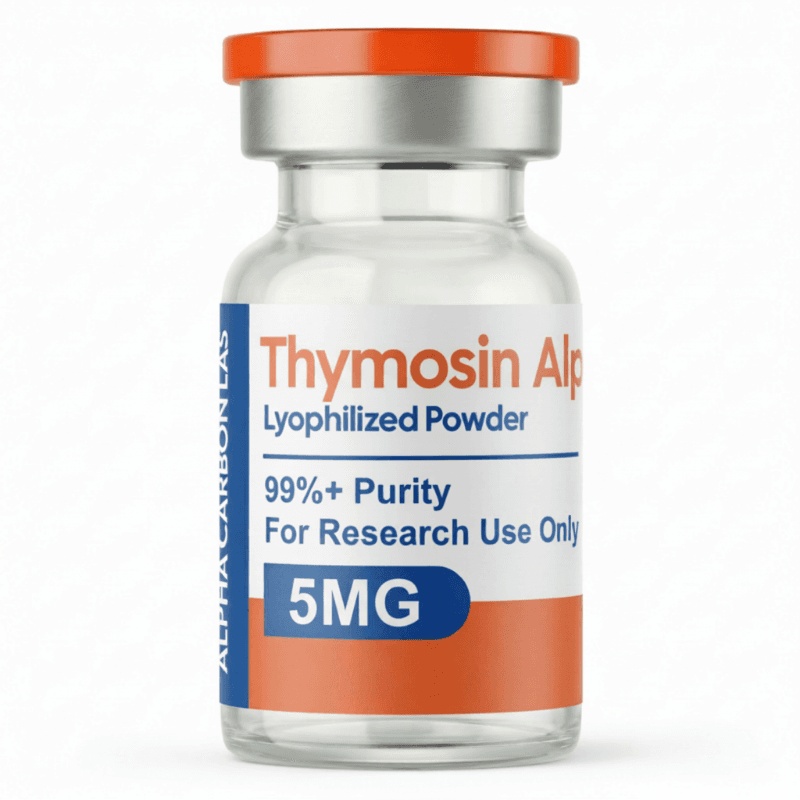
This product is for research purposes only. Not for human consumption.
Purity: >98% (HPLC verified)
Formulation: Lyophilized powder
Molecular Formula: C129H215N33O55
Molecular Weight: 3108.3 g/mol
CAS Number: 62304-98-7
PubChem CID: 16130571
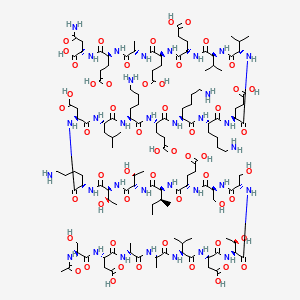
Thymosin Alpha-1
Overview
Thymosin Alpha-1 (Tα1), also known as Thymalfasin, is a naturally occurring 28-amino acid peptide originally isolated from thymosin fraction 5, a bovine thymus gland extract, by Allan Goldstein and colleagues in the 1970s. This peptide represents one of the most clinically validated immunomodulatory peptides, with decades of research establishing its ability to enhance immune function and restore immune balance.
The thymus gland serves as the primary site of T-cell maturation, where immature T-cell precursors undergo selection processes that educate them to recognize foreign antigens while avoiding autoimmune reactions. Thymosin Alpha-1 facilitates this complex maturation process, influencing T-cell development and promoting the survival of properly functioning T-cells.
Clinical Significance
Thymosin Alpha-1 has achieved regulatory approval as a pharmaceutical therapeutic in over 30 countries for treatment of chronic hepatitis B and C, as adjunctive therapy in certain cancers, and for immune enhancement in immunocompromised states. The extensive clinical experience with this peptide has established excellent safety and tolerability profiles.
Unlike immunostimulants that simply amplify immune responses indiscriminately, Thymosin Alpha-1 acts as a true immunomodulator, enhancing deficient immune responses while potentially dampening excessive or misdirected immune activation, helping to restore immunological balance.
Mechanism of Action
Thymosin Alpha-1 exerts its immunomodulatory effects through multiple interconnected mechanisms involving direct actions on various immune cell populations, modulation of cytokine networks, and enhancement of pattern recognition receptor signaling.
T-Lymphocyte Effects
In T-lymphocytes, Thymosin Alpha-1 enhances differentiation of immature thymocytes into mature T-cells, promotes the development of Th1 cells critical for cell-mediated immunity, and enhances expression of IL-2 receptors on T-cell surfaces. The peptide increases T-cell production of key cytokines including IL-2 and IFN-γ (interferon-gamma), improving T-cell cytotoxic function.
Natural Killer Cell Activation
In natural killer (NK) cells, Thymosin Alpha-1 enhances cytotoxic activity, increases IFN-γ production, improves tumor cell recognition and killing, and enhances antibody-dependent cellular cytotoxicity (ADCC).
Dendritic Cell Maturation
In dendritic cells, the peptide promotes maturation from immature antigen-capturing cells into mature antigen-presenting cells, enhances expression of MHC molecules and costimulatory molecules essential for effective T-cell activation, and increases production of IL-12.
Toll-Like Receptor Signaling
Thymosin Alpha-1 has been shown to potentiate TLR2 and TLR9 signaling, enhancing the immune system's ability to detect and respond to pathogens. At the molecular level, it influences key intracellular pathways including the NF-κB pathway and MAPK pathways.
Research Findings
The research literature on Thymosin Alpha-1 spans over four decades, encompassing basic immunological research, preclinical animal studies, and numerous clinical trials in diverse patient populations.
Viral Hepatitis Research
Meta-analyses of randomized controlled trials in chronic hepatitis B have demonstrated that Thymosin Alpha-1 treatment significantly increases rates of HBV DNA clearance and HBeAg seroconversion compared to control treatments. Studies in chronic hepatitis C showed that when combined with interferon-alpha, Thymosin Alpha-1 significantly enhanced sustained virological response rates.
Cancer Immunotherapy
Studies in melanoma, hepatocellular carcinoma, lung cancer, and other malignancies have investigated Thymosin Alpha-1 as an adjunct to chemotherapy, radiation, or surgical treatment. Research has shown improvements in immune parameters, reductions in treatment-related immunosuppression, and in some studies, improvements in disease-free survival.
Vaccine Enhancement
Research has demonstrated that Thymosin Alpha-1 can improve antibody responses to influenza vaccination in elderly individuals and immunocompromised patients who typically have blunted vaccine responses.
Sepsis and Critical Illness
Studies have shown that Thymosin Alpha-1 can improve immune cell function, reduce infection rates, and potentially improve survival in septic patients who often develop immunoparalysis.
Immunosenescence Research
In healthy aging populations, Thymosin Alpha-1 has been shown to partially restore age-declined immune parameters and enhance responses to vaccination.
Research Applications
- Immune system enhancement and immunomodulation research
- Viral infection treatment studies (hepatitis B and C, HIV, influenza)
- Cancer immunotherapy and adjunctive oncology research
- Immunodeficiency disorder research and treatment
- Vaccine response enhancement and immunization studies
- Aging and immunosenescence research
- Sepsis and critical illness immune support studies
- T-cell biology and differentiation research
- Thymic function and thymopoiesis studies
- Innate and adaptive immunity research
Safety Profile
Thymosin Alpha-1 has one of the most extensively documented and favorable safety profiles among immunomodulatory peptides, with decades of clinical use in millions of patients worldwide.
The peptide has been approved for medical use in over 30 countries and is remarkably well-tolerated with minimal adverse effects even with prolonged use. The most commonly reported adverse effects are mild local injection site reactions including transient redness and mild discomfort.
Systemic adverse effects are uncommon and typically mild. Unlike many immunomodulatory agents, Thymosin Alpha-1 does not cause immunosuppression, bone marrow suppression, or organ toxicity. Comprehensive laboratory monitoring in clinical trials has not revealed clinically significant abnormalities.
The peptide can be safely combined with numerous other medications including antivirals and chemotherapy agents based on extensive clinical experience.
Scientific References
Research Use Only
This product is intended for research purposes only and is not for human consumption, therapeutic use, or diagnostic applications. Please ensure compliance with all applicable regulations and institutional guidelines.