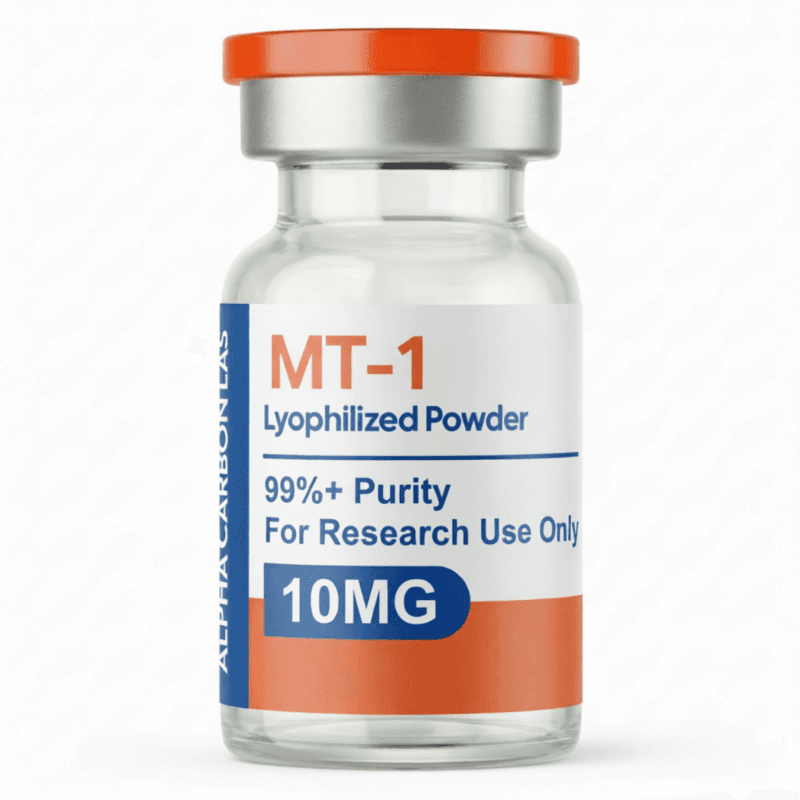
This product is for research purposes only. Not for human consumption.
Purity: >98% (HPLC verified)
Formulation: Lyophilized powder
Molecular Formula: C78H111N21O19S2
Molecular Weight: 1646.98 g/mol
CAS Number: 75921-69-6
PubChem CID: N/A
MT-1
Overview
Melanotan I (MT-1, also known as afamelanotide or by the trade name Scenesse) is a synthetic tridecapeptide analog of the naturally occurring hormone alpha-melanocyte stimulating hormone (α-MSH), one of several melanocortin peptides that regulate pigmentation, appetite, inflammation, and other physiological processes. MT-1 was specifically designed and developed to provide photoprotection - protection against ultraviolet radiation-induced skin damage - particularly for individuals with fair skin, photosensitivity disorders, or increased risk of skin cancer due to genetic conditions affecting melanin production. Unlike its close relative Melanotan II (MT-2), which was designed with modifications that provide additional biological activities including effects on sexual function and appetite through broader melanocortin receptor activation, MT-1 maintains closer structural similarity to natural α-MSH and demonstrates high selectivity for the melanocortin-1 receptor (MC1R), which is the primary receptor subtype mediating melanogenesis (melanin pigment production) in the skin. This selectivity results in skin darkening and photoprotective effects with minimal influence on other melanocortin receptor subtypes (MC3R, MC4R, MC5R) that mediate appetite, sexual function, and other processes - making MT-1's profile cleaner and more focused on its intended dermatological applications. The development of MT-1 was driven by the recognition that melanin provides natural photoprotection against UV-induced DNA damage, reactive oxygen species formation, and the subsequent risks of photoaging, sunburn, and skin cancer. Fair-skinned individuals with type I or II skin (who burn easily and tan minimally or poorly) have lower constitutive melanin levels and are at substantially higher risk for UV-induced skin damage and melanoma compared to individuals with naturally darker skin. Additionally, specific genetic photosensitivity disorders - most notably erythropoietic protoporphyria (EPP), a rare metabolic disorder causing severe photosensitivity, phototoxic reactions, and significant quality of life impairment - create an urgent need for effective photoprotection beyond sunscreens and UV avoidance. MT-1 was developed to address these needs by pharmacologically stimulating melanogenesis, thereby inducing a protective tan without requiring UV exposure (or with minimal UV exposure), providing endogenous photoprotection that is superior to topical sunscreens alone. The peptide underwent extensive preclinical and clinical development, including Phase II and Phase III trials demonstrating efficacy and safety for EPP and other photoprotection applications. MT-1/afamelanotide achieved regulatory approval in Europe (2014), Australia (2014), and the United States (2019) as an orphan drug for EPP, representing one of the few synthetic peptides to achieve full regulatory approval for clinical use. Beyond EPP, MT-1 has been studied for other photosensitivity conditions, prevention of polymorphic light eruption, photoprotection in transplant recipients (who have elevated skin cancer risk due to immunosuppression), and general photoprotection for high-risk individuals, though EPP remains the only approved indication in most jurisdictions.
Mechanism of Action
MT-1 exerts its biological effects through selective binding to and activation of the melanocortin-1 receptor (MC1R), a G-protein coupled receptor (GPCR) belonging to the melanocortin receptor family, which is predominantly expressed on melanocytes - the pigment-producing cells located in the basal layer of the epidermis, as well as in hair follicles, uveal tract of the eye, and several other tissues. Natural α-MSH is derived from the precursor protein proopiomelanocortin (POMC) and serves as the endogenous ligand for melanocortin receptors, but it has a very short plasma half-life (minutes) due to rapid enzymatic degradation, making it impractical as a therapeutic agent. MT-1 was designed with specific amino acid substitutions and modifications - particularly the replacement of L-methionine with L-norleucine at position 4 and cyclization of the peptide - that confer resistance to enzymatic degradation by neutral endopeptidase and other proteases, dramatically extending the half-life to several hours and providing sustained biological activity suitable for therapeutic use. When MT-1 binds to MC1R on melanocytes, it triggers receptor conformational changes that activate Gs proteins, which stimulate adenylyl cyclase to produce cyclic AMP (cAMP) as a second messenger. Elevated intracellular cAMP activates protein kinase A (PKA), which phosphorylates the transcription factor CREB (cAMP response element-binding protein). Phosphorylated CREB translocates to the nucleus and binds to cAMP response elements in DNA, upregulating expression of microphthalmia-associated transcription factor (MITF), which serves as a master regulator of melanocyte function and melanogenesis. MITF activation increases expression of key melanogenic enzymes including tyrosinase (the rate-limiting enzyme in melanin synthesis), tyrosinase-related protein 1 (TRP-1), and tyrosinase-related protein 2 (TRP-2 or DCT). These enzymes catalyze the multi-step conversion of the amino acid tyrosine to melanin pigments through a series of oxidation and polymerization reactions. The resulting increased melanin production leads to darkening of the skin (tanning) as melanin-containing melanosomes are transferred from melanocytes to surrounding keratinocytes and distributed throughout the epidermis. This melanin serves multiple photoprotective functions: it absorbs and scatters UV radiation, reducing penetration to deeper skin layers; it neutralizes reactive oxygen species (ROS) generated by UV exposure through melanin's antioxidant properties; it provides physical shielding of nuclear DNA in keratinocytes from UV-induced DNA damage that can lead to mutagenesis and carcinogenesis; and it helps dissipate UV energy as heat. The selectivity of MT-1 for MC1R is particularly important - while MT-2 activates MC3R and MC4R (involved in appetite regulation, sexual function, and energy homeostasis), MT-1 shows minimal activity at these receptors, resulting in a side effect profile focused on melanogenesis and pigmentation without the appetite suppression, nausea, or sexual effects seen with MT-2. MT-1 can produce skin darkening even in the absence of UV exposure (though some minimal UV exposure is typically used in clinical protocols to accelerate and optimize the tanning response), and the induced tan persists for weeks to months after cessation of treatment as melanocytes gradually return to baseline activity and skin cells naturally turn over. In EPP specifically, the photoprotection provided by MT-1-induced melanin allows patients to tolerate significantly greater UV and visible light exposure before experiencing phototoxic reactions, enabling outdoor activities and substantially improving quality of life for these severely sun-sensitive individuals.
Research Findings
The research and clinical development program for MT-1/afamelanotide represents one of the most comprehensive and successful peptide development efforts, spanning over two decades from initial synthesis and preclinical characterization through regulatory approval and real-world clinical use. Early preclinical studies in the 1990s by researchers at the University of Arizona including Dr. Mac Hadley, Dr. Victor Hruby, and Dr. Robert Dorr characterized MT-1's melanogenic properties, photoprotective effects, and favorable selectivity profile for MC1R. Animal studies demonstrated that MT-1 administration produced dose-dependent skin darkening, that the induced pigmentation provided significant protection against UV-induced erythema (sunburn), DNA damage, and photocarcinogenesis, and that the peptide was well-tolerated without major systemic effects. These promising preclinical findings led to early human studies exploring MT-1's effects in healthy volunteers. Phase I trials established safety, pharmacokinetics, and proof-of-concept for melanogenesis induction. Studies published by Dorr and colleagues in Archives of Dermatology demonstrated that MT-1 in combination with controlled UV exposure produced robust, cosmetically acceptable tanning in fair-skinned individuals, with the induced tan providing measurable photoprotection. Importantly, these studies showed that MT-1 produced eumelanin (the brown-black, photoprotective form of melanin) rather than pheomelanin (the red-yellow form associated with fair skin and potentially increased photosensitivity), which was crucial for establishing its photoprotective rather than merely cosmetic effects. The pivotal clinical development program focused on erythropoietic protoporphyria (EPP), a rare genetic disorder caused by deficiency of ferrochelatase enzyme, resulting in accumulation of protoporphyrin IX in blood and tissues. When protoporphyrin absorbs light (particularly blue light around 400-410nm), it generates reactive oxygen species that cause severe phototoxic reactions - patients experience burning pain, edema, and erythema within minutes of light exposure, severely limiting outdoor activities and causing profound quality of life impairment. Traditional photoprotection (sunscreens, protective clothing, UV-blocking windows) provides inadequate relief because protoporphyrin is activated by visible light that sunscreens don't block. Phase II and III trials in EPP patients demonstrated that MT-1 implants (controlled-release subcutaneous formulations providing sustained peptide release over months) significantly increased pain-free sun exposure time - patients could tolerate 3-7 times longer light exposure before experiencing phototoxic reactions compared to placebo. Multiple randomized, placebo-controlled trials including the CUV029 study published in JAMA Dermatology confirmed these benefits, with EPP patients receiving MT-1 reporting dramatic improvements in ability to perform outdoor activities, engage in social and occupational functions, and overall quality of life. These robust efficacy data, combined with acceptable safety profiles, led to regulatory approval: the European Medicines Agency approved afamelanotide (Scenesse) in 2014, the Australian Therapeutic Goods Administration in 2014, and the US FDA in 2019, all as orphan drug designations for EPP. The approved formulation is a controlled-release implant (16mg) placed subcutaneously, typically providing photoprotection for 2-3 months per implant. Post-marketing experience has confirmed clinical trial findings, with real-world EPP patients reporting sustained benefits. Research beyond EPP has explored MT-1 for other photodermatoses including polymorphic light eruption (PLE), actinic prurigo, and solar urticaria, with studies showing potential benefits though not achieving regulatory approval for these indications. Studies in solid organ transplant recipients, who face dramatically elevated skin cancer risk due to chronic immunosuppression, have explored MT-1 as a preventive photoprotective strategy. Research has also examined MT-1 for vitiligo (a depigmentation disorder), though results have been mixed and complex given vitiligo's autoimmune pathogenesis. Cosmetic applications for photoprotection and tanning in healthy individuals have been studied but face regulatory and ethical considerations regarding use of prescription medications for cosmetic purposes.
Research Applications
- Erythropoietic protoporphyria (EPP) treatment and photoprotection
- Polymorphic light eruption and photodermatosis research
- Skin cancer prevention in high-risk populations
- Photoprotection in immunosuppressed transplant recipients
- Melanogenesis and pigmentation biology research
- MC1R signaling and melanocortin receptor research
- UV-induced DNA damage prevention studies
- Vitiligo and hypopigmentation disorder research
- Photoaging prevention research
- Solar urticaria and photosensitivity disorder studies
- Melanoma prevention research in high-risk individuals
Safety Profile
MT-1/afamelanotide has undergone extensive safety evaluation through rigorous clinical trials and post-marketing surveillance, establishing a well-characterized safety profile that supported regulatory approval for EPP in multiple jurisdictions. The most common adverse events associated with MT-1 are related to the subcutaneous implant itself rather than systemic peptide effects: implant site reactions including pain, erythema, swelling, and bruising occur frequently but are generally mild and self-limited. Hyperpigmentation is an expected pharmacological effect, with darkening of skin, existing nevi (moles), freckles, and sometimes mucosal membranes; while this is the intended effect, concerns exist about potential masking of melanoma or other skin lesions through hyperpigmentation, necessitating thorough skin examinations before and during treatment. Darkening of existing moles has raised theoretical concerns about nevus transformation or melanoma development, though long-term data has not shown increased melanoma risk; nonetheless, regular dermatological monitoring is recommended. Systemic adverse events reported in clinical trials have generally been mild and include nausea (particularly in initial doses), headache, fatigue, and gastrointestinal symptoms. The selectivity of MT-1 for MC1R means that appetite effects, sexual function effects, and blood pressure changes seen with less selective melanocortin agonists (like MT-2) are minimal or absent with MT-1. Photosensitivity reactions can paradoxically occur during the early treatment period before protective melanin has fully developed, requiring appropriate UV protection during the induction phase. No serious systemic toxicities, organ damage, or life-threatening adverse events have been attributed to MT-1 in approved clinical use. Long-term safety data extending over years of treatment in EPP patients shows no cumulative toxicity or progressive adverse effects. Contraindications include hypersensitivity to MT-1, pregnancy and lactation (due to insufficient safety data in these populations, though animal studies have not shown teratogenic effects), and certain photosensitive conditions where increased pigmentation might be contraindicated. Patients with personal or family history of melanoma require particularly careful consideration given theoretical concerns about melanocortin receptor activation in melanocytes, though MC1R activation is a normal physiological process and current evidence does not support increased melanoma risk with MT-1. The FDA-approved label includes recommendations for comprehensive skin examinations before initiating therapy, regular monitoring during treatment, and patient education about self-examination and sun protection practices. Overall, the benefit-risk profile for approved EPP indication is highly favorable, transforming quality of life for patients with this debilitating condition, while applications beyond EPP would require careful evaluation of risks versus benefits in each specific context.
Scientific References
Research Use Only
This product is intended for research purposes only and is not for human consumption, therapeutic use, or diagnostic applications. Please ensure compliance with all applicable regulations and institutional guidelines.