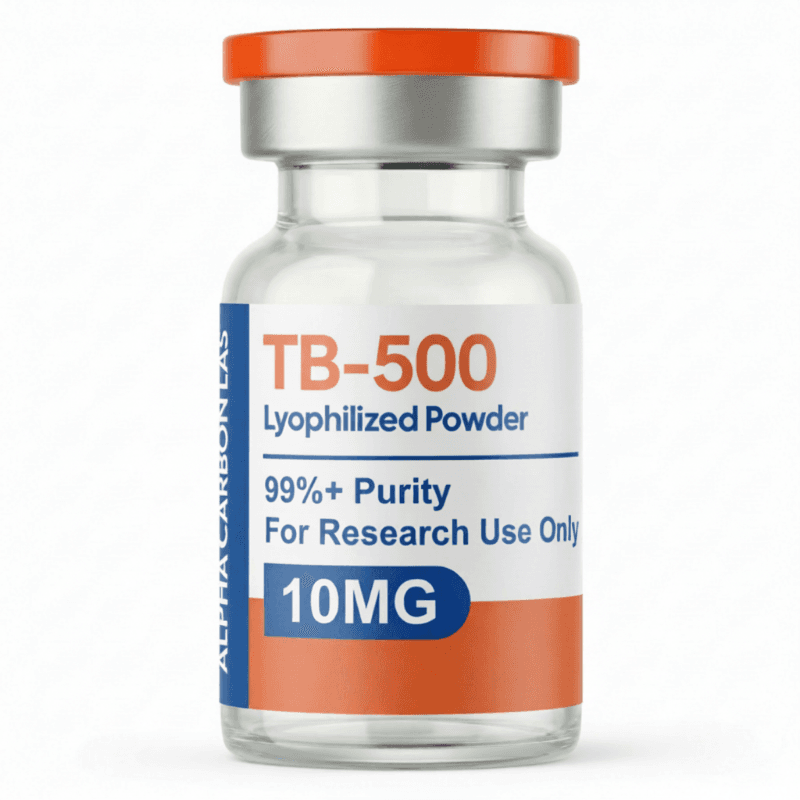
This product is for research purposes only. Not for human consumption.
Purity: >99% (HPLC verified)
Formulation: Lyophilized powder
Molecular Formula: C212H350N56O78S
Molecular Weight: 4963 g/mol
CAS Number: 77591-33-4
PubChem CID: 16132341
TB-500
Overview
TB-500 is a synthetic version of Thymosin Beta-4 (Tβ4), a naturally occurring 43-amino acid peptide that is present in virtually all animal and human cells, with particularly high concentrations in platelets, wound fluids, and various tissues undergoing repair. First discovered in the thymus gland, Thymosin Beta-4 plays a fundamental role in cellular organization, tissue development, and injury response throughout the body.
TB-500 represents a synthetic form that preserves the bioactive sequence of naturally occurring Tβ4 while offering enhanced stability and reproducibility for research applications. This peptide serves as a critical regulator of actin polymerization - a process essential for cell movement, proliferation, and differentiation - making it central to wound healing, tissue regeneration, and cellular repair processes.
The peptide's ability to promote cell migration, angiogenesis, and stem cell differentiation positions it as a multifunctional regenerative agent with applications spanning cardiovascular protection, wound healing, inflammation modulation, and tissue remodeling.
Mechanism of Action
TB-500 functions through several sophisticated molecular mechanisms centered around its interaction with G-actin, the monomeric form of the cellular cytoskeletal protein actin. By sequestering G-actin, TB-500 regulates actin polymerization and cytoskeletal dynamics, which are essential for cell motility and structural organization.
This actin-binding capability enables the peptide to promote cellular migration - a critical process for wound healing, tissue repair, and immune response. TB-500 stimulates angiogenesis by promoting endothelial cell migration and differentiation, supporting the formation of new blood vessels that supply oxygen and nutrients to healing tissues.
The peptide upregulates the expression of key extracellular matrix proteins and matrix metalloproteinases (MMPs), facilitating tissue remodeling and proper wound maturation. It exhibits anti-inflammatory properties by modulating cytokine expression and immune cell function, reducing excessive inflammatory responses that can impair healing.
TB-500 also promotes stem cell recruitment and differentiation at injury sites, supporting tissue regeneration through mobilization of progenitor cells. Additionally, the peptide has demonstrated cardioprotective effects by activating cell survival pathways including the Akt signaling cascade, protecting cardiomyocytes from apoptosis, and supporting cardiac function following injury.
Research indicates TB-500 may also influence the expression of genes involved in cellular protection, including heat shock proteins and anti-apoptotic factors.
Research Findings
The research foundation for TB-500 encompasses decades of investigation into both the natural Thymosin Beta-4 and its synthetic analog.
Cardiovascular Research
Cardiovascular research represents a particularly robust area, with studies demonstrating TB-500's ability to improve cardiac function following myocardial infarction, promote revascularization of ischemic tissue, reduce scar formation after cardiac injury, and support the survival and function of cardiomyocytes under stress conditions.
Research by Bock-Marquette and colleagues published in Nature demonstrated that Thymosin Beta-4 activates integrin-linked kinase and promotes cardiac cell migration, survival, and repair - findings that have been pivotal in understanding the peptide's cardioprotective mechanisms.
Wound Healing and Tissue Repair
Wound healing studies have consistently shown accelerated closure rates, improved tissue quality, and enhanced healing of both acute and chronic wounds. Research has demonstrated benefits in healing skin wounds, corneal injuries, and various epithelial defects.
In musculoskeletal applications, studies have shown TB-500 promotes healing of muscle injuries, enhances recovery from muscle tears and strains, and may support tendon and ligament repair, though evidence in connective tissue healing is less extensive than for BPC-157.
Neurological and Dermatological Research
Neurological research has explored TB-500's neuroprotective properties, with studies indicating potential benefits for spinal cord injury, traumatic brain injury, and peripheral nerve regeneration. The peptide appears to support neural cell migration and axonal outgrowth.
Hair growth research has shown TB-500 can stimulate hair follicle stem cells and promote hair growth in both animal models and preliminary human observations, leading to interest in dermatological applications.
Inflammation and Stem Cell Studies
Studies on inflammation have demonstrated TB-500's ability to modulate inflammatory responses, reduce tissue damage from excessive inflammation, and promote resolution of inflammatory processes. Research into stem cell mobilization has shown TB-500 can recruit endogenous stem cells to injury sites and support their differentiation into tissue-specific cells.
While animal research is extensive and compelling, controlled human clinical trials remain limited, with most human data coming from case reports and small pilot studies.
Research Applications
- Cardiovascular repair and cardioprotection research
- Wound healing and tissue regeneration studies
- Muscle injury recovery and repair research
- Inflammation and immune modulation studies
- Cell migration and cytoskeletal dynamics research
- Angiogenesis and vascular formation studies
- Neuroprotection and nerve regeneration research
- Hair growth and follicle stem cell research
- Stem cell mobilization and differentiation studies
- Corneal injury and eye tissue repair research
- Tissue remodeling and extracellular matrix research
- Post-myocardial infarction recovery studies
Safety Profile
TB-500 has generally demonstrated good tolerability in preclinical research studies and limited human applications. Animal toxicology studies have not revealed significant adverse effects at therapeutic dose ranges, and the peptide has been well-tolerated in various research models. Because Thymosin Beta-4 is a naturally occurring peptide found throughout the body, exogenous administration of TB-500 is thought to be working through endogenous pathways, which may contribute to its favorable safety profile. However, comprehensive human safety data remains limited, and there are no large-scale, long-term clinical trials establishing safety in humans. Anecdotal reports from non-clinical use suggest generally mild and infrequent side effects, potentially including headache, fatigue, or injection site reactions. Some theoretical concerns have been raised regarding potential effects on cancer progression, as TB-500's promotion of cell migration and angiogenesis could theoretically support tumor growth or metastasis in individuals with existing malignancies - though this remains speculative and unproven. The peptide's effects on the immune system and cell proliferation warrant careful consideration and appropriate precautions. TB-500 is not approved by regulatory agencies for therapeutic use and remains available only for research purposes. As with BPC-157 and other research peptides, the absence of rigorous Phase III clinical trials means potential long-term risks or rare adverse events may not yet be identified.
Scientific References
Research Use Only
This product is intended for research purposes only and is not for human consumption, therapeutic use, or diagnostic applications. Please ensure compliance with all applicable regulations and institutional guidelines.